
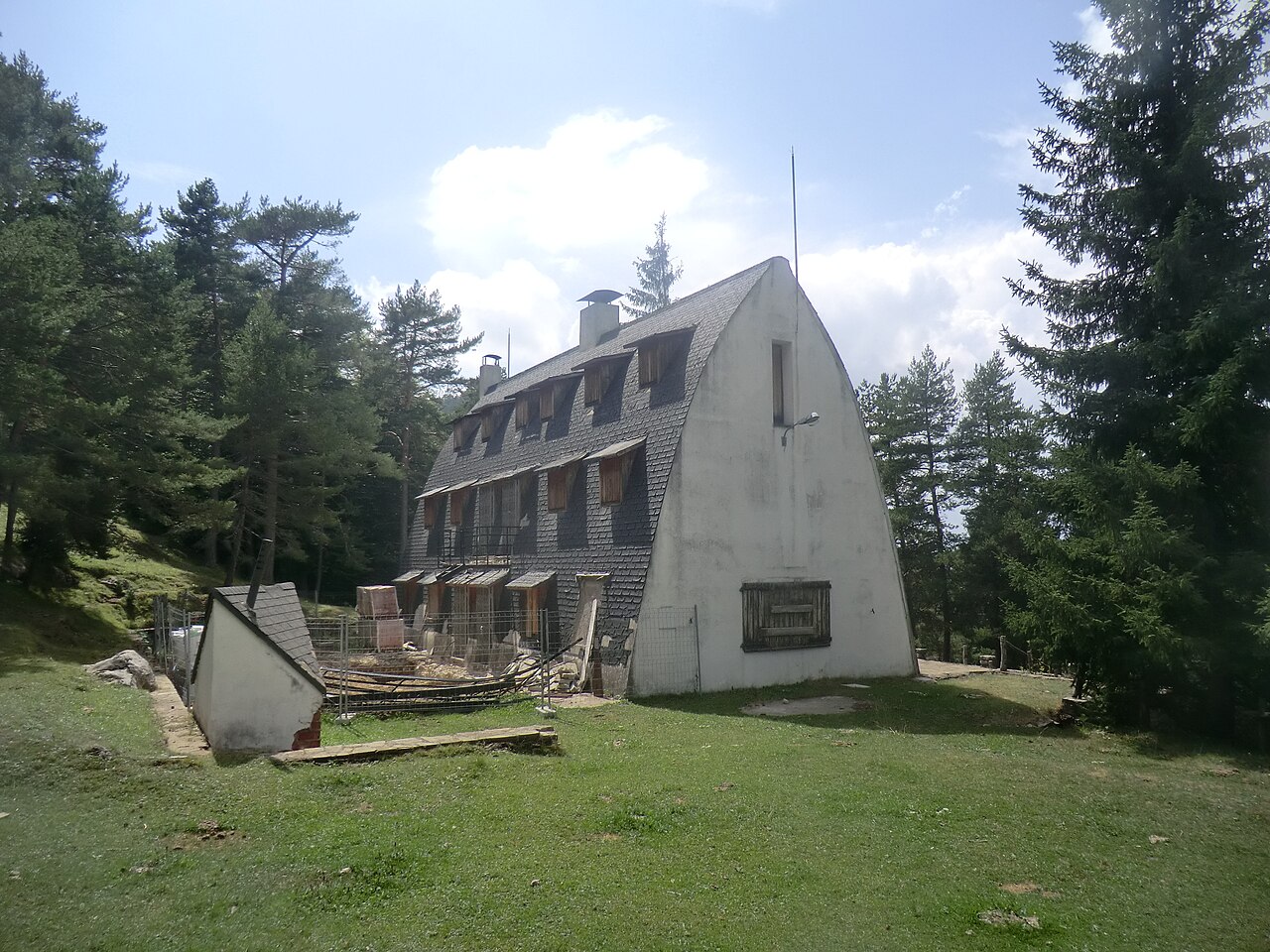
There are places that remain silent for decades, almost waiting for someone to really listen to them. And then comes the moment when that silence is broken and the story takes a new direction. That’s what’s happening to the Xalet del Catllaràsa chalet immersed in the woods of Catalonia which today, one hundred years after the death of Antoni Gaudí, is officially recognized as one of his works.
The news arrives in 2026, the year of the centenary and celebrations of Any Gaudí, and has the flavor of revelations that rewrite cultural maps. For over a century, this building remained suspended between hypotheses and uncertain attributions, almost a shadow in the biography of the most visionary architect of Catalan modernism. Today, however, it fully enters his catalogue.
And it does so in a silent way, consistent with its position: far from the spotlights of Barcelona, far from the crowds of the Sagrada Família and Park Güell, nestled among trees and pre-Pyrenean landscapes.
Xalet del Catllaràs: a chalet between nature, industry and vision
The Xalet del Catllaràs it is located in the Serra del Catllaràs, in the territory of La Pobla de Lillet, in the province of Barcelona, about eighty kilometers from the city. Here, among woods and mountains, at the beginning of the twentieth century a building took shape intended to house technicians and engineers engaged in the mining activities of the area.
The project was born between 1901 and 1908 on the initiative of Eusebi Güell, an enlightened entrepreneur and historical patron of Gaudí, owner of the coal mines and the Asland cement plant in the area. Not an aesthetic whim, therefore, but a functional structure linked to the world of work and industry.
Yet, even in a building intended for everyday working life, traces emerge of an architectural thought that dialogues with nature, that models space following curved lines, parabolic arches, geometric solutions that seem to grow like living organisms. It is precisely this project coherence that has definitively convinced the scholars.
The study that solved a century-long mystery
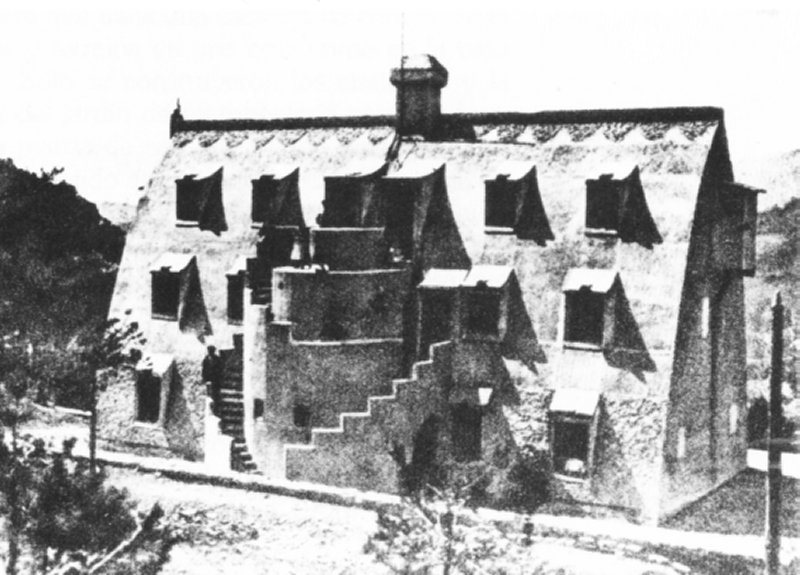
The official confirmation comes from research commissioned by the Department of Culture of the Generalitat de Catalunya and conducted by Galdric Santana, director of the Gaudí Chair at the Universitat Politècnica de Catalunya.
The investigation cross-referenced historical documents, architectural surveys, analyzes of structural geometries and three-dimensional reconstructions, comparing the chalet with Gaudí’s typical design schemes. The result was clear: the original project is hiseven if the construction phase was not followed directly by the architect.
And it is precisely this detail that has fueled uncertainty for decades. The building underwent modifications during its construction, probably for technical or economic reasons, and Gaudí never officially claimed paternity. The distance between design and construction had created a gray area in historiography, which has now finally been clarified thanks to contemporary analysis technologies.
A less monumental, more intimate Gaudí
This discovery gives us a different image of the great master of Catalan modernism. Not only the architect of the great symbolic works, but also the designer capable of intervening in rural, industrial, apparently secondary contexts, keeping his poetics intact.
In the Xalet del Catllaràs we perceive the same tension between technique and nature that characterizes his most famous works, but expressed on a more intimate, almost domestic scale. The architecture adapts to the mountain landscape, supports it, integrates it. It is a relevant lesson even today, in a time when we talk more and more about harmonization between the built environment and the natural environment.
One hundred years after the death of Antoni Gaudí, his work continues to surprise us and grow, as if it had never really ended. This attribution not only adds a building to the list of his works, but broadens the understanding of his way of thinking about space and the relationship between man and territory.
And perhaps this is precisely the most fascinating aspect: even when we think we know a great name in history inside out, there is always a hidden detail, a chalet in the woods, ready to tell us something new.
