
December 31st is a universal passing date. Everywhere in the world, people gather to take stock of the year that is about to end and to look to the future with new goals. This day is experienced by many with a mixture of nostalgia and hope. It is a time of reflection on successes and failures, difficulties and achievements, but also an opportunity to put the past aside and make a new beginning.
The evening develops in different ways: those who celebrate with friends and family, those who participate in parties and dinners, while others prefer a quiet evening at home, perhaps with a solitary toast. No matter how you experience it, midnight represents the magical moment of saying goodbye to the old year and welcoming the new one, often accompanied by fireworks and promises of change.
In Japan, however, December 31st is a deeply spiritual moment, far from the frenetic approach that characterizes Western celebrations. The country follows a series of ancient rituals that not only mark the passing of the year, but do so with a sense of purification and spiritual preparation for the future.
The spiritual preparation of December 31st
The day of December 31st in Japan begins with the so-called “osoji”, a deep cleaning tradition that involves all homes. This ritual aims to free oneself from impurities accumulated over the year. Cleaning the house therefore becomes a symbolic act of purification, to prepare it to welcome the kami, the divinity who will protect the house in the new year. After cleaning, the decorations begin: the “shimekazari” are hung, straw rope crowns that mark the entrance to the house, indicating that it is ready to welcome the divinity of the new year. Furthermore, the “kadomatsu” are placed, symbols of longevity and strength, made with pine, bamboo and plum tree.
In the afternoon, families go to temples or shrines for a first purification ceremony. Here you clap your hands twice in front of the altar to invoke the gods, pray and offer a gift. The evening is then spent in a traditional way: you put on your kimono and return to the temples to pray, make wishes and participate in the “Joya no Kane” ceremony, which marks the culmination of the evening.
The 108 ringing ceremony
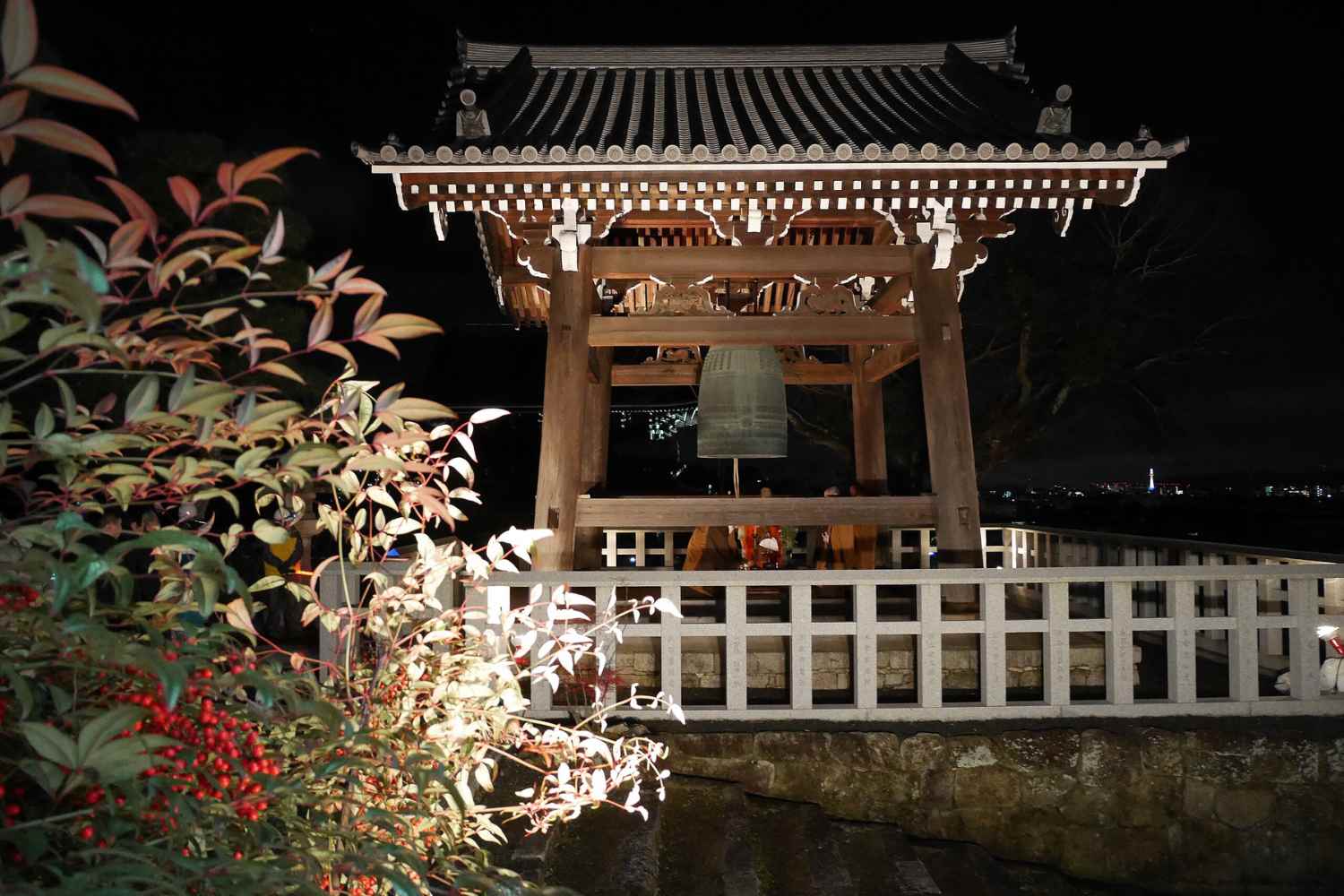
The most symbolic and significant tradition of the night of December 31st in Japan is certainly the 108 bell ringing ceremony, or “Joya no Kane”. In Buddhist temples throughout Japan, large bells are rung 108 times. These chimes represent the 108 earthly desires which, according to Buddhist tradition, cause suffering and hinder the search for happiness and wisdom. These include greed, anger, ignorance, jealousy and other passions that trap human beings in a cycle of pain. Each chime serves to free the mind and soul from these impurities, preparing the heart to welcome the new year with serenity.
The final chime, the number 108, occurs exactly at midnight, symbolically marking the transition from the old to the new year. This is not just a collective gesture, but a profound spiritual experience. Many believe that the ringing of bells has a beneficial effect on the mind, bringing peace and purification. After the chimes, those present have the opportunity to express their wishes and prayers using a “sounding string” called Tamakushi, a ritual that symbolically marks the transition between the old year and the new one.
A start to the new year with meaning
With the new year, the Japanese go for their first visit to the temple, a ritual called “Hatsumode”. It is tradition to purchase a special amulet, the “hamaya”, an arrow that aims to ward off evil forces from the home and loved ones. The amulet is hung in the house, usually in the north-east corner, considered the most vulnerable point to evil spirits.
In addition to the 108 ringing ceremony, it is also common within Japanese families to ring a bell at home, a gesture that invites reflection and the release of past desires to prepare for a better future.
The tradition of happy new year greetings
In Japan there are two distinct ways of wishing a happy new year. During the month of December, when you meet someone you won’t see until the New Year, you use the expression “Yoi otoshi wo omukae kudasai,” which means “Have a good year.” Once the year has begun, the greetings change to “Shinnen akemashite omedetou gozaimasu!”, which translates to “Happy New Year!”.
Japanese New Year is not characterized by wild parties, but rather by deep introspection. The 108 bell ringing ceremony represents a moment of purification, but also of personal reflection. In Japan, the transition to the new year is welcomed with calm, spirituality and a strong connection with one’s cultural and religious roots. While in the rest of the world we greet the old year with fireworks and loud toasts, Japan teaches that, sometimes, it is in silence and reflection that the true meaning of the new beginning is found.
