
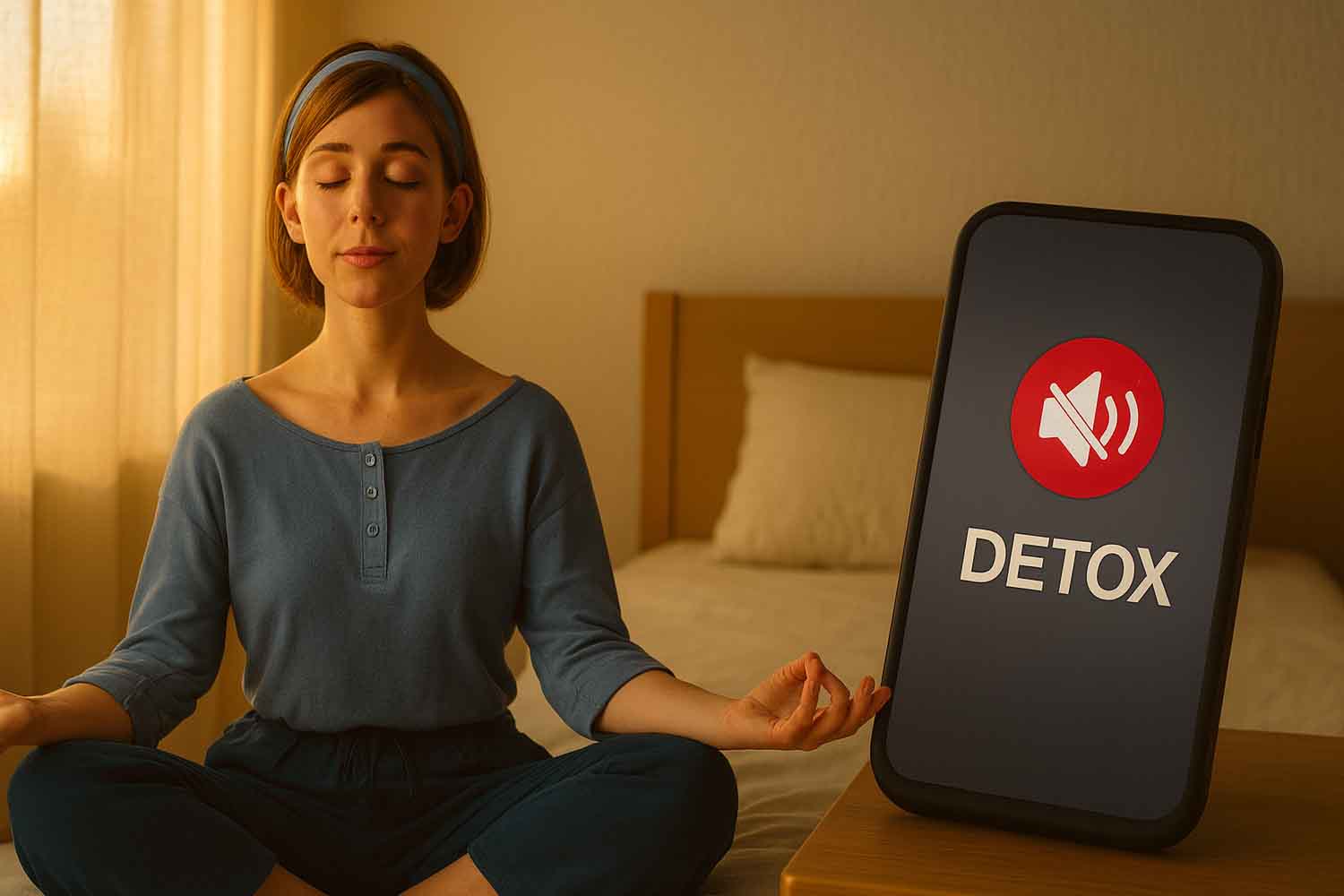
We spend hours on our smartphone, often without even realizing it. We scroll, close one app, open another, with the constant feeling of being tired and, at the same time, never truly disconnected. Many try to “disappear” from social media suddenly, only to then come back in frustration. A new study, however, suggests that perhaps we are looking at the problem from the wrong point of view. And the news, for once, is encouraging.
According to research, to get real benefits on mental health. Just use them less and, above all, use them better. Even a short detox from social networkswithout extremism, can help the brain recover, improving anxiety, mood and quality of sleep.
In recent years our relationship with technology has changed at such a speed that scientific research is struggling to keep up. We know that excessive screen use is associated with psychological well-being issues, but it remains unclear what “healthy screen use” really means.
To try to answer this question, a group of researchers led by Joseph Firth of the University of Manchester he brought together different skills, from youth mental health to the study of social media, up to public health. A central aspect of the work was listening to young people directly, not just analyzing abstract numbers.
The study involved 373 boys and girls between 18 and 24 years old. For two weeks they continued to use social media as usual, while researchers collected data directly from their smartphones, monitoring usage time, physical activity and sleep. In the following week, they were offered the opportunity to participate in a detox from social networks. About 80% accepted.
Reduce without giving up
The detox did not involve total disconnection. Participants, who previously spent an average of about two hours a day on social media, simply reduced their use to 30 minutes daily. No absolute ban, no digital disappearance.
Yet the effects were evident. At the end of the reduction week, the symptoms of anxiety decreased by 16%those of depression by 24% and disorders related toinsomnia by 14.5%. Numbers which, the researchers explain, have concrete clinical relevance.
The key point is that it’s not the screen time itself that makes the difference, but what that time replaces. Every half hour spent scrolling content automatically is half an hour taken away from sleep, movement and real relationships. Researchers talk about a sort of “empty calories” of attention, which fill time but don’t really nourish you.
From here a simple principle arises: replace, not prohibit. Reduce passive scrolling and leave room for more active activities, including digital ones, or offline experiences that help the brain to slow down.
Where to start: Home, sleep, and notifications
According to the study, one of the most effective changes starts from a specific place: the bedroom. Using your smartphone in the hour before bed is considered the most critical time. Taking your phone off your bedside table, leaving it in another room, or creating a small screen-free evening routine allows your brain to prepare for rest. Better sleep, as the data shows, is directly linked to a reduction in anxiety and depression.
Another aspect concerns notifications. Gentle reminders about screen time rarely work: we ignore them with an automatic gesture. Much more effective is to consciously use tools such as “Do Not Disturb” mode, limiting notifications to a few important people or situations. In this way the mechanism by which every vibration becomes an irresistible appeal is interrupted.
The role of adults: fewer prohibitions, more example
For those with children, the study sends a clear message: strict bans often don’t work. Indeed, they can worsen the family climate and push children to use devices secretly. The example, however, weighs heavily. The digital habits of adults directly influence those of younger people.
Respecting moments and spaces together without technology promotes more authentic communication and also has a positive effect on the adults themselves. Because, ultimately, everyone needs a little detox from social networksnot just teenagers.
The study was published in the scientific journal World Psychiatry and leaves a simple but powerful message: we don’t have to disappear from social media to feel better. Sometimes you just need to take a step back, at the right time.
