
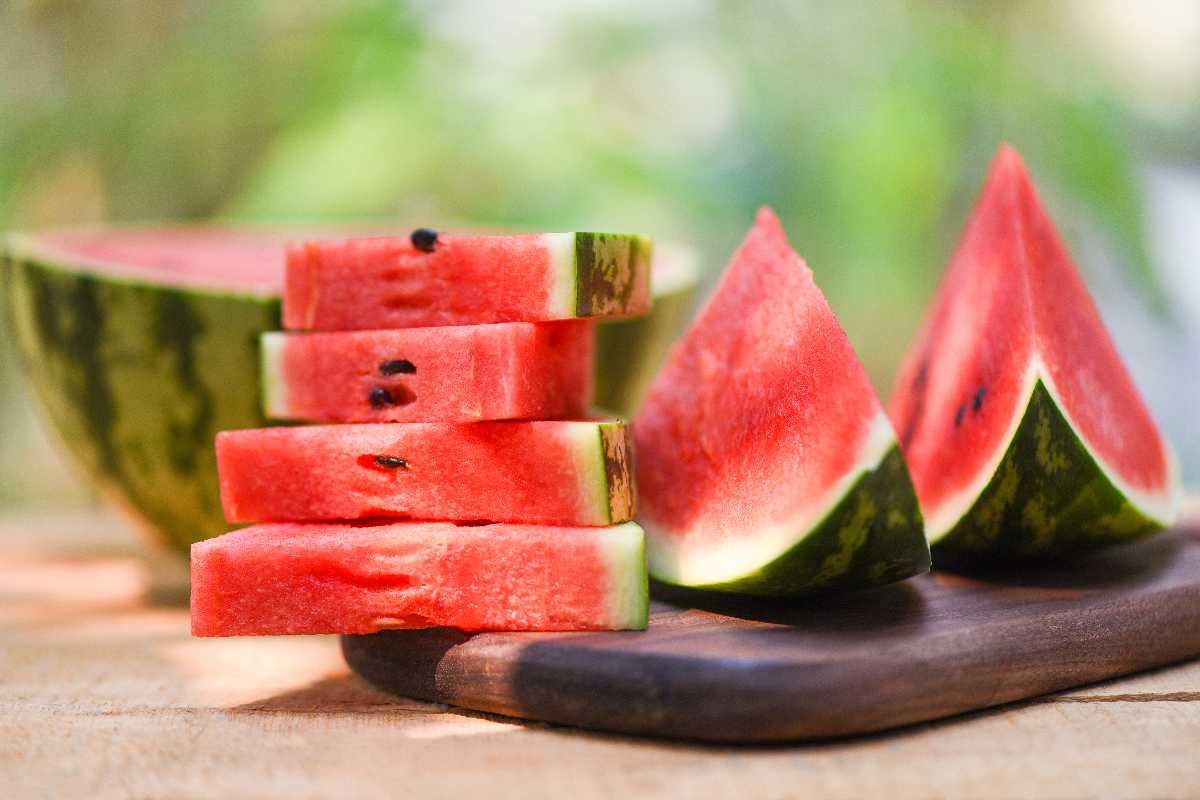
Watermelon is one of the symbols of the Italian summer: thirst-quenching, rich in water, and a precious source of vitamin C, potassium and antioxidants such as lycopene and beta-carotene. Its sweet taste makes it the protagonist not only of classic beach slices, but also of smoothies, sorbets, ice creams and even savory recipes such as salads and cold soups. Precisely because of its delicacy, however, storing it in the right way makes the difference between a still juicy fruit and a bland and mushy one.
Whole watermelon: no fridge, at least for a while
If the watermelon is still intact, there is no need to take up valuable space in the refrigerator. It can remain at room temperature, in a cool, dry corner of the kitchen, and remain in good condition for up to a whole week. Those who prefer it very cold can put it in the fridge for half an hour before cutting it, but this is an optional step. An anti-waste tip: avoid cooling it under running water, a useless and wasteful habit.
When you need the fridge
In hotter or more humid homes it is better to move the whole watermelon to the lowest shelf of the fridge: it keeps well for about a week. The situation changes once cut: at that point the refrigerator becomes mandatory, and the slices must be protected to prevent them from oxidizing or absorbing the odors of other foods. Already cut watermelon does not last long: it should be consumed within a couple of days, because it quickly loses consistency and flavor.
Why cling film is not the best choice
One of the most common mistakes is wrapping watermelon slices directly with cling film, making it adhere to the pulp. The problem is that, in direct contact with such a humid surface, the film creates an airtight barrier that retains too much humidity, encouraging bacterial proliferation and making the surface slimy. In practice, the watermelon “sweats” inside its casing, and that trapped humidity becomes an ideal environment for microorganisms, with negative effects both on food safety and on the consistency of the fruit, which tends to soften more quickly.
It is also better to avoid two other common home remedies: aluminum foil, which when in contact with acidic or very watery foods risks releasing microparticles capable of altering the flavor, and the simple plate turned upside down over the slice, which still lets air pass through the sides, drying out the exposed edges and causing the fruit to absorb the odors of other nearby foods.
Why airtight containers work better
Airtight containers, especially made of glass, remain the most effective solution: they do not adhere to the pulp like film does, they leave a cushion of air which reduces the stagnation of humidity on the surface of the fruit and, at the same time, they isolate the watermelon from the external environment, preventing it from absorbing foreign odors or becoming contaminated in contact with other foods. They are also easier to wash and disinfect than disposable plastic wrap, reducing the risk of transferring bacteria from one use to another. Those who want an even more natural alternative can opt for ecological beeswax films, which allow the fruit to “breathe” without allowing it to absorb external odors.
It is also worth remembering another frequent mistake, linked more to purchasing than to home preservation: buying watermelon already cut at the refrigerated counter, wrapped in cling film. Once cut, the fruit loses its natural protection represented by the peel, and becomes more vulnerable to contamination by salmonella, listeria or E. coli, especially if the cold chain has not been respected from the shop to home.
The freezer: only a partial ally
Since watermelon is made up of over 95% water, freezing is not the ideal way to preserve it whole or in slices: large ice crystals form which damage the fibers of the pulp, making it tasteless and soft once defrosted. The freezer is useful, however, for transforming the pulp into popsicles or smoothies: remove the peel and seeds, cut it into pieces, leave it in the freezer for about 12 hours in special bags and then blend it, perhaps with lemon juice and milk.
How to store it in a jar until Christmas
For those who want to savor the taste of watermelon even out of season, there is a solution that allows it to be preserved for up to six months: put it in a jar, as a jam or as a watermelon in syrup, cut into slices without seeds and preserved in water, sugar and citric acid, hermetically sealed. The result is a little summer surprise to be enjoyed perhaps at Christmas.
Avoiding the most common mistakes — direct contact film, aluminum foil, upside-down plates or purchasing poorly refrigerated pre-cut fruit — is the best way to enjoy watermelon for a long time, safely and without waste.
