
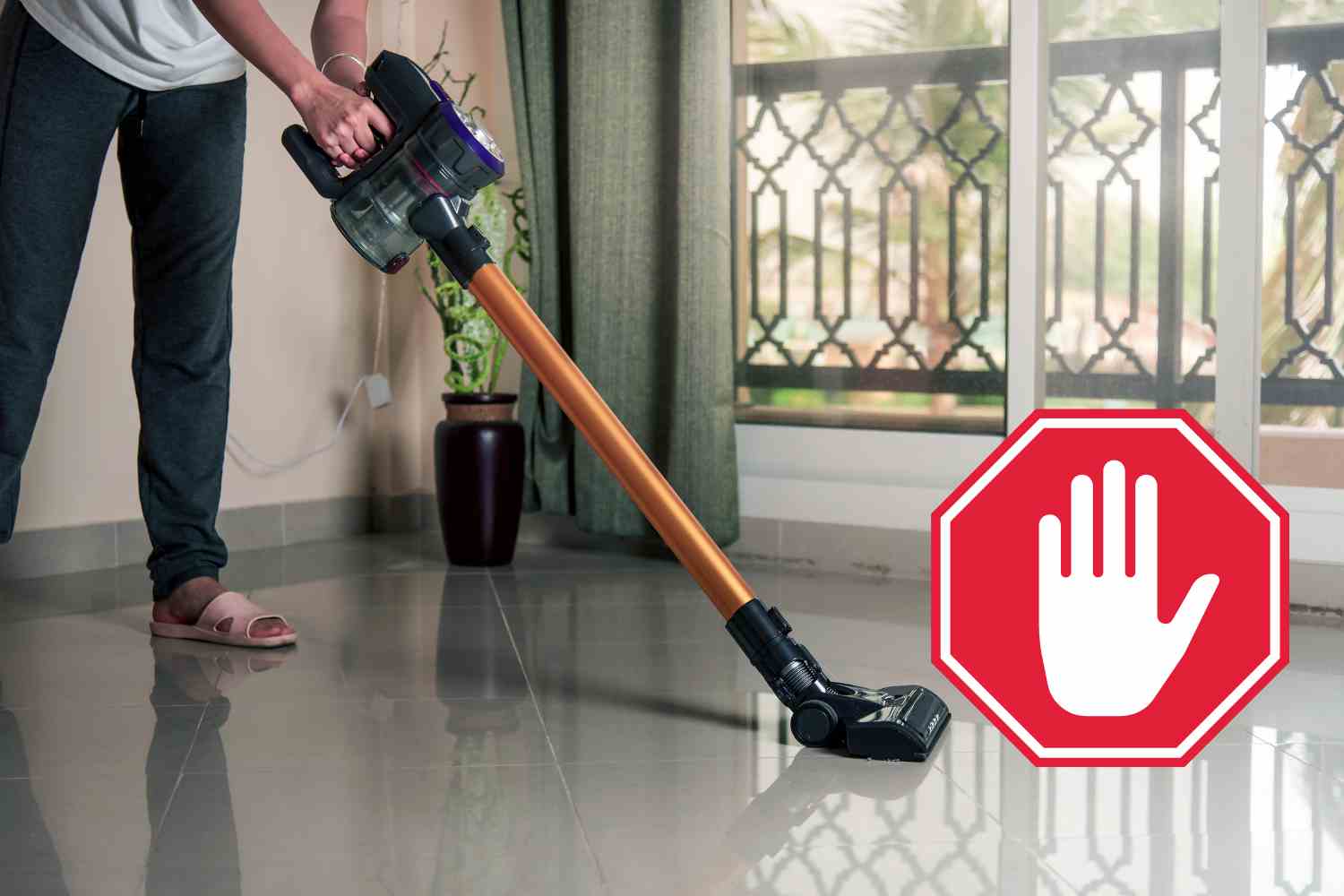
The vacuum cleaner is one of those appliances that seem indestructible. I turn it on, passes on the floor, collects dust, hair, crumbs and seems to be able to swallow anything without batting an eye. In reality it is not so at all: inside there are engines, filters and mechanisms that work well until they ask themselves too much. Many treat it as a bin aspiration, ignoring the fact that a small mistake is enough to compromise its operation, burn the engine or clog the ducts. And it is not always possible to remedy.
The main problem is that often we rely on the instinct: something falls to the ground, we focus it with the vacuum cleaner and away, without thinking if it is really a suitable object to be aspirated. And it is precisely this lightness that the appliances break long before time.
Water and liquids: the number one enemy
It may seem obvious, yet it is the most common mistake. The liquids, even in small quantities, should never end up in traditional vacuum cleaner. It is not designed for that, unless it is a specific “Wet & Dry” model. The water easily enters the engine and circuits, causing short circuits or oxidations that smoke the entire appliance in smoke. It is enough even to overthrow a glass of water on the floor and try to suck it to transform a trivial gesture into an unexpected expense of hundreds of euros. Those who think they get by drying the filter deludes themselves: the damage is usually already done.
Metal pieces and pointed objects
Coins, screws, staples, small nails: they are all objects that not only risk getting stuck in the pipes, but can rigor and break the internal parts. Some, if they reach the turbine, end up damaging it seriously. It does not go better with thin blades, such as those of cans or metal caps, which can cut bags or containers and finish directly in contact with the engine. Many think that “so much is small, it pulls it away without problems”. Too bad that that only object aspirated quickly and fury can cost a repair that is often not worth facing.
Ash and fine dust
Those who have a fireplace, a stove or simply empty the ashtray of the evening before should know that the ash should not be aspirated with a traditional vacuum cleaner. The particles are too thin, they slip into the filters and satulate them in a moment. Result: the engine begins to overheat because the air no longer circulates. Not only that, but ash can still be hot and in that case the risk is even to merge some plastic parts or cause irreversible damage. There are aspiracies designed on purpose, and it is no coincidence.
Broken glass and hard fragments
A glass that shatters on the ground is always a nightmare to collect, and the idea of solving everything with the vacuum cleaner is strong. But it is a serious mistake: the glass fragments not only risk cutting the bags and filters, but can scratch and damage the pipes. Furthermore, they are often not completely aspirated, they remain stuck and over time they compromise the passage of the air. In these cases, it is better to arm yourself with a palette and fucks, collect the bulk and pass only at the end to remove the smallest splinters, always with the utmost caution.
Sticky foods and humid residues
Many do it almost without thinking about it: a piece of fruit falls, a biscuit wet in the milk, a stain of sauce and go with the pipe of the vacuum cleaner. Sensational error. Everything that is humid, sticky or oily ends up encouraging inside, attracting molds and bad smells. Not to mention that food residues can become fertile ground for bacteria and insects. There is no filter that holds: a vacuum cleaner is not a wet bin, and using it in that way condemns it to a slow but inexorable decline.
Hair and threads too long
Here the question is thinner. The vacuum cleaner is also made to collect animal hair and hair, but when the quantity is excessive it becomes a problem. Long threads tend to twist around the rotating brushes and over time they block them. The engine of the brush strives more and more, until it burns. It is a much more frequent situation than you think, especially in long -haired animals or people who lose a lot of hair. It is therefore necessary to clean the brushes regularly, otherwise the damage is inevitable.
Land and heavy materials
There are those who, after doing work in the garden or at home, decide to “clean up everything” with the vacuum cleaner. Too bad that sand, earth, fragments of cement or rubble are materials that go to clog the filters and weigh too much on the engine. In a few minutes you risk reducing the suction power and drastically shortening the life of the appliance. For these cases there are industrial or construction site aspirators, not those designed for home powder.
The vacuum cleaner is a precious tool, but it is not eternal and is not infallible. Treating it as if it were a “meal” means condemning it to break much earlier than expected. It must be remembered that not everything that falls on the ground can end up in the bag or container, and that certain materials require specific tools. Using it carefully is the only way to avoid bad surprises and unnecessary expenses. After all, a little common sense is enough: better to collect certain objects by hand rather than buying a new vacuum cleaner after a few months.
