
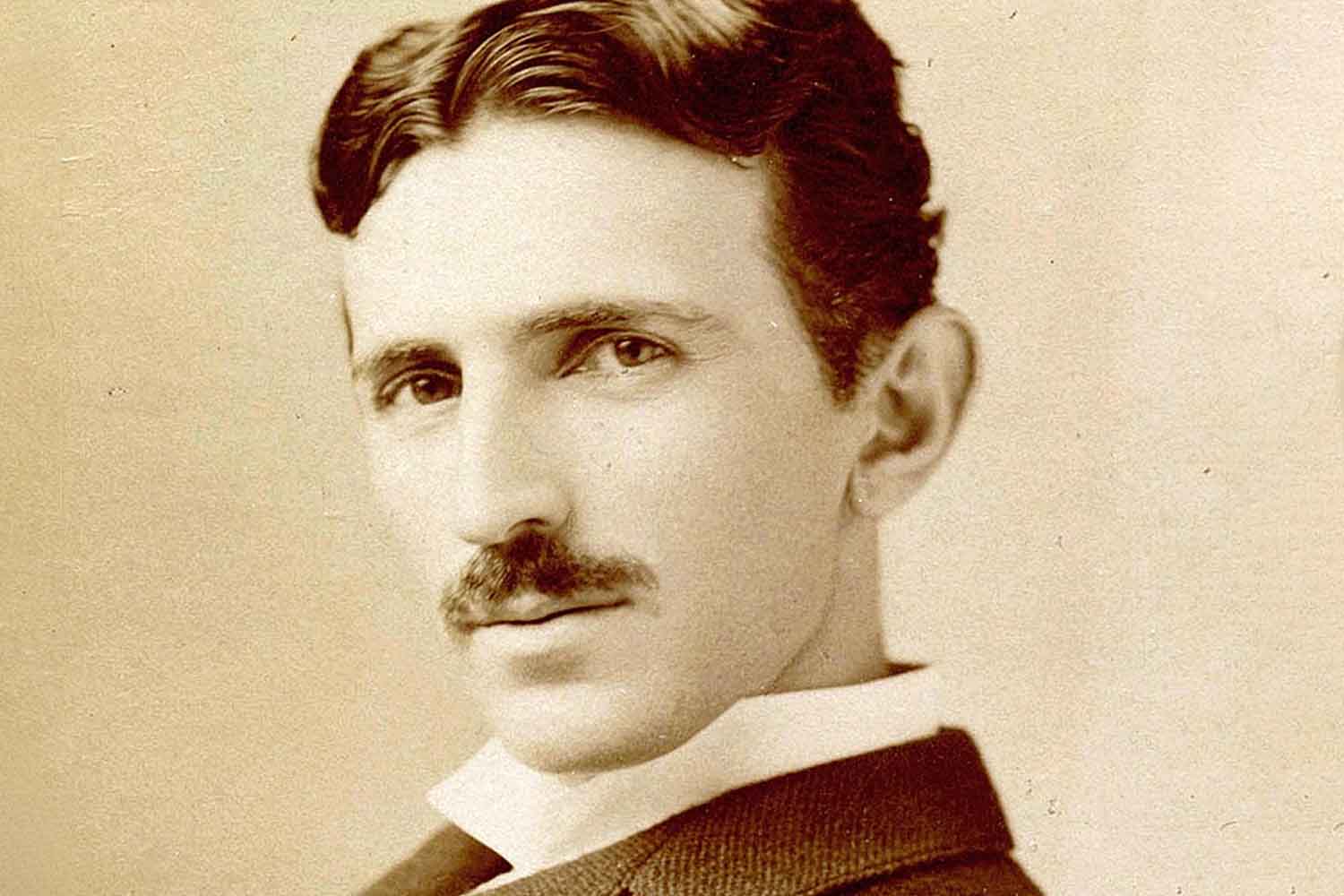
What if a huge part of the technologies that today we consider normal, almost banal, were born from the mind of a man who his time was not ready to listen to? It’s a question that, every time we talk about Nikola Teslareturns to knock with some insistence. Because Tesla is not just the man of lightning, reels and iconic photos staring into space. He was much more: a radical thinker, a tireless inventor, a visionary who imagined a more connected, more efficient and – ultimately – more sustainable world, when no one was really ready to understand it.
Born in 1856, Tesla spent his life working on electricity, waves, automation, energy transmission. He filed over 300 patentssome have become pillars of modernity, others have slipped to the margins of history, taken up by others or simply forgotten. Yet, stopping at his most famous inventions is an understatement. His brain knew no breaks, and many of his ideas still speak today, especially to those who try to imagine a less energy-intensive and more intelligent future.
The induction motor as the invisible heart of modern industry
In 1887 Tesla designed an engine which, at first glance, was nothing spectacular. It doesn’t make any noise, it doesn’t give off sparks, it doesn’t seem destined to amaze. And instead everything changes. The engines of the time were complex, delicate, subject to constant breakages. Tesla overturns the approach starting from a simple but very powerful idea: using the alternating current and a rotating magnetic field.
The result is a more reliable, longer-lasting engine with less friction and less waste. Some parts don’t even come into direct contact, reducing wear. The patent arrived in 1888. It’s not suitable for cars, it’s true: too big, too heavy. But it is perfect for factories and industrial plants. It is no coincidence that the engineers of Westinghouse Electric they immediately understand the potential. From then on, the induction motor spread everywhere, becoming one of the most used tools in modern industry. Even today it is everywhere, even if almost no one associates its name with Tesla.
When Tesla invented remote control
We are in 1898. At Madison Square Garden, Tesla presents a small boat floating in a tank. At first it seems like a demonstration like many others. Then something strange happens: the boat moves, turns, stops. Tesla doesn’t touch it. No wires. No leverage. The public remains banned.
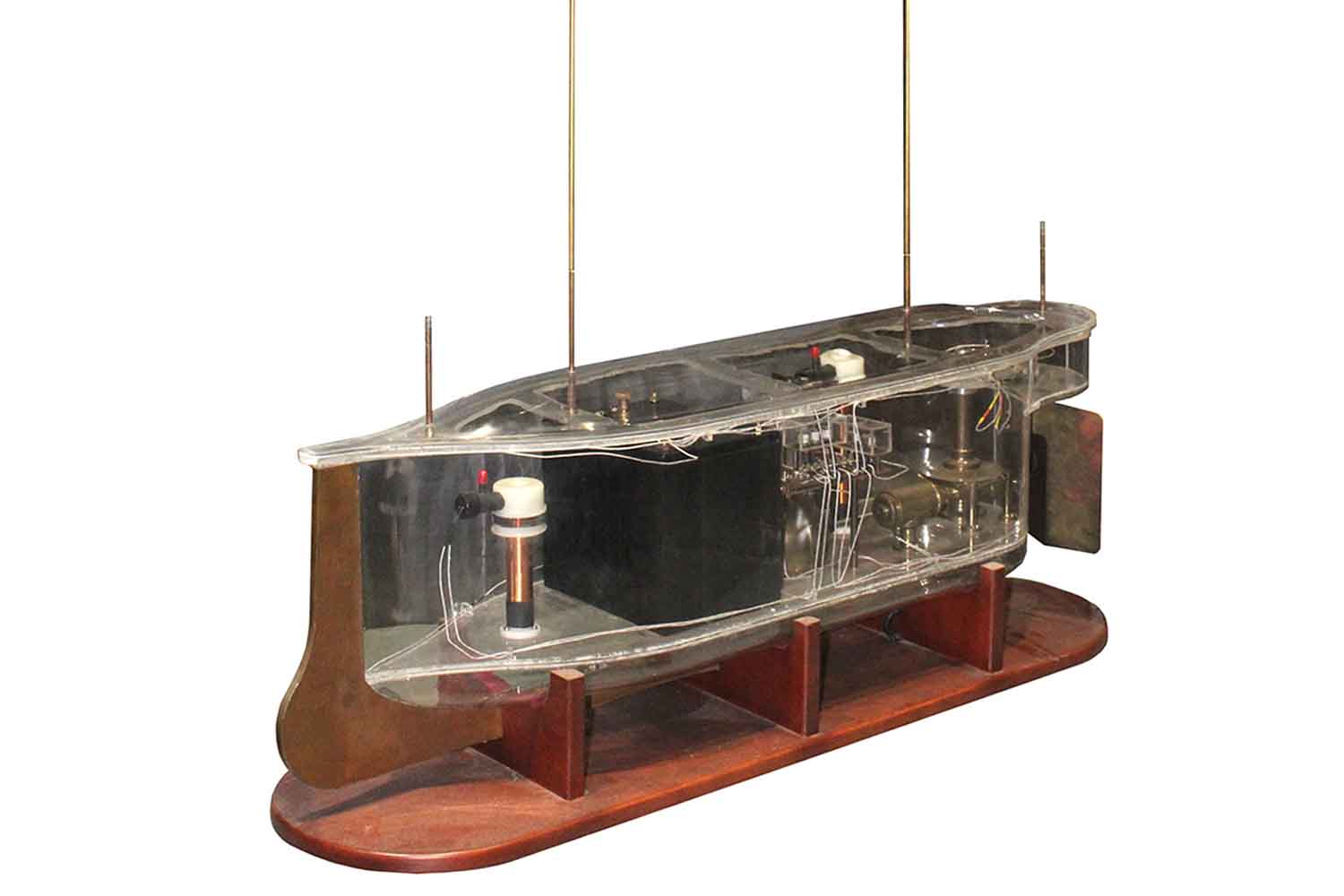
In an age where radio is in its infancy, the idea of control an object remotely it seems like magic. Someone talks about mental powers, someone else about tricks. In reality, Tesla has just patented a wireless control system based on radio waves. It’s not a show in itself: it’s proof that commands can travel in space. At that moment the foundations of the modern remote controlrobotics and, if we want to broaden our gaze, drones that today observe forests, monitor environmental disasters and help in scientific research.
Radio is a truth recognized too late
At school we were taught that the radio was invented by Guglielmo Marconi. The story, however, is a little more complicated. As early as 1897, Tesla had filed patents that clearly described wireless transmission, with tuned circuits for sending and receiving signals. Patents officially granted in 1900.
Marconi had more support, more funds, more visibility. In 1904 he obtained a patent which established him as the inventor of the radio. Tesla begins a long and exhausting legal battle, which will only end in 1943, five months after his death. The US Supreme Court will recognize that the key patents were Tesla’s. A posthumous victory, of course, but necessary to put the pieces back in place.
The “death ray” and the misunderstanding of a pacifist
In the 1930s Tesla talks about a project called Teleforce. The newspapers immediately renamed it the “death ray”, fueling fears and fantasies of a science fiction novel. In reality, Tesla didn’t feel like a weapons inventor at all. He was deeply pacifist and believed that technology capable of neutralizing an attack could serve as a deterrent, avoiding wars instead of fueling them.
The project will never go beyond theory: there is a lack of funds, political interest and concrete support. No prototype is built. Yet the idea will influence research on directed energy weapons and it will remain one of the most controversial – and misunderstood – pages of his legacy.
High voltage, Tesla coil and the dream of a world without cables
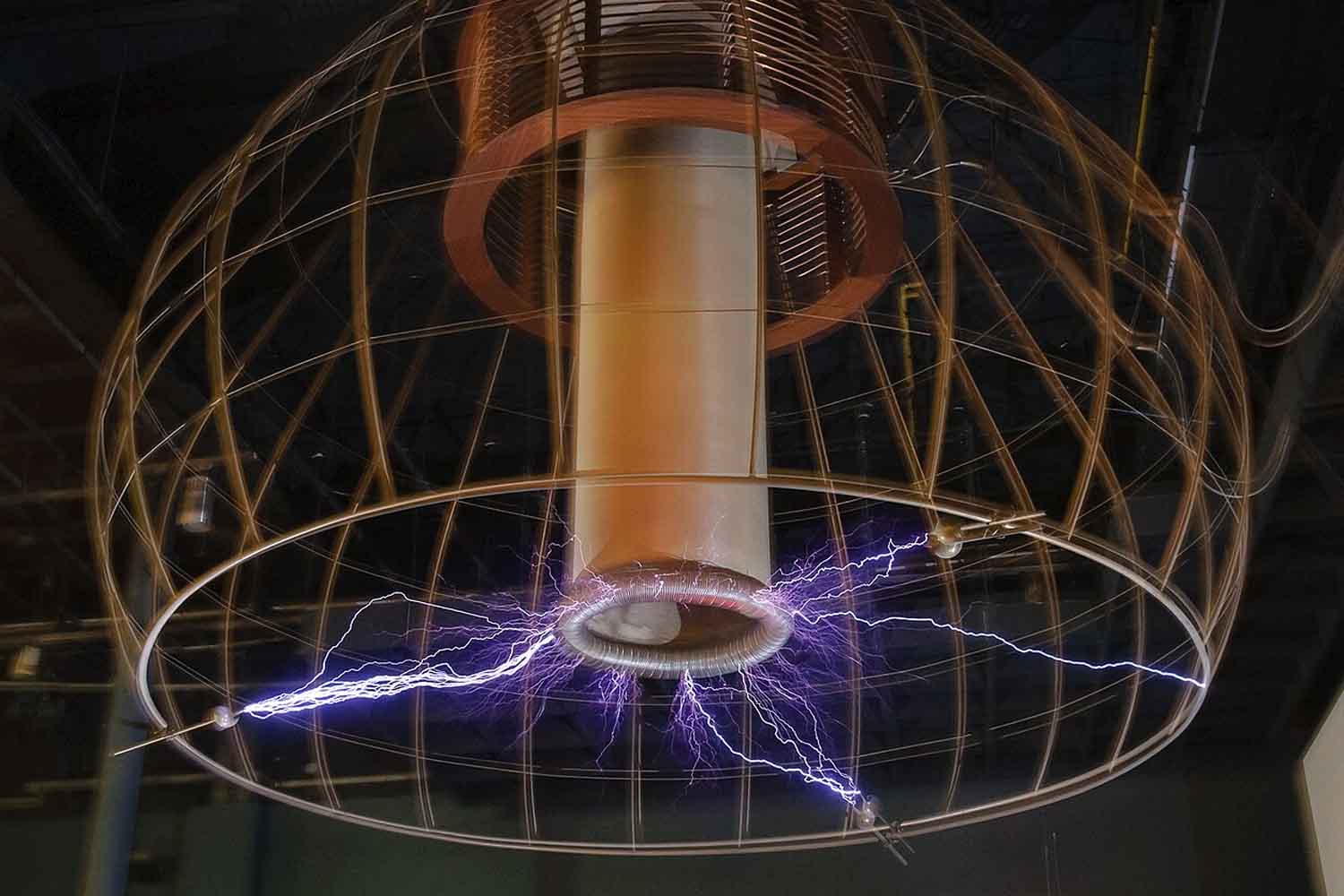
In the 1890s Tesla dedicated himself to the study of high voltages and created the famous Tesla coil. During public demonstrations, electricity seems alive: lamps that light up without wires, discharges that pass through the air. The public is fascinated, but for Tesla it’s not just show.
His goal is clear: to demonstrate that energy and information can be transmitted without cables. He holds conferences, develops ever more powerful transmitters and dreams of an interconnected world, in which energy can travel more freely and efficiently. Many projects will remain unfinished, but the ideas behind them are the basis of today’s wireless communications.
Radar imagined when it only seemed like science fiction
In 1917 Tesla published an article in which he described a system capable of identifying objects at a distance thanks to the reflection of waves. The principle is surprisingly simple: a wave sets off, hits an object and comes back. By analyzing the return signal, you can understand where the object is and whether it is moving. Tesla even talks about a fluorescent screen to display these signals.
At the time, no one took it seriously. Years later, in the military field, radar was born. Once again, Tesla was right, only too soon.
Robots and automation
With the concept of teleautomationTesla imagines machines capable of acting remotely, without humans on board. Some patents talk about ships being controlled via radio waves. Ideas that at the time seemed crazy, unrealizable. The authorities archive them as laboratory curiosities.
Yet those intuitions will influence twentieth-century robotics, information technology and automation. Many inventors will discover, only later, that Tesla had anticipated them by decades.
Nikola Tesla, a legacy that still speaks to our future
Nikola Tesla didn’t just build cars. He sowed ideas. He envisioned a global wireless communication network when the world was still full of cables. He thought of energy as something to be used better, not wasted. With over 300 patents, it has left a profound impact on our daily lives, even if we often don’t realize it.
Perhaps, the next time we turn on an appliance, use a wireless connection or talk about automation and a sustainable future, it is worth stopping for a moment and asking ourselves: how many of the technologies we use every day still owe something to his intuitions?
