
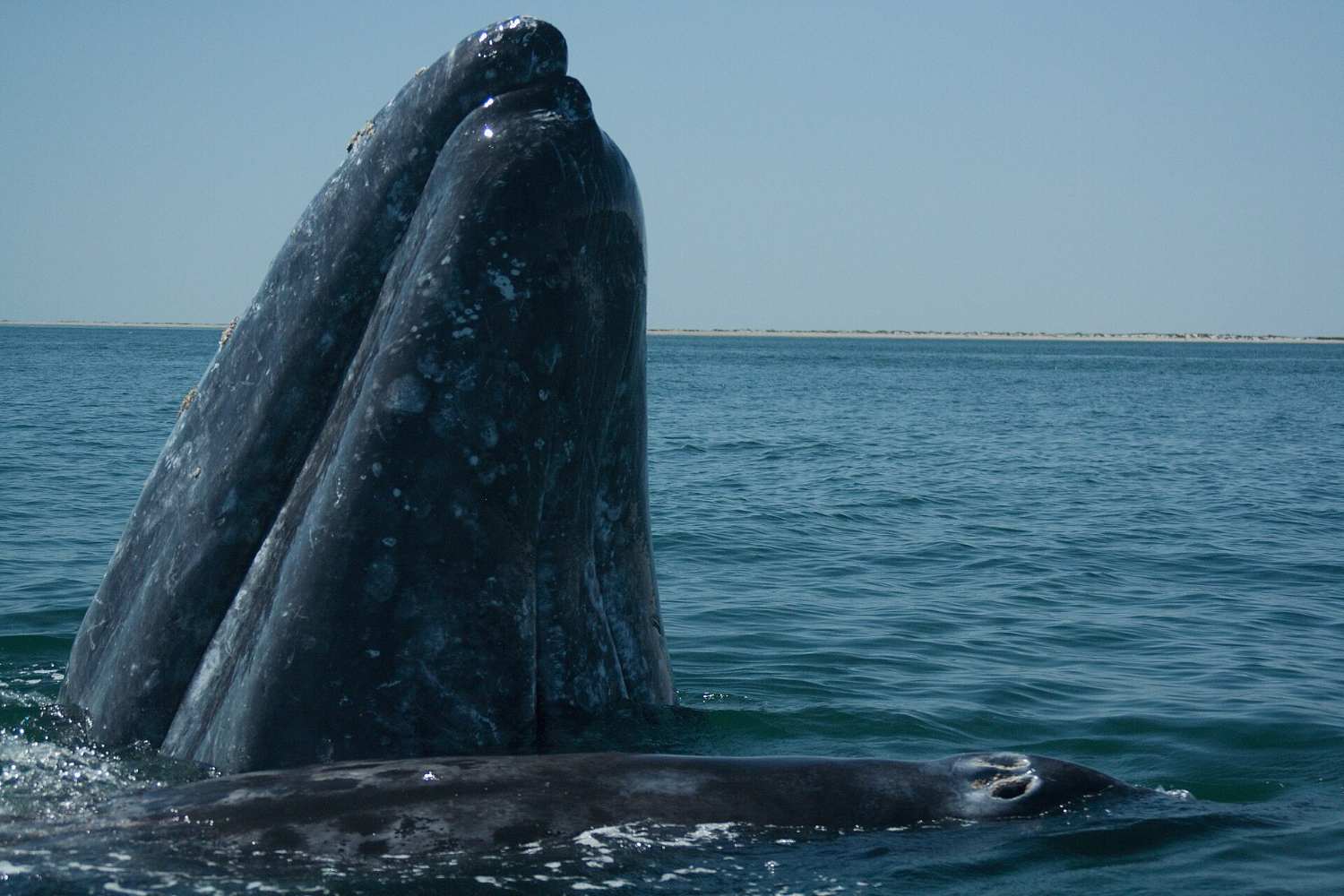
In 2025 there was a real and its own massacre between gray whales along the coasts of Pacific Mexican. With 91 Lifeless specimens By mid -May, the data exceeded the previous 2020 record (88 dead) and has turned on a new alarm among scientists. The phenomenon, already defined in 2019 as “unusual mortality event”, seems far from concluded.
The alarm is launched by Dr. Jorge Urban Ramírez, head of the first (research program on marine mammals) of the Autonomous University of Baja California Sur, which points the finger at one Food crisis linked to climate change. The whales, in fact, are literally dying of hunger.
The problem was born in the north, in the Arctic power areas, where global warming is dissolving the sea ice and interrupting a food chain Fragile but essential. Algae that grows under the ice feed the crustaceans and other organisms that the whales feed on. Without ice, no algae, no food. The result? More and more lean, weak and vulnerable cetaceans.
This debilitating condition makes the whales more exposed to diseasescollisions with boats and even the orche attacks. In parallel, the most rigid winter caused by the phenomenon of La Niña has stretched the migratory path, which can exceed 10,000 km, further increasing the energy expenditure.
The births are in free fall
The crisis does not stop at mortality: also The births are in free fall. In 2025 only 69 puppies were counted, the lowest number ever recorded. Females, now exhausted and malnutrite, often do not have strength to complete pregnancy.
Although they are not currently classified as endangered species, gray whales are undergoing one alarming reduction of the population. According to the first, from the over 24,000 specimens estimated in 2016, approximately 14,000 in 2022 went down: a 30% decrease in a few years.
The areas of finding the corpses report a change also in migratory paths. If in the past most of the beaches took place in the Ojo de Liebre Laguna, there are now cases also in the south, in locations such as Bahía Magdalena, San Felipe, Guaymas, Mazatlán, Loreto and La Paz. A sign that the whales are changing the desperate search for food.
Jorge Urban Ramírez proposes that the gray whale comes inserted in the “threatened” category of the Norma 059 of the traffic light (the Mexican equivalent of our Ministry of the Environment), thus increasing the level of protection.
This crisis is yet another concrete demonstration of the devastating impact of climate change on marine ecosystems. Without a reversal of course, such events may no longer be exceptions, but the new rule. And to pay the expenses, once again, it will be the species that cannot defend themselves.
