
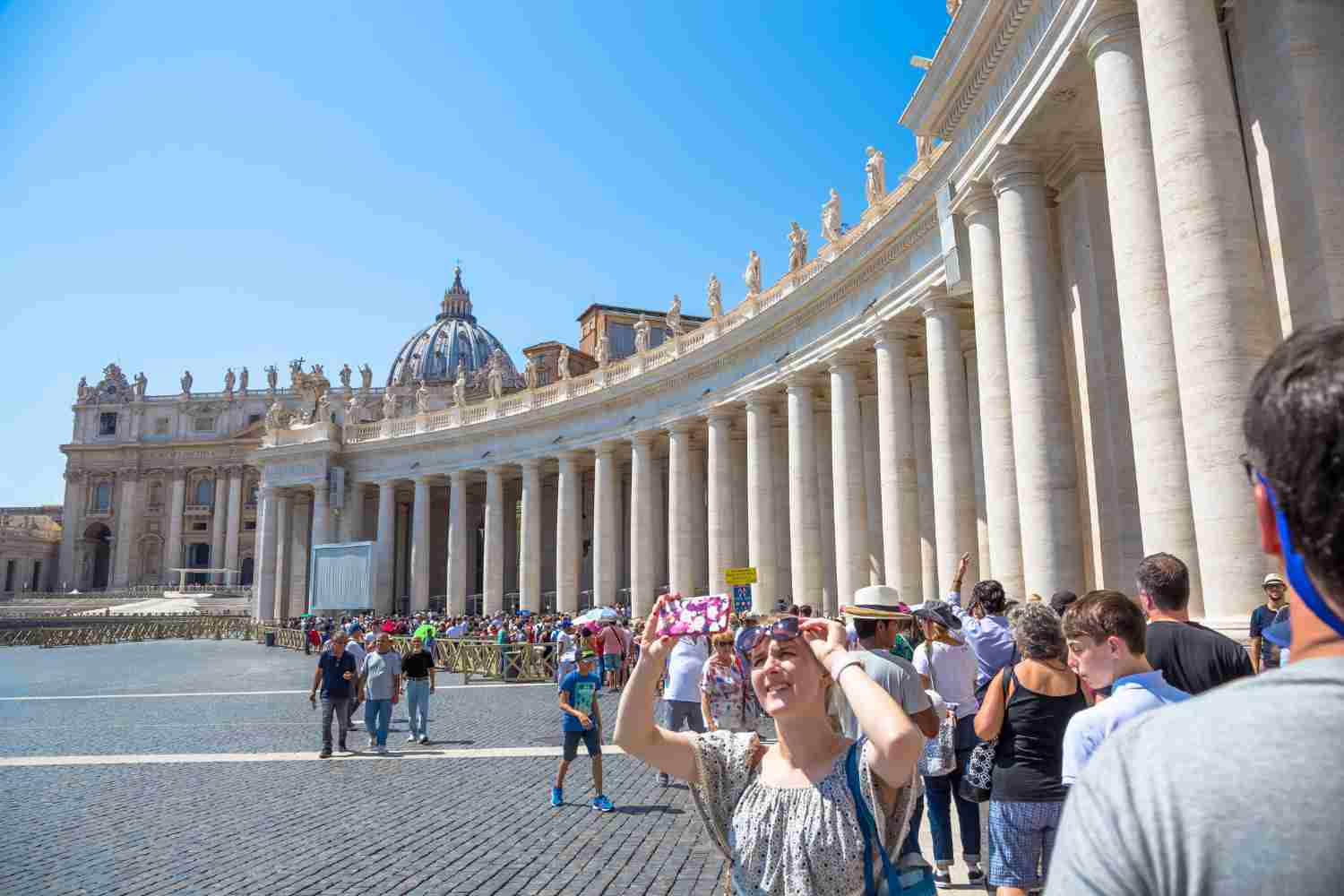
Florence, Rome, Venice, Cinque Terre and Naples. The same five cities that, every year, collect most of the 70 million tourists who visit Italy. According to theTourism Observatoryabout 70% of these travelers focus on just 1% of the national territory. A figure that clearly tells an increasingly evident phenomenon: Overurism, or mass tourism, which is compromising the identity of the places, the quality of life of the residents and the experience of the visitors themselves.
For this reason, the Visit Italy portal has launched a new awareness campaign entitled “99% of Italy”, a proposal to overturn the logic of “checklist tourism” and invite to discover hidden, authentic and sustainable Italy. This is not a new promotional slogan, but a visual, cultural and social appeal to change the way of traveling.
Beyond the checklist
“We are experiencing checklists in the era,” he explained Ruben SantopietroCEO of Visit Italy, in a recent Ted Talk dedicated to the future of tourism. It is the journey that becomes a performance, photography to share, running against time to “tick” famous destinations. But what really remains later? The risk is to reduce millennial city to selfies scenography, emptying them with meaning and deeply damaging their inhabitants.
“99% of Italy” aims to respond to this cultural crisis by promoting a different narrative of the Bel Paese. The campaign – officially launched on June 23 and visible until 1 July On social networks, Tiktok and Instagram – takes shape in the symbolic places of the lovestourism with silent but visually strong gestures: ordinary people who, in the heart of crowded cities, raise signs with simple but disarming messages.
View this post on Instagram
“This is not all of Italy. It is only the one ended on Instagram”, “Florence does not need other likes. It needs more love”, “Naples has excited you. Now let Southern Italy surprise you”. No narrative voice, no actor. Only the real presence of citizens and tourists who interrupt the distracted flow of images to attract attention to what remains invisible.
An Italy still to listen to
According to the study attached to the campaign, Overurism is not only a numerical question, but a problem of management, distribution and perception. Italian iconic destinations are becoming unlivable places for those who live them, while dozens of villages, rural areas and landscapes of extraordinary beauty remain on the margins of tourism.
Santopietro says it clearly: “The problem is not tourism, it is how we are managing it. With 99% of Italy we want to overturn this logic. It is not an invitation to see something new, but to see real Italy better”.
Therefore it is therefore not necessary to give up the Colosseum or al Rialto bridgebut start thinking about an Italy that does not end in those places. An Italy made of countries, squares, markets, oral stories, crafts and biodiversity that survive only if someone decides to stop to listen to them.
Decentralize to regenerate
The heart of the campaign is the attempt to decentralize tourist flows, lightening the most fragile destinations and restoring value to areas little considered but very rich from a cultural, landscape and human point of view. “99% of Italy” does not want to be an invitation to “discover the new” but to share the territory in a fair way, supporting local economies and promoting tourism respectful of the host communities.
A tourism that does not “consume” but regenerateswhich does not overload but integrate. Authentic experiences, far from the most beaten tourist routes, thus become growth opportunities for the territory: less queues and photos, more encounters and knowledge. Less environmental impact, more sense of belonging.
A message concerning everyone
The campaign aims to sensitize not only tourists, but also residents, institutions, sector operators and media. Mass tourism is not an inevitable fate: it is the result of choices, habits and policies that can be changed. As the information material spread by Visit Italy suggests, a collective consciousness is needed to face the problem and build a new tourist model.
Educating on travel, inform about alternatives, invest in training and communication. But also putting relationships at the center, not the numbers. A place visited without awareness becomes an image, not an experience. And an experience without depth leaves no trace – if not the ecological one.
A cultural challenge before it is cheap
The real success of the campaign will be measurable not only in clicks or shares, but in the ability to change the gaze of travelers. Because the future of Italian tourism also passes through those who, stopping to read a sign between the crowd, will decide that it is worth leaving the map to find Italy less beaten but equally authentic.
