
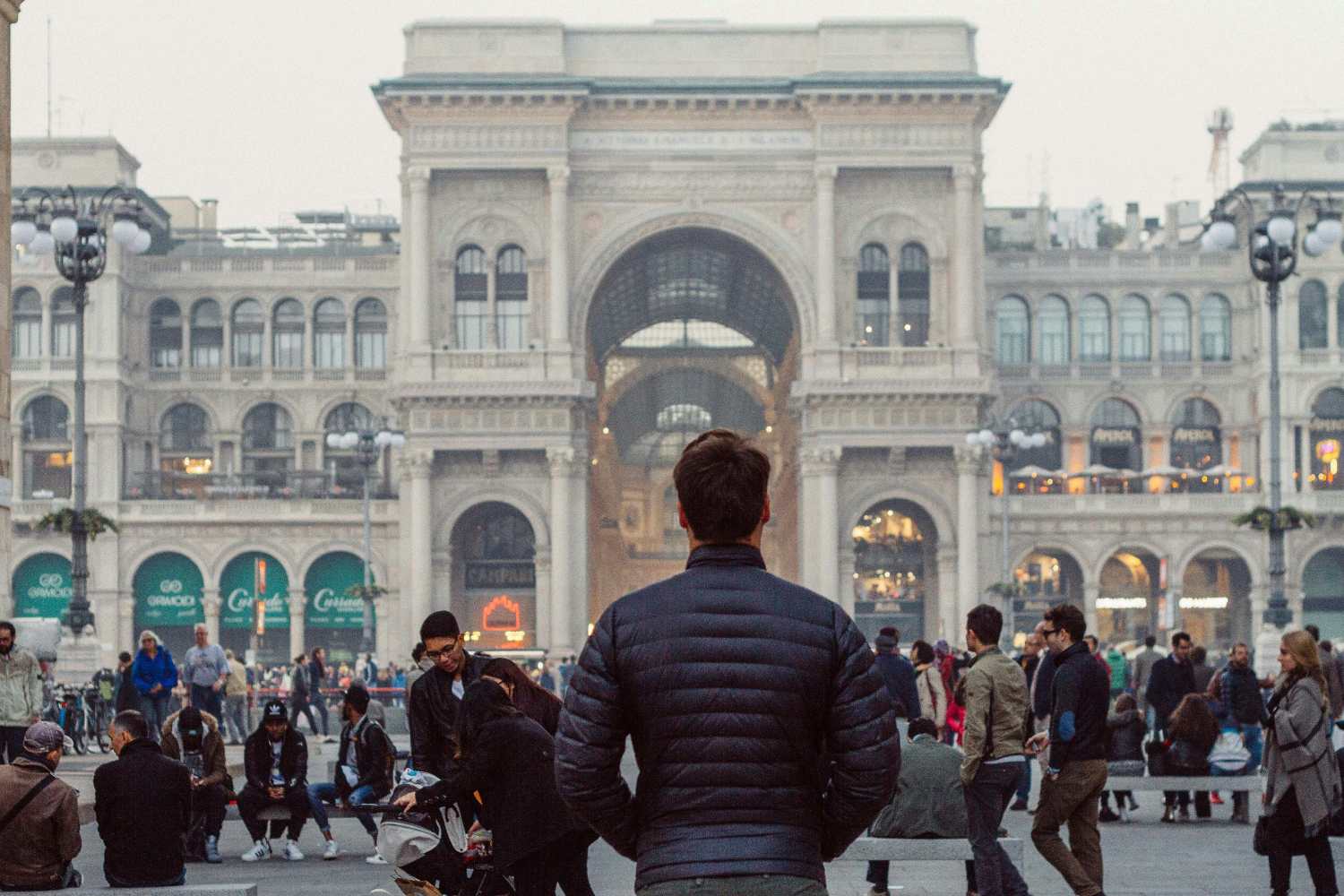
A study published on Nature he decreed Milan as the most walkable city in the world among the metropolises with over 500,000 inhabitants. According to the data collected, 97.5% of the residents of the Lombard capital can reach the main essential services on foot – such as schools, hospitals, supermarkets and public offices – in less than 6.5 minutes. A fact that even exceeds that of Copenhagensecond in the ranking, and which highlights the efficiency of the urban distribution of services.
What really does “walks” really mean?
The concept of “walkability” is not limited to the simple proximity to the services, but also concerns the quality of public spaces and the safety of pedestrian paths. It is a distinct notion from the idea of city at 15 minutespromoted by Urbanist Carlos Moreno, who focuses on the possibility of satisfying every daily need within a reduced temporal radius. Walks, on the other hand, considers factors such as accessibilitythe presence of Safe sidewalksthe absence of architectural barriers and protection from traffic and heat islands.
Be careful, however, that it is not all that glitters: if on the one hand Milan has a high concentration of services, on the other it is necessary work to improve the quality of urban spacesmaking them safer and more welcoming for pedestrians of all ages. This means investing in pedestrian infrastructures, improving road crossings and increasing green areas to make the move on foot more pleasant.
The Italian primacy and the international confrontation
In addition to Milan, also Turin and Genoa They stand out in the global ranking, placing themselves respectively in the third and ninth place. Turin offers an excellent balance between urban density and accessibility to services, while Genoa, with its complex morphology, demonstrates how an effective distribution of services can compensate for the challenges related to the geography of the territory.
European cities dominate the ranking of walkability: Copenhagen, Dublin, Lyon, Paris and Edinburg are all in the top ten. On the contrary, metropolises such as New York, Los Angeles or Sydney record much higher travel timesdue to a development model based on low housing density and dependence on the car.
The study has shown that a better distribution of services can significantly improve walks. For this reason, cities should adopt urban planning strategies aimed at reduce the need for long movements and encourage sustainable mobilitymaking the roads more liveable for everyone.
