
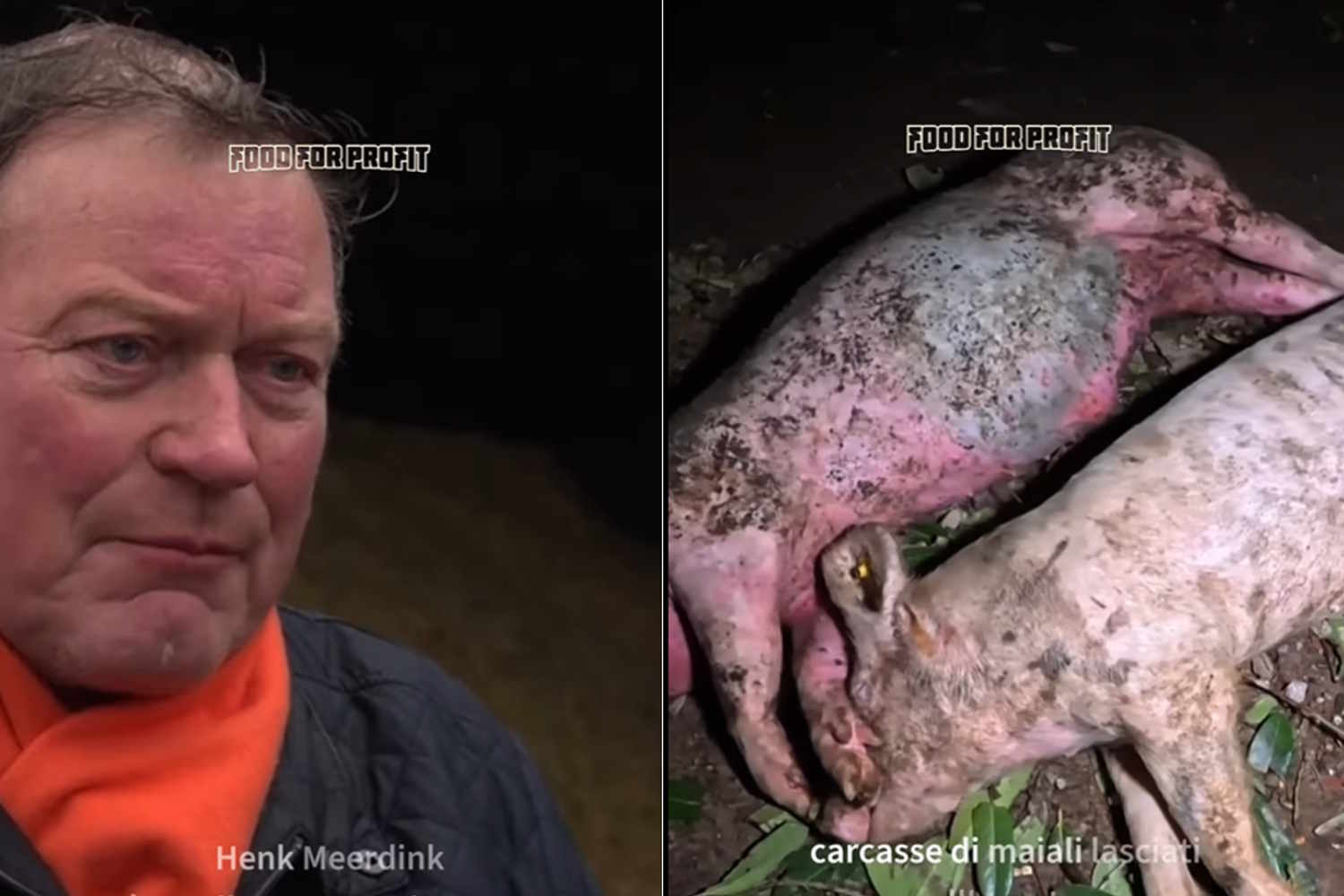
Bodies of pigs left to rot among the fences, animals that attack themselves for stress, rats and hygienic conditions to say the least disastrous. The images collected by Food for Profit together with Animal Rising NL do not come from any breeding, but from two structures managed by Henk Meerdinkentrepreneur of Dutch zootechny and politician, founder of the HMV party and BBB ally – the movement that officially represents the interests of the agribusiness lobby in Europe.
We are talking about a country that boasts of having rigid standards for animal welfare – underlines the journalist Giulia Innocenzi – but the images tell anything else.
In the videos spread from the investigation, you can see animals forced to live in dirty and overcrowded boxes, with visible signs of diseases and infections: hernias, swollen eyes, injuries. Some cannot even move and are struck with pungines electric. Others are dragged violently. Stress is such that often the pigs begin to teach each other, while the sick pigs remain in the same spaces with the healthy ones.
And that’s not all: the filming show abandoned carcasses outdoors or in the corridors, also accessible to other wild animals. In the middle of cobwebs and dead mice, a scenario is incompatible with any standards of animal welfare. Yet one of the two farms even brings the brand “Beter Leven“, A certification that should guarantee quality and respect for animals.
View this post on Instagram
The paradox is evident: certified structures that, in practice, show a bankruptcy model of production. But the question is not only ethics. Intensive farms in the Netherlands also represent one of the main sources of nitrogen pollution in Europe. The ammonia issued by the contamine air, water and soil dejections, putting biodiversity at risk.
Not surprisingly, a few days ago, a historical sentence gave reason to Greenpeace: the Dutch government will have to drastically reduce emissions and cut the number of animals raised by 2030 by a third. A decision that marks an important precedent, but which comes after years of silence and complicity between politics and lobby in the sector.
