
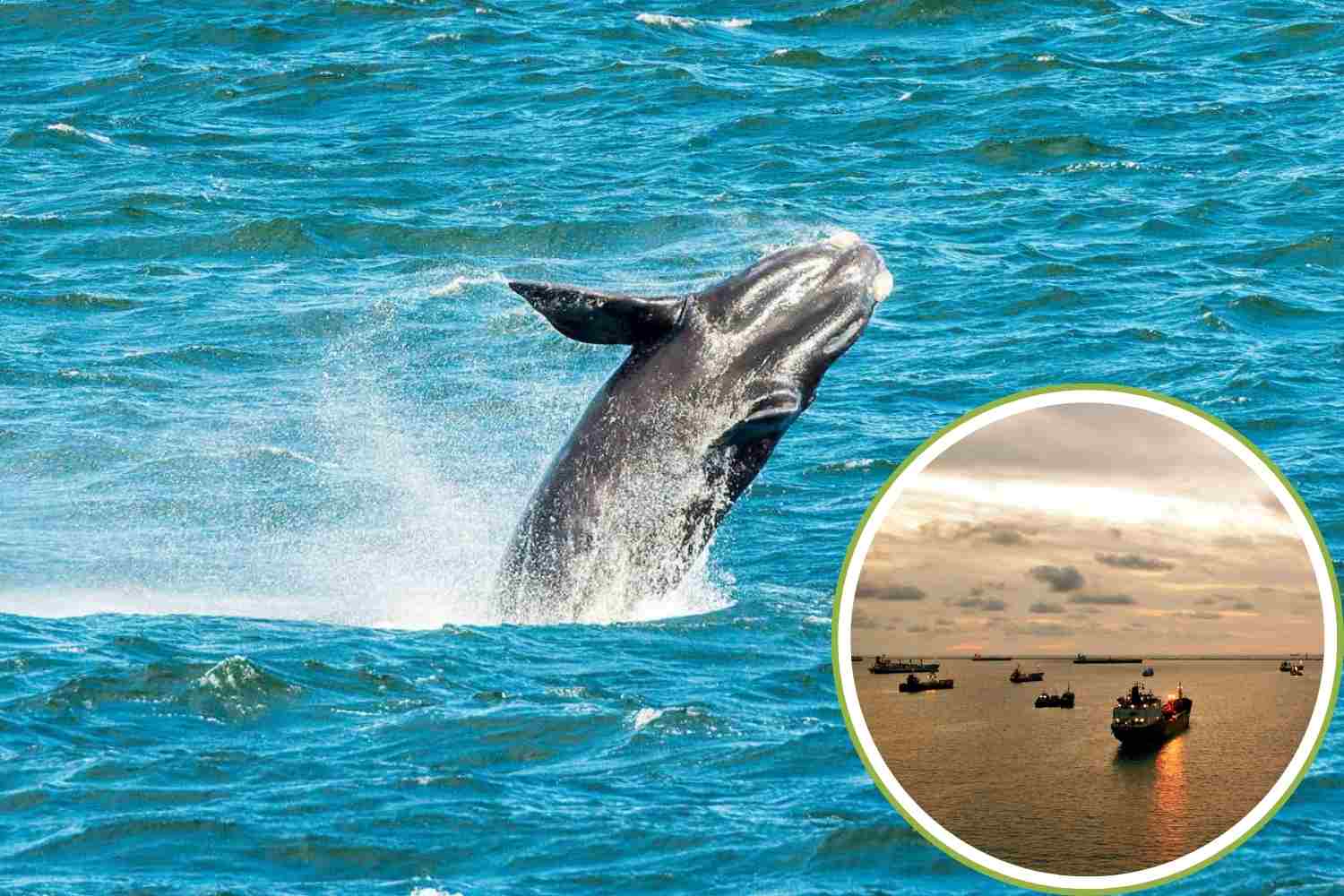
Navigate in the Atlantic Ocean avoiding the clashes with the giants in the process of extinction. It is not a utopia, but a concrete possibility thanks to Whalecast: a system that unites technology, data And artificial intelligence For Protect Balene Franche of the North Atlantic, one of the most threatened species in the world. The project was born from the intuition of Taylor Shropshireresponsible for the Marina resilience of Fathom sciencetechnological spin-off ofState University of North Carolinaand comes to life through a collaboration with SAS, a leading company in the data analysis.
A map to avoid collisions
Whalecast is one Interactive heat map which indicates the chances of sighting of the franche whales along the eastern coast of North America, in particular between Georgia and Maine. The map is the result of the integration of oceanographic data with historical sightings, and allows ships to change the route or slow down in real time for Avoid lethal collisions.
This system exceeds the limits of current “seasonal management areas”, areas imposed by governments where ships must reduce speed, but which often prove to be too generic. Whalecast, on the other hand, provides a dynamic forecast, comparable to a marine weather bulletindirectly on the touchscreen of the boats.
Artificial intelligence and synthetic data for more accurate forecasts
The validation of the predictive model was made possible thanks to the program Data for good of sas. Lincoln GrovesVolunteer Analyst of Sas, has developed and tested several Machine Learning models to increase the accuracy of the forecasts. Starting from about 40,000 databases provided by Fathom, Tolls generated a set of 500,000 synthetic data through Sas Data Makeruseful to train, validate and test algorithms.
The inclusion of new variables, such as the distance of the whales from the coast, has further improved the effectiveness of the models thanks to the platform Sas Viya Workbench. This flexibility has allowed quick and adaptable programming, essential to respond to environmental variability.
Who are the franche whales and because they are at risk
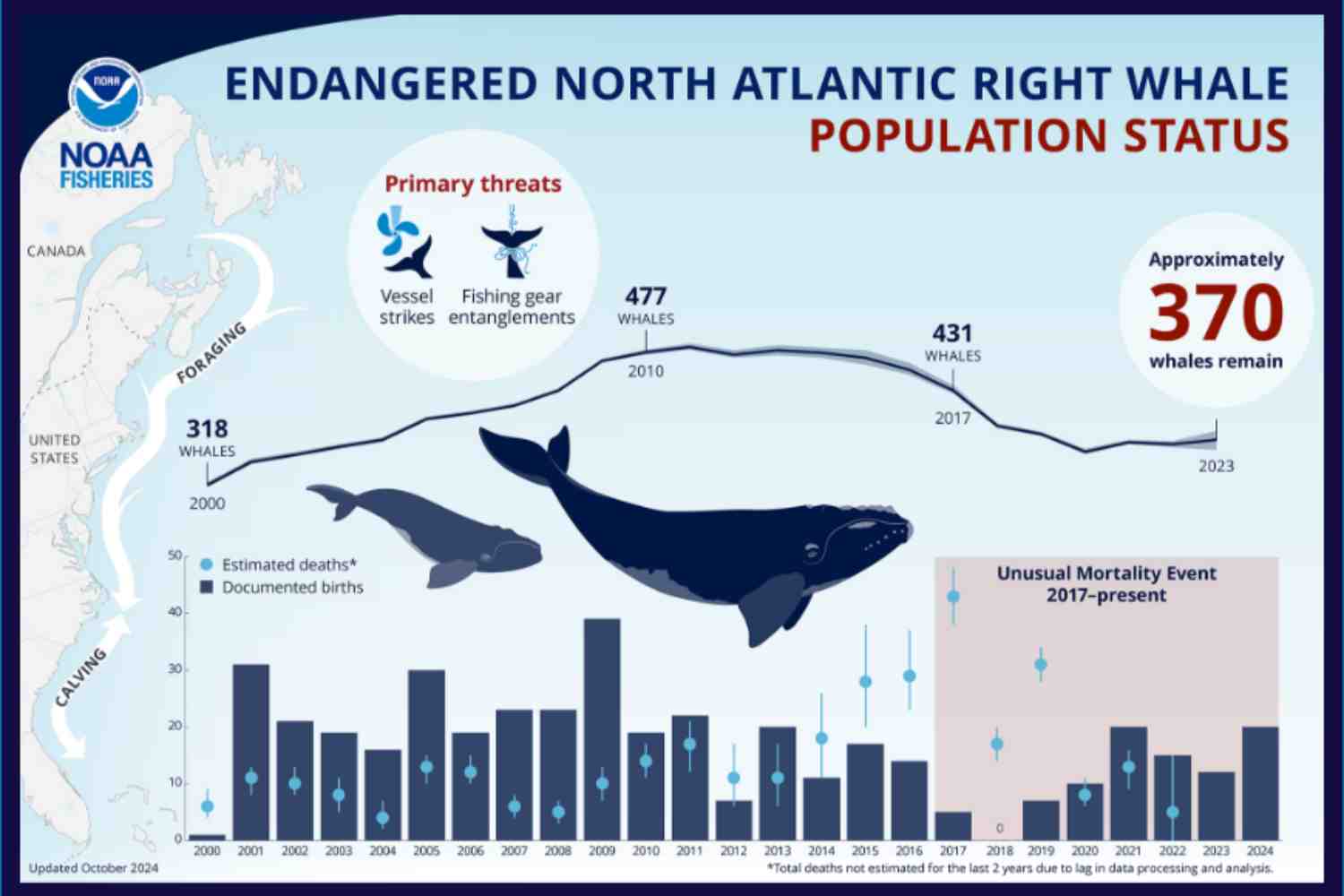
The franche whales of the North Atlantic (Eubalaena Glacialis) are slow, long-lived and poorly prolific cetaceans: a female can only give birth every 3-4 years. In the past, they were the “perfect prey” for the whales because they floated after death and offered a large amount of oil. Today, Human activities are mainly threatening them: collisions with ships, noise pollution And fishing equipment. According to the estimates of the Noaa Fisheries Updated in October 2024, only 370 specimens survive.
Technology at the service of conservation
Whalecast represents an answer to this emergency. In addition to its effectiveness, it has the advantage of being easily integrated with the technologies already present on board the ships, without requiring onerous investments like those necessary for the installation of thermal sensors or marine radar.
The project also has an important social implication. “Many maritime felt limited by rules imposed from above,” explained Shropshire. “By providing them with information tools, we can increase their decision -making autonomy and actively involve them in conservation”.
An exportable model
The hope of Fathom Science and Sas is that Whalecast’s success can be replicated elsewhere, to protect other marine species at risk. The creation of Digital Twin of the Oceans, once the prerogative of Smart City and Industry, is proving to be a key resource also for biodiversity.
The future of marine conservation could therefore go from the dialogue between data science and marine biology. A dialogue that, thanks to projects like this, becomes increasingly fruitful and concrete. Because today, thanks to the AI, we can finally “see” where the whales are. And act to save them.
