
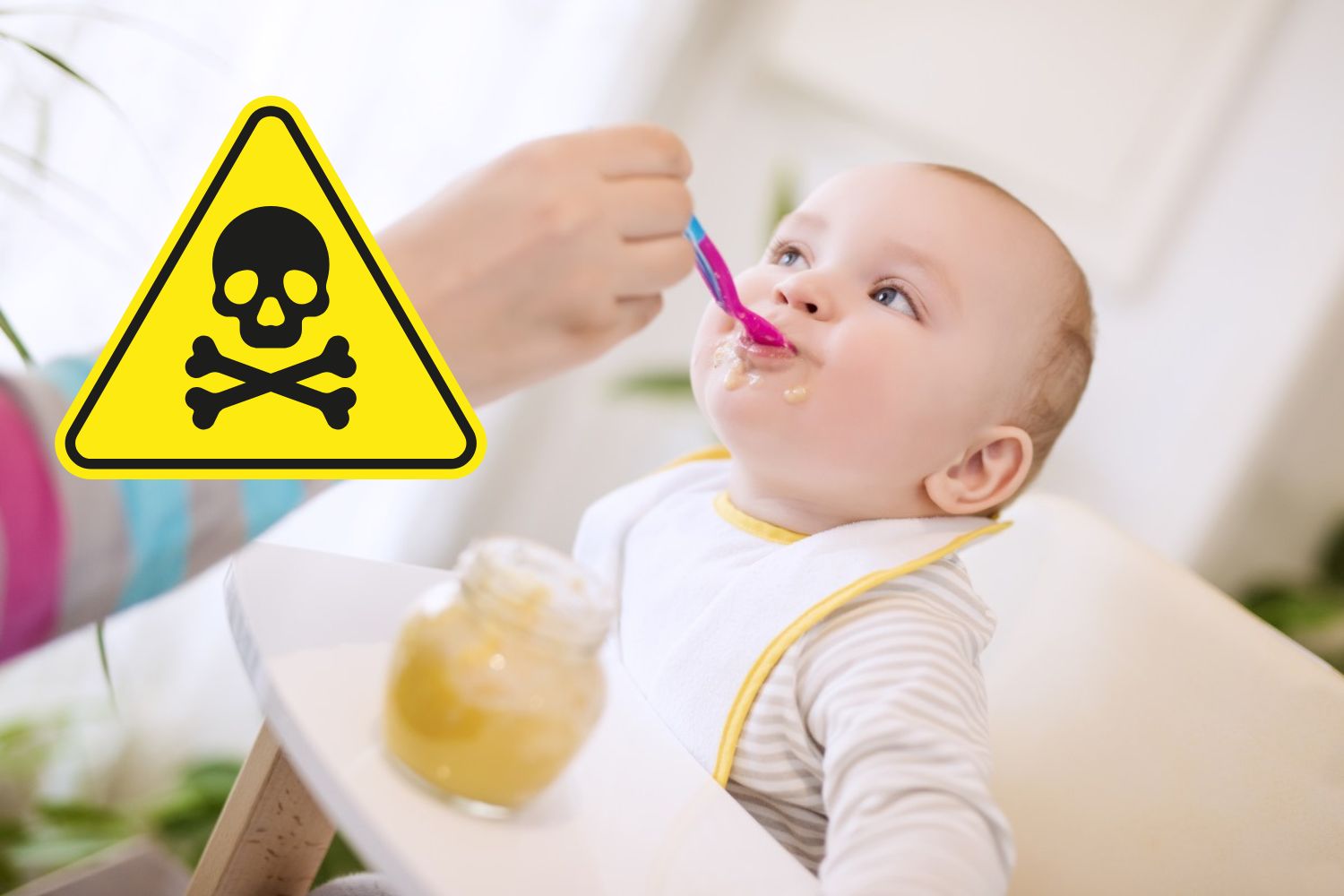
You are among the Main children’s food manufacturers in the United States have marketed products with higher lead levels At the limit imposed by Californian legislation, the most stringent in the country. This was revealed by an analysis conducted by Reuters on over 1,700 tests published since January, when a new law in California has entered into force.
This has imposed on all companies that produce or sell foods for childhood in the state, to test their products to identify any heavy metals, including lead, and to publish the results.
The Reuters investigation then rekindles the spotlight on a crucial question: How sure is the food intended for babies and children? If on the one hand the lead is a contaminant difficult to eliminate completely, on the other hand it is clear that it is possible – and necessary – to do more to minimize the exposure of the smallest to toxic substances. And if companies do not spontaneously make it, read like the Californian one could be the decisive lever.
But returning to the results, what discovered the investigation by analyzing the data? 102 Test passed the legal limit of 0.5 micrograms of lead per day per product. The companies involved include known names such as Plum Organics, Beech-Nut, Nestlé (Gerber), Square Baby, Pumpkin Tree and Happy Baby (owned by Danone).
The offending foods include consumer products such as the organic sweet potatoes of Beech-Nut, the plum prunes of Plum Organics and the 2nd food carrots of Gerber.
Although none of the samples analyzed exceeds the federal limits established by the Food and Drug Administration (FDA), these are not aligned with the Californian ones, more rigorous and oriented towards the protection of vulnerable subjects, such as babies and children are precisely.
“These exhibitions add up. They create health risks in childhood and for life. Every time a child consumes a lead meal, it is a problem – said Jane Houlihan, director of the research of the organization Healthy Babies Bright Futures, underlining the cumulative risks of exposure to heavy metal, already related to harmful effects on neurological development.
The point on the law and reactions of companies
The Californian legislation, which entered into force on January 1, 2025, imposes on all companies that produce or sell baby food in the state to test their products for the presence of heavy metals and publish their results. In response, companies have adopted defensive strategies to try to return within the limits, such as the calculation of the average between different lots or the reasoning on the average consumption over time, arguments not explicitly envisaged by the legislation.
“The law does not prohibit the calculation of the average, but does not authorize it either “explained the lawyer Lauren Handel, underlining how this ambiguity has allowed producers to get around the expected thresholds.
The implications for health and current legal actions
Lead, like other heavy metals, can enter food in various ways: through contaminated soil, air, fertilizers, pipes, but also during industrial processing. Some ingredients, such as spinach and carrots, are known to absorb greater quantities.
The presence of lead in children’s food is considered a potential risk factor for the development of disorders such as ADHD and Autism, and a national legal cause against different producers, including Gerber, Plum Organics and Beech-Nut, has recently obtained the green light from an American judge.
However, demonstrating the causal link in court will be complex, since children can also be exposed to lead from environmental sources or other foods. Despite this, the cause represents an important first step for parents who ask for greater transparency and safety.
California is not alone. Maryland also approved a similar law, while Illinois is evaluating a similar measure. The pressure on manufacturers and health authorities is therefore growing to align with more precautionary standards and to adopt safer agricultural and industrial practices.
Some companies, such as Cerebelly and Square Baby, have started to act: by changing suppliers, reviewing the recipes, avoiding high -risk ingredients and improving the cleaning processes of raw materials.
