
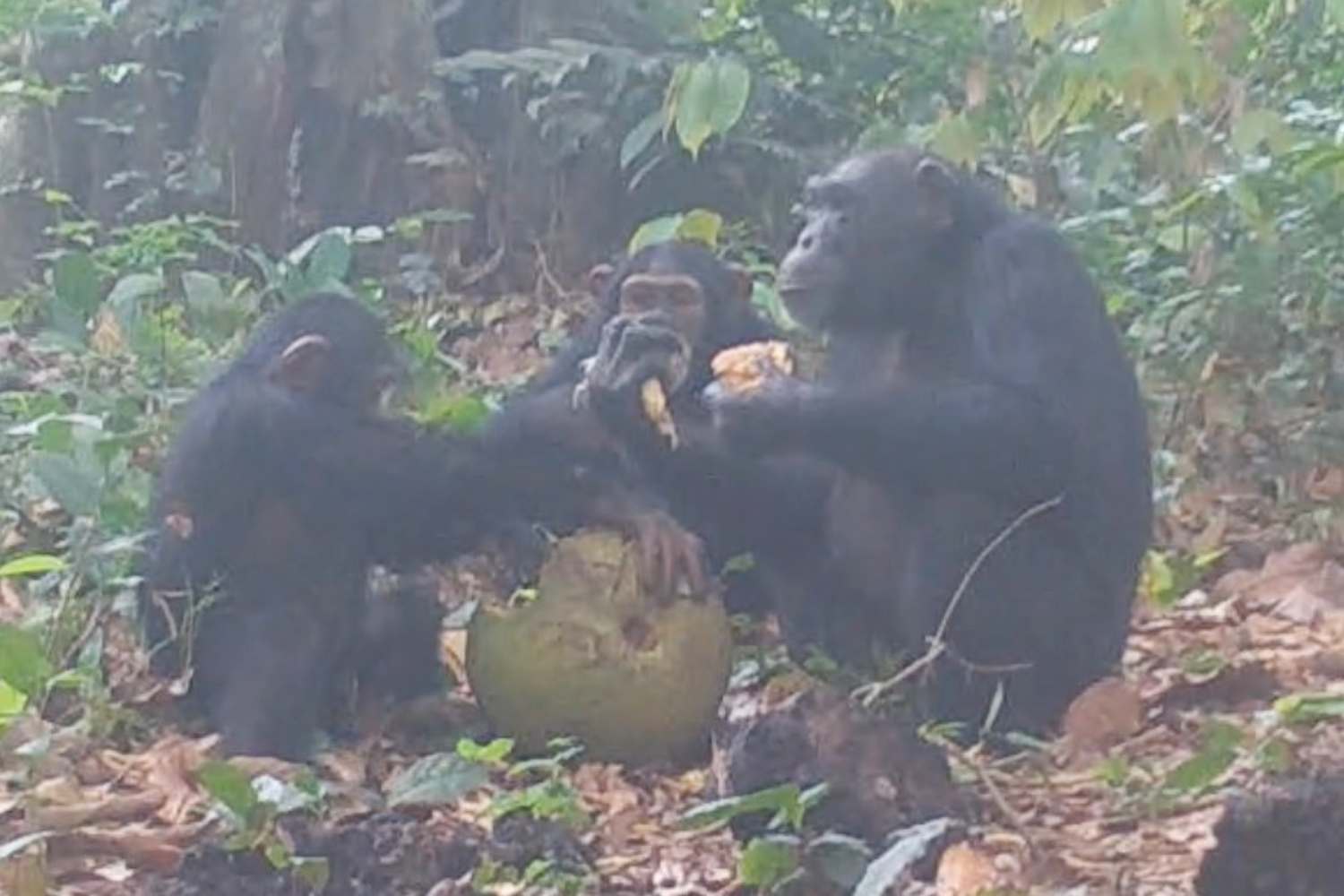
In the green heart of Guinea-Bissau, a group of wild chimpanzees He was taken up in surprising, but decidedly familiar, behavior for us humans: share fermented fruits rich in alcohol. In practice, a full -blown aperitif.
The images, captured by cameras hidden in the Cantanhez National Parkshow the primates who pass together pieces of fermented breadfruita scene that recalls more a happy hour between friends than a simple search for food.
The novelty is not only in the fact that the chimpanzees consume fruit containing ethanol – which already observed in the past – but in the gesture of the sharingvery rare among these animals. The level of alcohol identified in the fruits reaches it 0.61% of alcoholic gradationsufficient to cause a slight relaxing effect, but not from “wild slap”.
Drunken Monkey Hypothesis
According to researchers of theExeter Universitythis habit could represent one of the first forms of social ritual linked to alcohol. If so, the origins of the human Happy Hour traced back to long before the sea view bars. The monkeys, in fact, not only eat the fermented fruit together, but seem to do it consciouslyalmost ceremonial.
To support this theory is the Drunken Monkey Hypothesisaccording to which our ancestors developed the ability to metabolize their own alcohol thanks to the regular consumption of ripe and fermented fruits. The ethanol, in addition to being present in nature, could therefore have played a key role in thesocial evolution of primates.
And as mentioned, it is not the first time that the monkeys surprise us with their tastes as connoisseurs: in a Guinea village, other chimpanzees have been seen drinking lymph fermented by Palme di rafiausing rudimentary tools to collect the liquid. In short, if you thought that the aperitif was our invention, you may have to review the history of Prosecco.
Do these behaviors raise fascinating questions: do chimpanzees actively look for fermented food? Do they do it for the taste, for the effect, or to strengthen social ties? Even if the answers are still in the study phase, one thing is certain: there line between man and monkey it is much more subtle (and alcoholic) than we imagine.
