
Forty -one years ago, the earth was invested by an unprecedented cosmic phenomenon: theLascampps eventa sudden reversal of the magnetic poles, has almost collapsed the Earth’s magnetic field, reducing it to 10% of its intensity. Without this protective “bubble”, our planet was exposed to levels very dangerous of ultraviolet radiationwith potentially catastrophic consequences for every form of life on the surface. But while many species fought for survival, Homo Sapiens has shown an extraordinary adaptation capacity.
The ocher as a natural solar filter and underground refuges
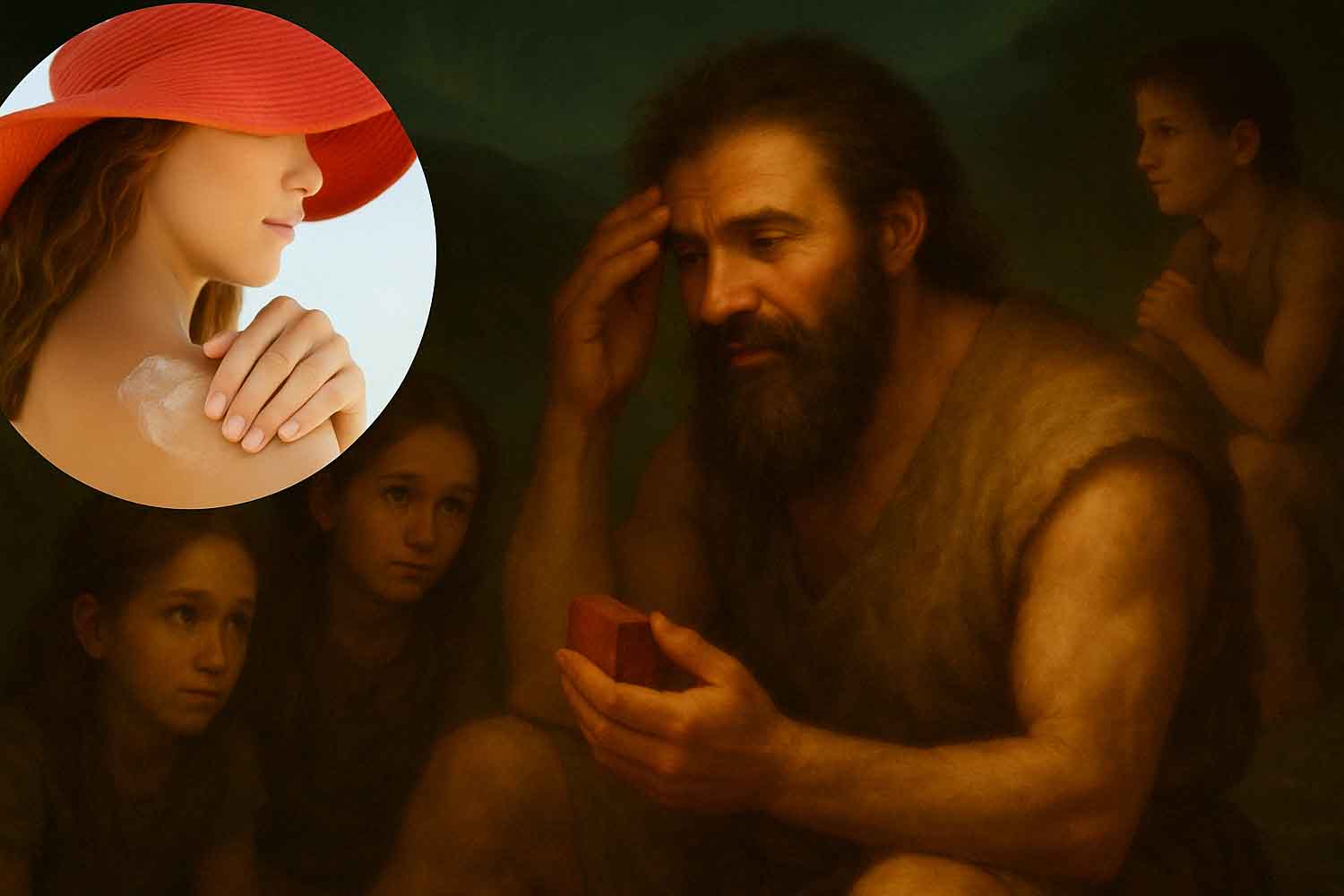
To deal with radiation, our ancestors have started to exploit theochera natural pigment rich in iron oxide, using it Not only for ritual or decorative purposes, but as a real sun protection. Recent studies show that, applied on the skin, the ocher manages to effectively shield from UV rays. But this was not the only strategy adopted. Homo Sapiens also began to pack protective clothingusing needles and bone tools to create clothes that offered complete coverage, and found refuge in caves and caveswhere solar radiation could not reach them.
These ingenious choices made the difference, marking an evolutionary turning point that would have changed the fate of humanity.
Neanderthal most vulnerable
The Neanderthals, tight cousins of modern man, they do not seem to have adopted the same protective solutions. Archaeological evidence show a scarcity of ocher in their settlements and no evident sign of the use of structured clothing. This has probably made them much more vulnerable to the increase in solar radiation. Unlike Homo Sapiens, they did not know how to adapt quickly to the environmental changes imposed by the collapse of the magnetic field.
This difference in approach may have been one of the decisive factors that led toExtinction of Neanderthalswhich took place about 40,000 years ago, while Homo Sapiens continued to thrive and spread in new territories.
