
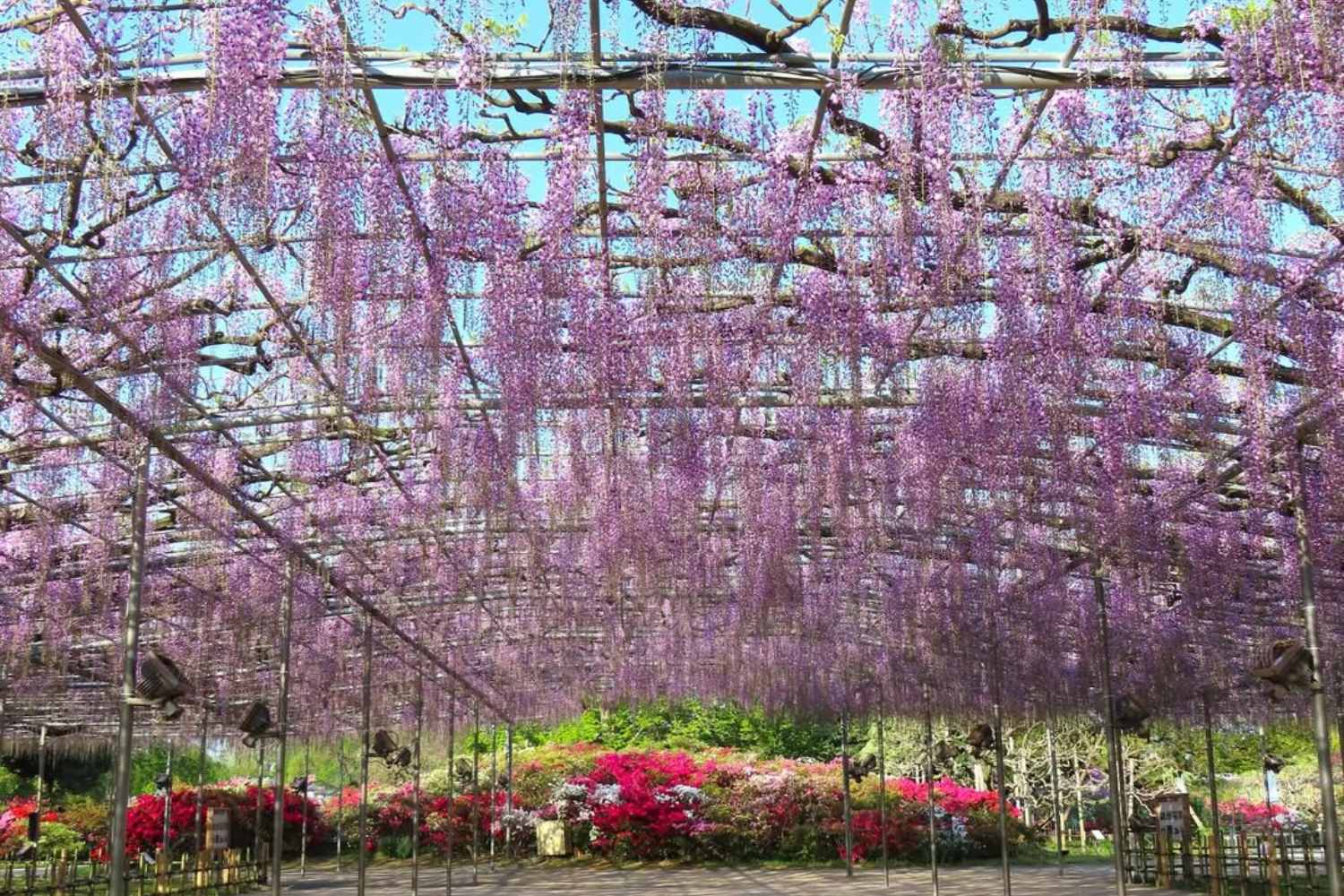
While the cherries in flower capture world attention during the Japanese spring, there is a second, equally suggestive flowering that enchants visitors with its ethereal elegance: that of the wisteria. In Japanese called “Fuji” (藤), these magnificent climbing transform parks and gardens into fairytale landscapes when they bloom between late April and early May, just when cherry petals begin to fade.
Colored waterfalls
The charm of the wisteria lies in their long floral bunches that gently hang from twisted branches, creating real color waterfalls. From intense purple to delicate lilac, from pure white to soft pink, these flowers develop in racemes that can also reach the meter in length. Their flowering, accompanied by a delicate perfume, transforms entire spaces into natural cathedrals where light filters through the petals creating games of colored shadows.
View this post on Instagram
What makes Japanese glycini even more extraordinary is their longevity. Many famous specimens have several tens, if not hundreds of years. Over time, their lignified trunks take on twisted and sculptural forms, testifying to decades of patient growth. Japanese gardeners, masters in the art of cultivation, have developed sophisticated support structures for these vegetable giants, modeling pergolas, tunnels and canopies that enhance the natural tendency of glycini to create floral times.
Ashikaga Flower Park
View this post on Instagram
The Ashikaga Flower Park, in the Prefecture of Tochigi, probably hosts the most famous glycine in Japan. This monumental specimen, with over 150 years of history, extends over an area of about 1,000 square meters thanks to an elaborate support system. During flowering, thousands of lilac bunches hang simultaneously, creating the illusion of colored clouds suspended in mid -air. The park also hosts a rare ultra -hundred and ninety white flower glyks and suggestive tunnels of wisteria who invite visitors to walk under times of petals.
The enchanted tunnels of Kawachi
View this post on Instagram
In southern Japan, in Kitakyushu in the prefecture of Fukuoka, the Kawachi Fuji gardens offer a show that takes your breath away. Two twins tunnels of wisteria, about 100 meters long, create a dreamlike corridor where the visitor literally walks immersed in the flowers. The combination of different varieties of wisteria creates fascinating shades that vary from deep purple to light pink. This private garden, open to the public only during flowering, has become a symbol of Japanese spring beauty.
A deep cultural tradition
Glytins is not only an aesthetic pleasure for the Japanese, but brings deep cultural connections with it. Appreciated since ancient times, it appears frequently in art and classical literature. Its name is associated with important noble families, such as the Fujiwara clan, which dominated Japanese politics for centuries. In traditional symbolism, glycine represents longevity and resistance because it can live for generations, but also sweetness and poetry for the delicacy of its flowers.
The Fuji-Mi ritual
As with cherries, the contemplation of glycini in bloom has also developed its own social ritual, the “Fuji-Mi” (literally “vision of glycini”). During the short season of flowering, families and friends gather under these flowery trees for picnics and moments of sharing. Unlike the festive and sometimes rowdy atmosphere of Hanami (the vision of cherries), Fuji-me tends to have a more contemplative, almost meditative character, in tune with the serene majesty of these cascid flowers.
Like many natural beauties celebrated by Japanese sensitivity, the flowering of the wisteria is particularly appreciated precisely because of its transitory nature. The maximum splendor period lasts just two weeksafter which the petals begin to fall, creating colored rugs on the paths of the gardens. This transience reflects the concept of “mono no aware”, the sweet melancholy deriving from the awareness of the ephemeral nature of beauty, a fundamental aesthetic principle in Japanese culture.
Where to see the flowering of the glycini
Although Ashikaga and Kawachi parks are the most celebrated destinations, Japan offers numerous other places to admire magnificent glycini. The Kameido Tenjin sanctuary in Tokyo He is famous for his glycini who are reflected in ornamental ponds, while The byodain temple in the prefecture of Kyoto It combines its iconic architecture with spectacular specimens of wisteria. Even lesser known places, such as small rural temples or city parks, can reserve enchanting surprises for the visitor attentive during the flowering season.
For those who want to discover Japan beyond the most beaten itineraries, the flowering of the wisteria represents an unmissable opportunity. Less crowded than the celebration of cherries but equally spectacular, it offers an immersion in an aspect of Japanese culture where tradition, nature and aesthetic research merge into an unforgettable experience.
