
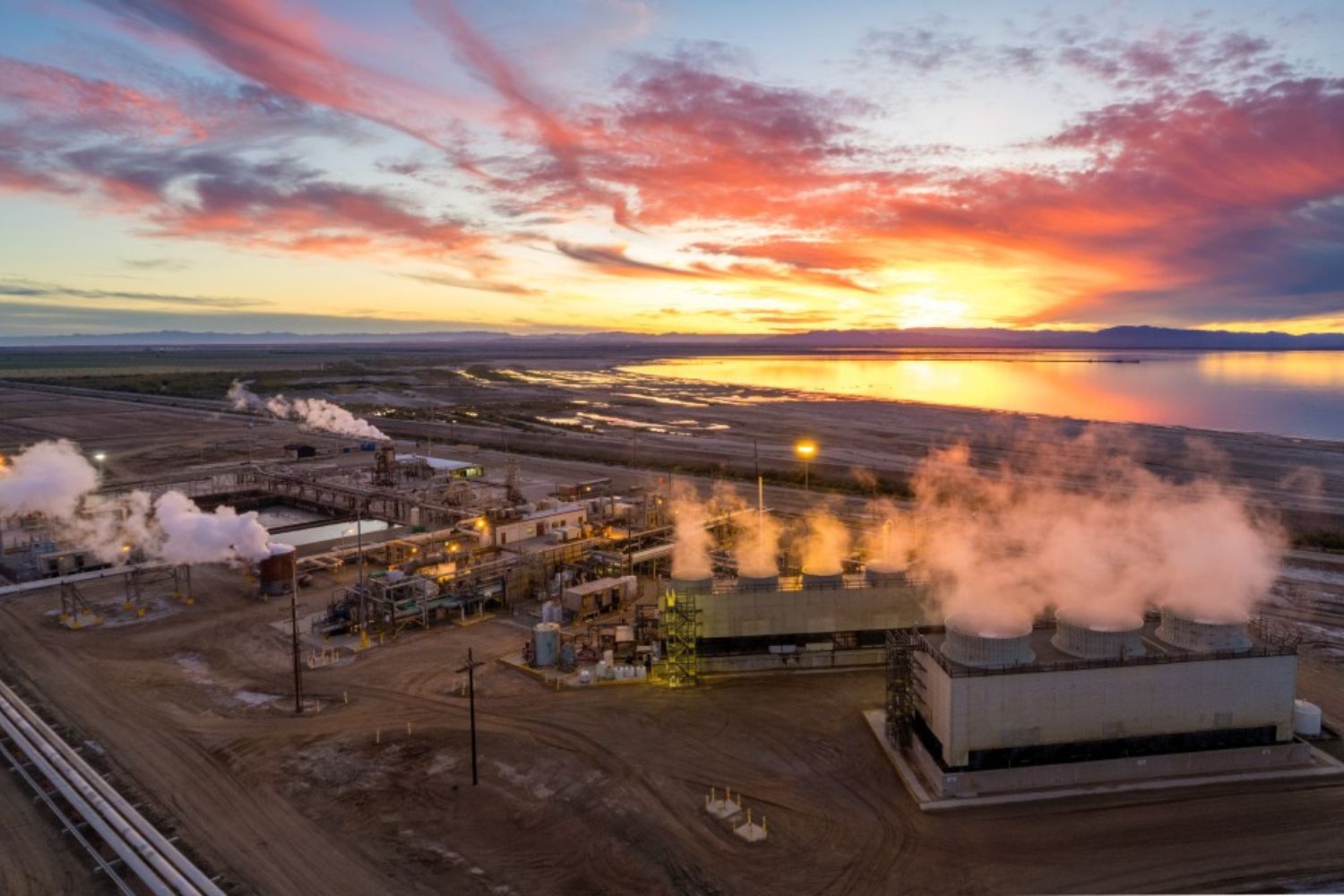
Here are the “super hot rocks” that could solve many energy problems, revolutionizing the geothermal sector.
THE’geothermal energy It could represent an abundant source of renewable energy at competitive costs with those of fossil fuels, and targeted investments could significantly accelerate their development. This is what emerges from a new Report of Researchers from Cornell University and the No-Profit Clean Air Task Force (Catf) organization.
The series of reports entitled “Gaps, Challnges, and Pathways Forward for Superhot Rocke Energy”, published by a research group of Cornell University and the non-profit organization Clean Air Task Force (Catf), deepens the existing and emerging technologies to expand access to geothermal energy, highlighting the key areas on which to concentrate research. Experts examine the technological challenges and possible solutions in sectors such as perforation, construction of wells, heat extraction, energy production and selection of sites.
“Geothermal energy represents an inexhaustible and always available source of clean energy,” reads the relationship. “With innovation, the energy of the superhot rocks could provide scalable and reliable renewable energy in many more parts of the world, with costs and capacities comparable to those of fossil fuels”.
The report on the choice of sites was created by a team led by Seth Saltiel, professor of research assistant in Earth Sciences and the atmosphere at Cornell University, together with Chancy Chhun, post-Dottooted associate, Pascal Caraccioli Salinas, PhD student, and other researchers from the Cascade Institute.
Traditionally, geothermal systems have been used only in regions where underground heat is concentrated near the surface, as in volcanic areas or along the boundaries of busty plaques. However, new technologies aim to overcome this limit, making geothermal energy accessible practically everywhere. Perforating deeper into the earth’s crust, it would be possible to exploit theSuperhot rock energy (SHR)or rocks that reach temperatures of at least 374 degrees Celsiussufficient to generate a significantly greater amount of energy and improve efficiency in electricity production.
The safe extraction of this energy will require a careful choice of sites and a thorough knowledge of the characteristics of the subsoil, such as the structure of the rocks, the presence of fractures and faults, the flow of heat and geothermal sources. These factors are essential because geothermal projects depend on a precise characterization of the conditions of the site, such as temperatures, pressure, water conditions and properties of the rocks, which may vary over time due to the injection of fluids and the extraction of heat, explained Saltiel.
Unlike other easily scalable renewable technologies, geothermal energy production has local specificities that represent a significant risk, braking commercial development. By identifying advanced technologies and research opportunities to perfect the analysis methods, we aim to overcome these obstacles and encourage the commercial diffusion of this technology
He said Saltiel.
Catf relations are the result of the collaboration between non -profit organizations, perforation companies, manufacturers of equipment, academic institutions and other subjects involved. Saltiel’s work with Earth Rogers, head of the SHR program at Catf, was partly financed by the Cornell Atkinson Center for Sustainability through the Innovation for Impact program.
To take advantage of the superhot rocks, it is necessary to drill well in dense and hard rocks. Although there are already technological innovations developed for current geothermal systems and for hydraulic fracture in the oil and gas industry, relationships underline that they are necessary “Significant innovations” To reduce risks and improve efficiency. This includes progress in perforation machinery, in the drill tips, sensors and temperatures management.
In 2022, Cornell perforated an exploratory well of about 3.2 kilometers on the Ithaca campus to study the potential of deep geothermalia as a source of heating. However, this project is not expected to reach the depths necessary to access superhot rocks, which in some areas, such as the eastern coast of the United States, would require perforations up to 10 kilometers.
According to the Catf report, 2% of the geothermal energy available between 3 and 10 kilometers of depth could satisfy the equivalent of 2,000 times the current energy consumption of the United States.
Don’t you want to lose our news?
