
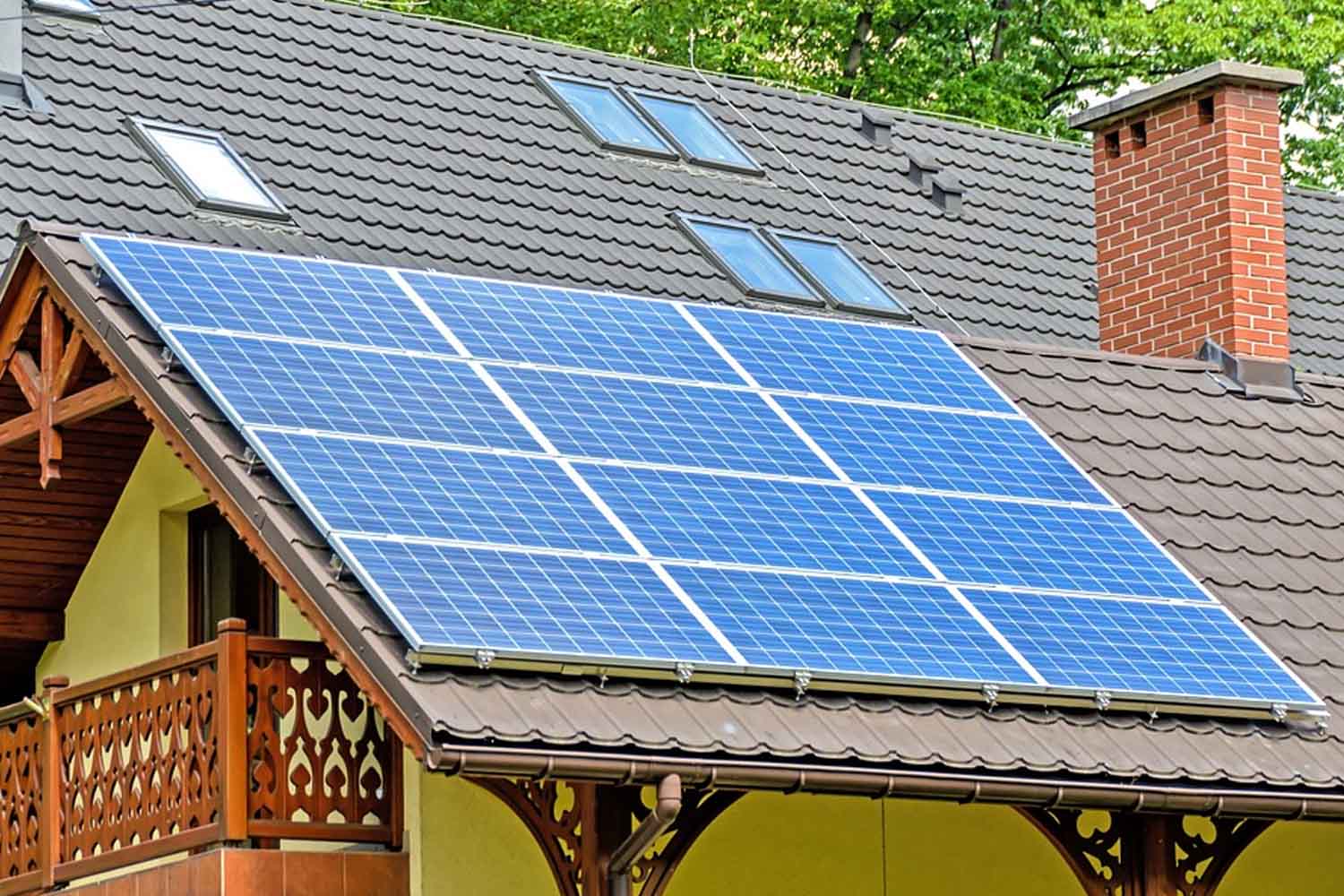
The vibrations caused by the wind can be transformed into a serious danger for photovoltaic panels, causing microfractures, mechanical failures and, in the most extreme cases, the collapse of the system. A recent international study conducted by researchers from the United Arab Emirates and Singapore has investigated this phenomenon in depth, proposing new solutions to improve the resilience of photovoltaic panels.
Vibrations induced by the wind: why are large photovoltaic panels more vulnerable?
With the increase in the spread of large solar modules, the vibrations caused by the wind represent an increasingly significant challenge. According to research, the primary torsional frequencies of the tracker system – between 4 Hz and 5 Hz – can trigger movements that damage the structures of the panels. Sagarika Kumarthe main author of the study, he explains: “These torsional movements can lead to Microcack, structural misalignments and, in the worst case, to collapse of the system”.
An even more complex problem is related to the current certification standards of photovoltaic panels, which may not be enough to face new environmental challenges. The IEC 61215-2 standardfor example, includes static and dynamic load tests, but does not fully represent the extreme conditions that occur during intense weather events, such as hurricanes.
Two phases to face the problem: the innovative approach of researchers
To better understand and face the mechanical stresses caused by the wind, the team has developed a two -phase plan. The first phase focused on the analysis of photovoltaic systems, including simulations of static and dynamic loads in different wind conditions, modeling of vibrations induced by air flow and modal analysis. The second phase, on the other hand, deepened the fluid dynamic aspects through the wind gallery tests, CFD simulations (Computational Fluid Dynamics) and the analysis of historical data relating to the winds.
The tests showed that a wind speed of 10 m/sa level of the soil (equivalent to a category 1 hurricane) corresponds to about 33 m/sa level of the tracker, causing a movement of the module of about 5.1 cm on the rear side. This type of deformation, if not adequately prevented, can have devastating effects on the stability of the system.
New test protocols to simulate real conditions
The research team proposed innovative test protocols to better represent real stresses. Among these we find:
These protocols represent a novelty because they include Asymmetrical and torsional loadsvariables often overlooked by conventional tests.
The research team, made up of scientists from Renewable and Sustainable Energy Research Center by Abu Dhabi and the Solar Energy Research Institute of Singapore (Seris)hopes that the results obtained can be integrated into international future standards, such as those defined by theInternational Electrotechnical Commission (IEC).
The results of the study were published in the scientific article entitled Testing of Wind-Induced Vibrations on Solar Photovoltaic Modules.
