
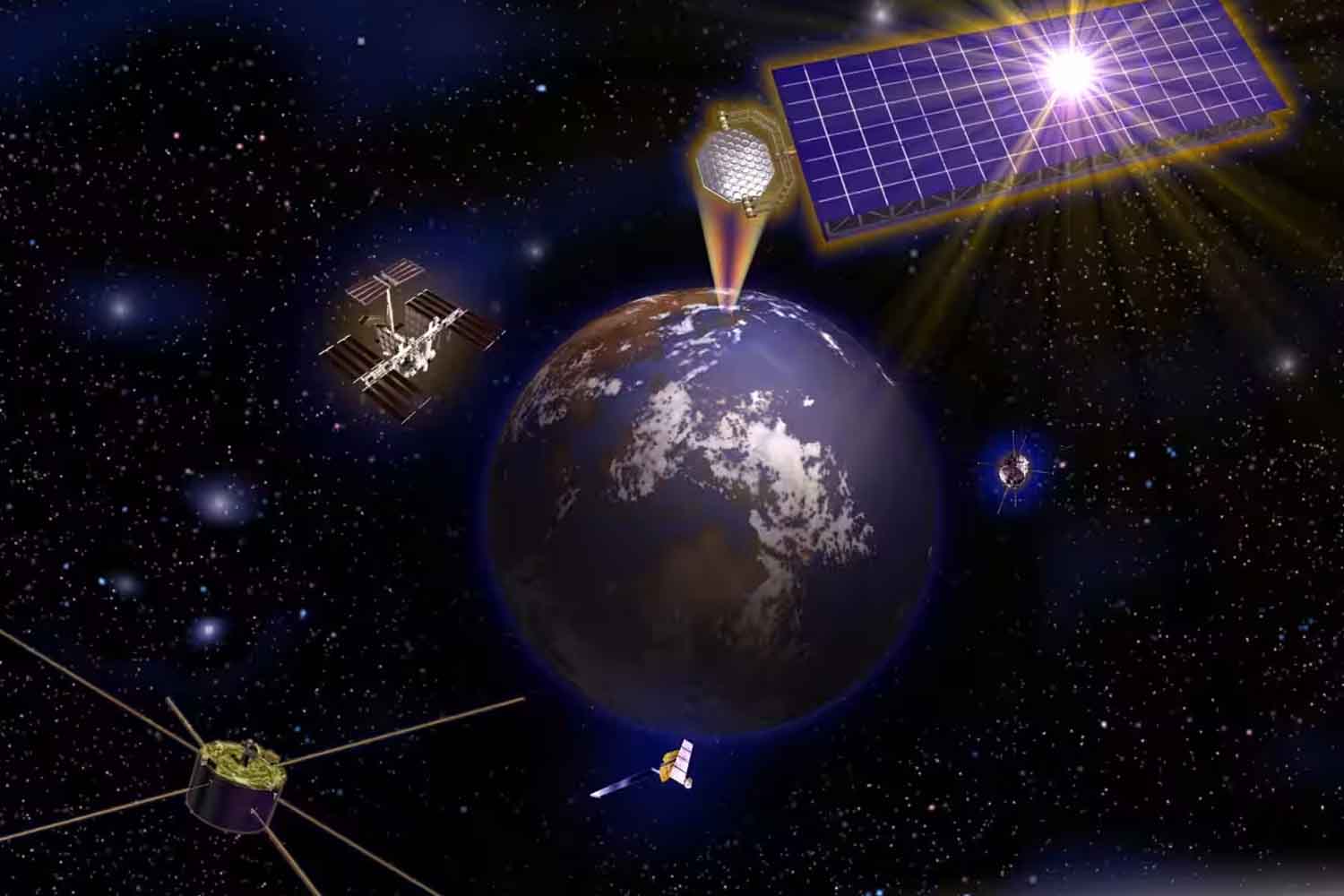
A greener future could come from space. In Japan, a group of scientists, together with the government and the organization for the development of new energy and industrial technologies (Nedo), is working on an unprecedented project: sending solar energy to the land collected directly into space. If everything goes according to the plans, already in 2025 the first tests could see the light.
The technology, which has been working since the 1960s – when the concept was theorized for the first time by the scientist Peter Glaser – exploits small satellites equipped with solar panels. These satellites, once in orbit, capture sunlight without being disturbed by clouds, rain or day-night cycles, and transform solar energy into the microwave. The microwaves, in turn, are sent to the earth, where large receiving stations reconvert them in electricity.
Solar energy from space: a technology that could change our way of producing clean energy
Why collect energy in space? Because up there the sun shines tirelessly. This means being able to have solar energy continues24 hours a day, 7 days a week, without the interruptions that instead occur on earth due to darkness or bad weather.
From an environmental point of view, the project represents a potentially epochal turning point. Not only because it promises to produce clean energy without CO2 emissions, but also because it would reduce the need to build huge photovoltaic systems that often subtract precious natural spaces. In practice, less soil consumed and less compromised ecosystems.
If Japan really succeeded in the company, it would open a new frontier in the fight against climate change. And perhaps a tomorrow the spatial solar energy could become a shared resource globally.
Despite the enthusiasm, the path is far from without obstacles. Launching and keeping satellites in orbit has a still very high cost, as well as building reception infrastructures on earth. And then there is the issue of security: sending high -power microwaves requires absolute precision. A small pointing error could be dangerous for people, animals or infrastructures.
The Japanese government, however, seems determined to go on, investing important resources to refine technology and make it safe and sustainable. If the first 2025 test will give the desired results, we could really be at the dawn of an unprecedented energy revolution. And who knows, perhaps in the future it will be normal to think that the energy that illuminates our houses arrives directly from space.
