
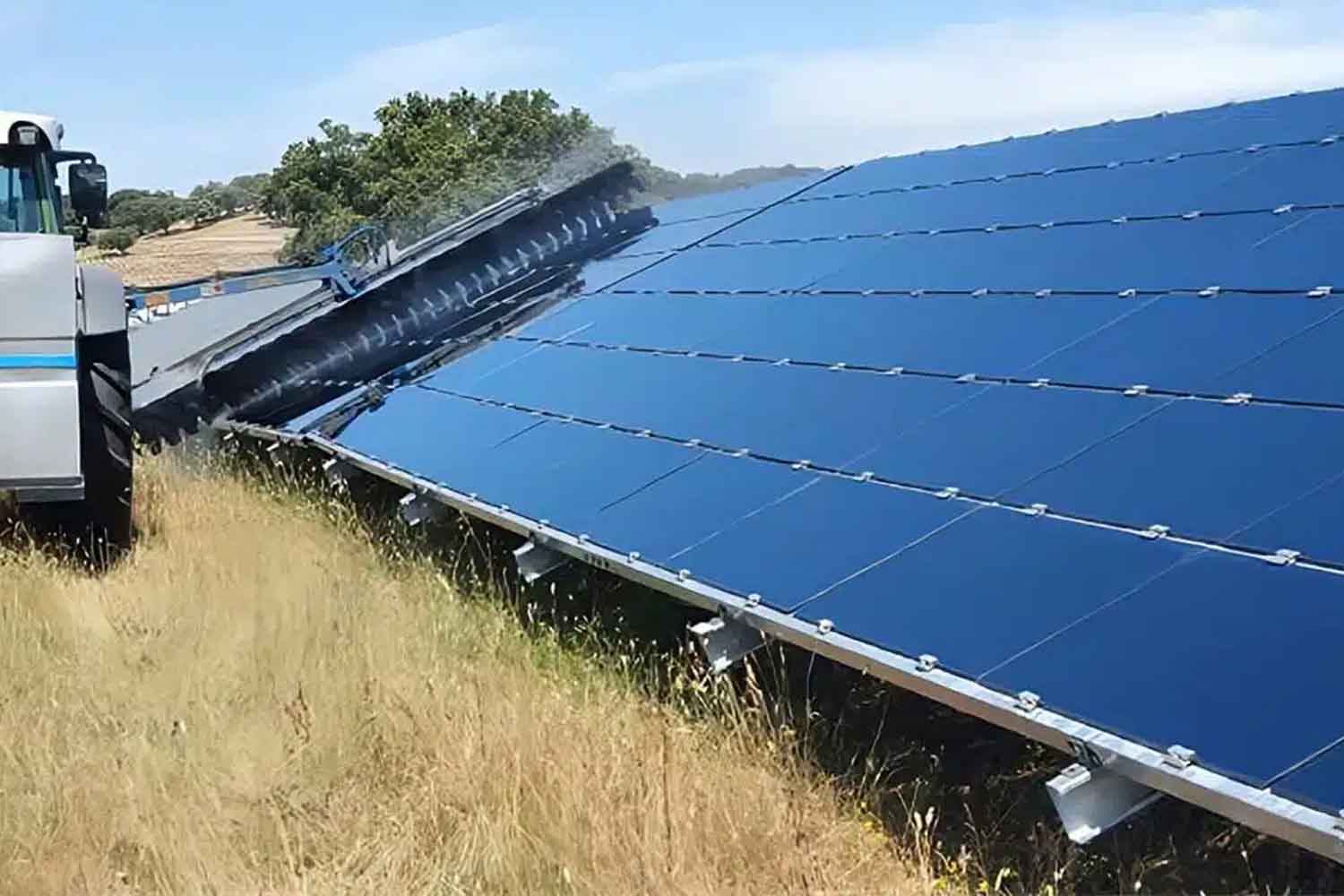
In some parts of the world, keeping the solar panels clean is far from simple. The accumulation of dust, sand and dirt on their surface can reduce the absorption of sunlight up to seriously compromising energy efficiency. To deal with this criticality, the Japanese company Nissei has developed a coating called Antistatic Solar Armor 2.0: a transparent film designed to reduce the storage of solid particles on the surface of the panels.
Applies directly to the glass
The idea behind this technology is simple: Create an invisible barrier which prevents the most aimed from adhering to the glass of the panels. The new version 2.0 retains the antistatic characteristics already present in the first model, but adds a greater resistance to atmospheric agentscrucial aspect for long -term applications.
In the presence of rain or wind, the film facilitates the detachment and outflow of dirt, helping to keep the surfaces cleaner longer. Where the rainfall is scarce, a jet of water is sufficient To remove most of the residues, thus reducing manual maintenance needs and the use of detergents or equipment.
It is a passive intervention, which does not require additional energy, and which could translate into concrete savings In terms of time and costs, especially in the plants installed in desert or industrial regions, where the accumulation of dirt represents a constant problem.
An application useful especially in arid areas
According to the company, the use of the antistatic film can Improve the performance of panels up to 10% Compared to a module without treatment, especially in environments exposed to extreme conditions. In addition, the coating is designed to last at least ten yearskeeping its antistatic properties unchanged and without the need for frequent replacements.
It is a type of technology that does not solve the structural problems of photovoltaics, nor replaces cleaning practices, but can Reduce waste And improve efficiency where it is more difficult to intervene regularly. Not surprisingly, the most concrete use scenarios concern plants located in arid, desert or difficult accessible environmentsbut nothing prevents you from thinking about a job even in urban or industrial contexts.
As often happens with innovations related to renewable energies, It remains to be seen what the real impact will be on the fieldwhat will be large -scale application costs and how much the film will actually last in prolonged conditions of use. However, it is a technology that could contribute – in a simple and silent way – to improve the reliability and yield of photovoltaic systems all over the world.
