
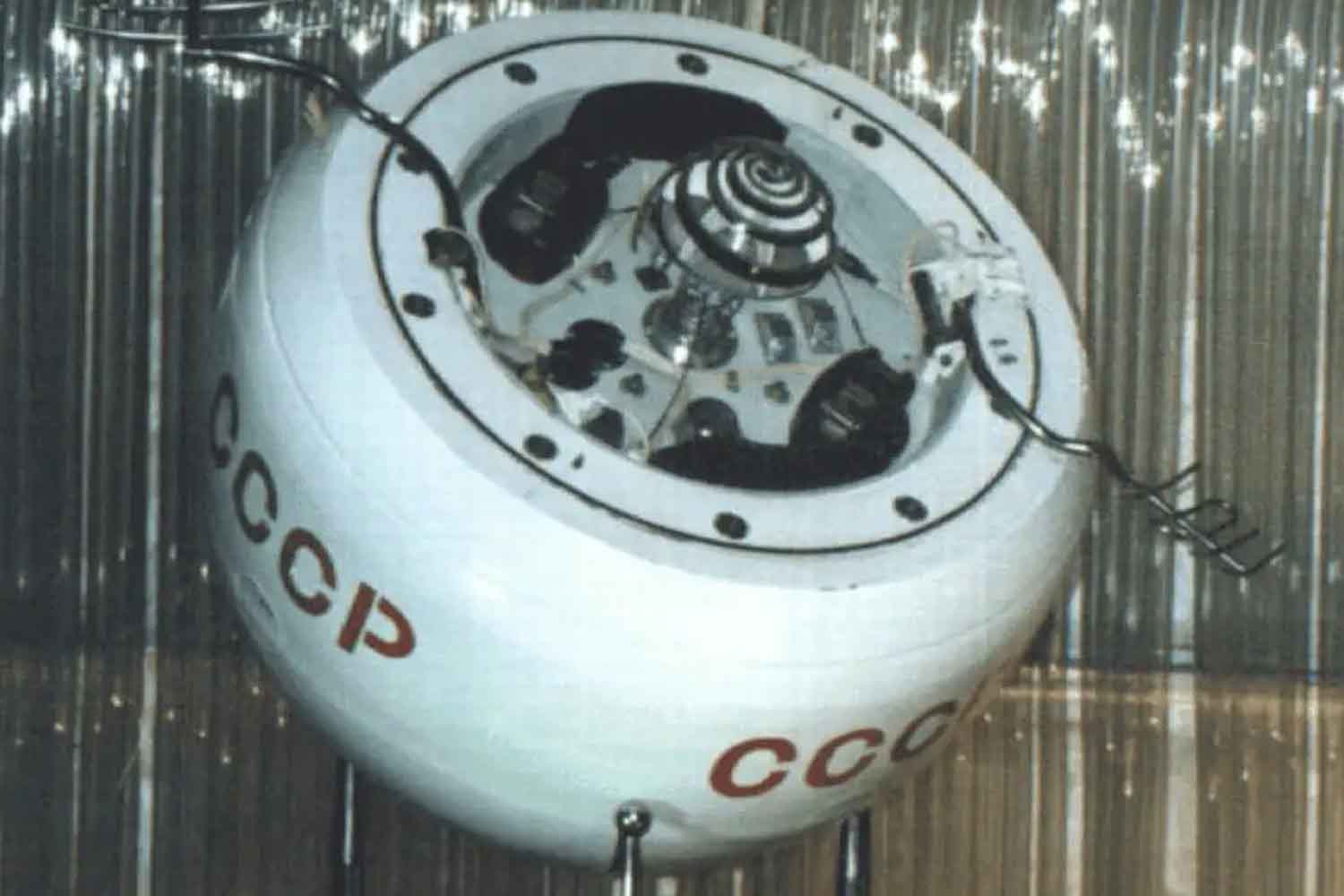
It is still in orbit around the earth, 53 years after its launch, the space probe Kosmos 482a Soviet vehicle started in 1972 with Venus destination. His return to the Earth’s atmosphere, initially expected between 2023 and 2025, it could now be imminent. The probe never reached the Target planet for a technical failure and remained in low orbit, becoming one of the most resistant space wrecks ever built.
Designed for Venus, it has survived for over half a century in the terrestrial space
Kosmos 482 was part of the program Venerationconceived by the Soviet Union for the exploration of the Venus planet. The launch took place on March 31, 1972, but due to an error while igniting the transfer rocket, the vehicle was unable to leave the terrestrial orbit. Some fragments separated in the following months and fell to New Zealand, but the main capsule, built to bear the extreme conditions of Venuscontinued to orbit around our planet.
Its highly reinforced structure resisted the space environment for decades, making the Kosmos 482 an object of particular interest for astronomers and analysts of the orbital trajectories. Tracked as an object Norad 06073, it is still visible and monitored.
Experts: the atmospheric descent could take place by the end of 2025
Current estimates indicate that the probe could return to the Earth’s atmosphere by the end of 2025with a possible partial survival of the module. Since the capsule was designed to face the entry into the atmosphere of Venus, it could also exceed the friction generated by the return to Earthwhich opens the scenario to a fall of fragments.
The astronomer Thomas Dormanwhich has been monitoring the behavior of the probe for years, observed that the vehicle, although not yet presenting the signs of an immediate return, He is slowly lowering his orbit. The atmospheric conditions and sun activity could accelerate the process in the coming weeks or months.
The exact place of the impact is obviously unpredictable, but the possibility that fragments reach the ground is not excluded, given the exceptionally robust structural characteristics of the probe.
