
A recent test of the Swiss magazine K-Tipp He lit the spotlight on an often neglected aspect of female lingerie: the presence of potentially harmful chemicals, an evident risk considering the very sensitive area of the body in which it is used.
The results are quite disconcerting: Out of 16 women’s panties tested in the laboratory, only two were completely without harmful residues. The results concern several brands known and distributed also in Italy, such as Intimissimi, H&M, Triumph, Calvin Klein, Victoria’s Secret and Chantelle.
The contaminants found in the panties
On K-Tipp reads:
13 products contained a total of five bisends. This represents a risk to health, since the tight panties come into contact with the most sensitive area of the female body. Through friction, heat and sweat, hormonal toxins are transported through the skin in the bloodstream.
The test searched mainly Bisfenoli (A, S, F) and Etoxylated of Nonilfenol and Ottilfenol (NPEO/OPERO)substances widely used in the textile industry. These substances, in addition to being environmental pollutants, are known for their active hormonal effect: can interfere with the human endocrine systemeven at very low concentrations.
Second K-Tippsynthetic materials such as polyester, polyamide and elastan, used to pack these briefs, favor the release and skin absorption of toxic substances due to friction, warmth and sweat.
Among the best known brands in Italy, Unfortunately intimissimi emerges for a worrying result: its pink silk panties contained 0.24 mg/kg of bisfenol A (BPA), A substance recognized as a toxic for fertility and potentially carcinogenic. Although the limit suggested by the EU is 0.8 mg/kg, the health authorities, including the German federation for the environment, warn that even minimal quantities of BPA can be dangerous.
The Bisfenolo S (BPS)often used as a “safe” substitute for the BPA, it was found the most common contaminant present in very high concentrations in numerous products. The “Crazy stupid love” briefs by Triumph they reached the record level of 640 mg/kg of BPS. Chantelle follows with 110 mg/kg and Calvin Klein with 71 mg/kg.
A scientific study from 2023 highlighted that the BPS can have similar or more serious biological effects of the BPA, damaging organs and reproductive skills.
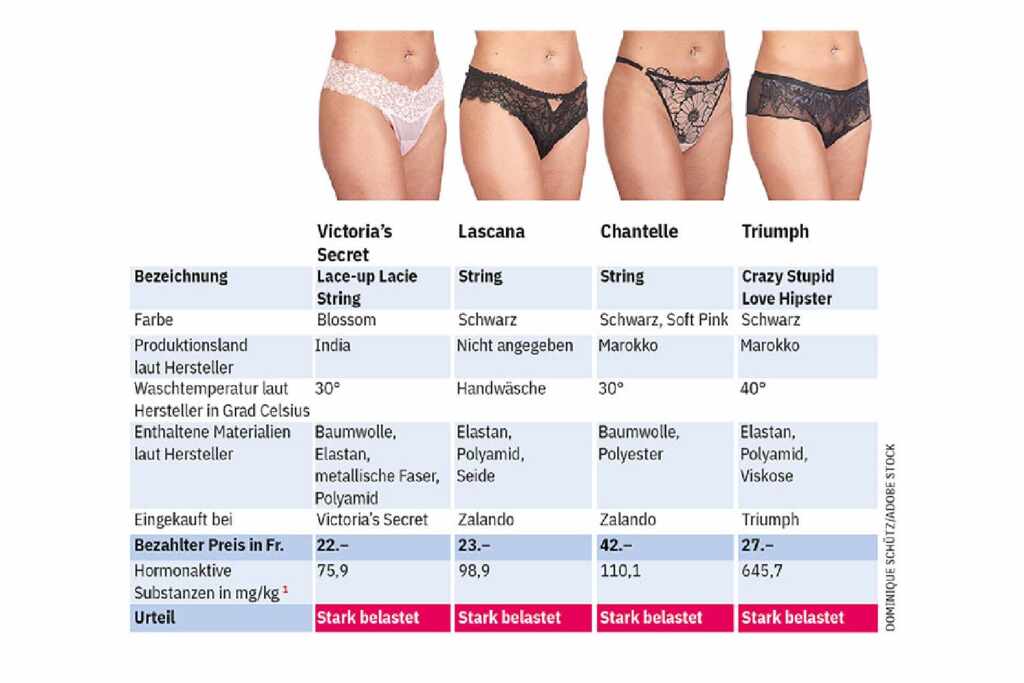
Three models – Victoria’s Secret, Obsessive and Chantelle – instead contained a Bisfenoli cocktail A, S and F, and Victoria’s Secret also presented Badge.2h20, a substance with significant estrogen effects, according to a Korean study. In these cases it is therefore to be considered that the risk increases for the combined effect of multiple interfering endocrine.
The panties of H&M and Leaven contained residues of industrial detergents, In particular, Npeo and Opoo, classified by the EU as “extremely worrying substances”. The H&M products reached 95 mg/kg of Npeo, close to the maximum admitted limit (100 mg/kg). These substances not only damage the environment, but they are also endocrine disturbers in fish and potentially in humans.
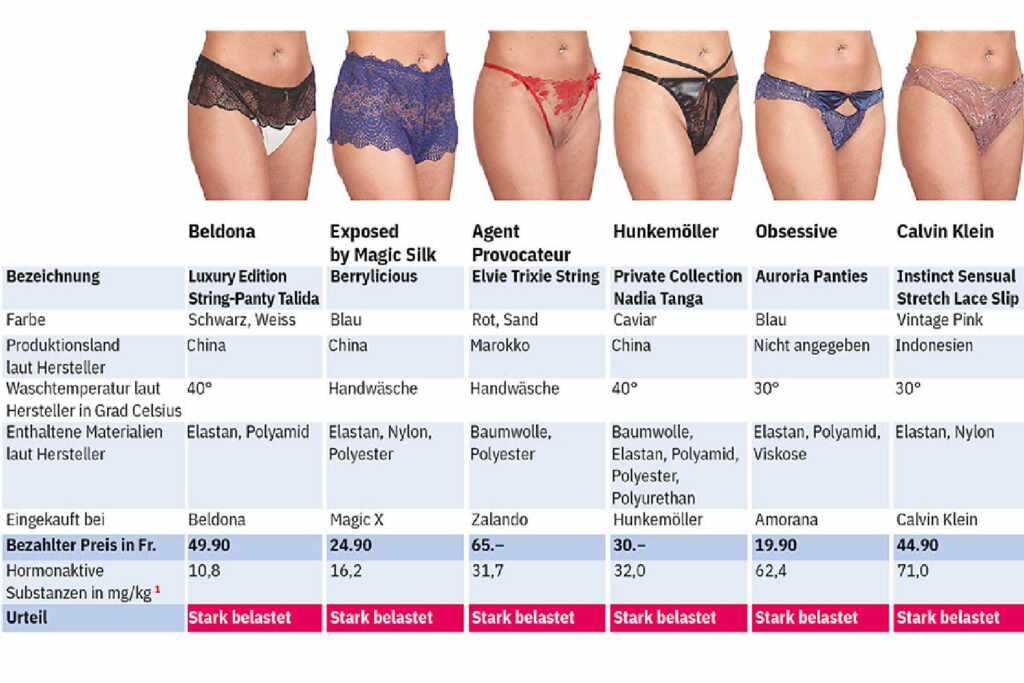
Only the “Exquise Tanga“ Of the French manufacturer Etam and the briefs of the Austrian company Hanro were without harmful substances.
Is it the solution?
Unfortunately the answer is no. A previous test conducted by K-Tipp In 2024 out of 166 panties showed that Washing does not always eliminate bisphenols. The contaminated products are such even after being washed, thus maintaining the same danger to contact with the skin.
The replica of companies
Some companies have defended themselves or promised to intervene on the matter.
Intimissimi has declared that it will “seriously seriously” take the test results. Triumph has made it known that its products are Oeko-Tex certified, but this does not guarantee the absence of Bispnotoli. H&M replied that its products respect the regulations, but they will still be reviewed. Lascana promises to minimize the use of ethoxylated detergents.
How the test was conducted
K-Tipp He tested 16 “sexy” panties as a woman with the aim of detecting the presence of toxic substances, in particular bisphenols and residues of industrial detergents. The laboratory therefore went hunting for:
