
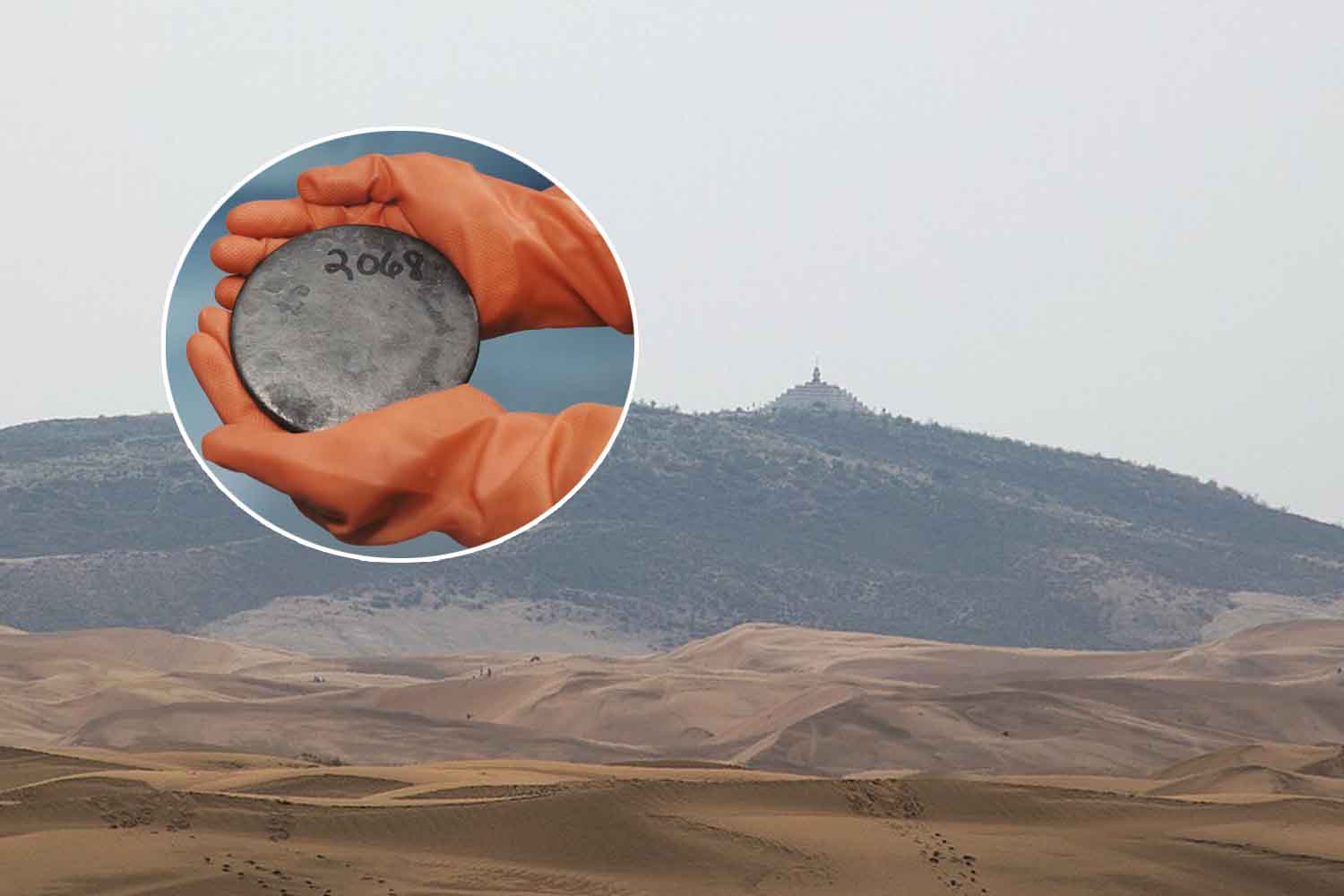
In the arid heart of the desert of Ordosin a region already rich in coal, oil and gas, China has discovered something even more strategic: Over 30 million tons of uranium. An imposing reserve that could guarantee energy independence to the country In the long term and drastically change the balance in the global nuclear market.
China wants less coal and more atoms, but at what price?
In recent years, Beijing has declared war on fossil sources to focus everything on nuclear energy. But to make its reactors work, Uranium is essential. And despite the commitment on the internal front, so far China was forced to matter enormous quantitiesmainly from countries such as Kazakhstan, which in 2021 provided almost half of global production, leaving only a miserable 4%to China.
Now, however, something is about to change. Thanks to Advanced exploration technologieslike 3D modeling and geospace analysis, Chinese researchers have located one of the larger Uranium deposits ever identified so far. A radioactive treasure in the subsoil of the order, which could reset addiction from abroad and armor national energy security.
From a geopolitical point of view, this discovery represents a real twist. With Uranium stocks, China will be less exposed to penalties, embargoes or instability of the international marketmaking itself more autonomous, but also more influential on the global energy chessboard.
The price of autonomy: market in crisis and environmental challenges
But if obvious advantages are expected for China, For other manufacturers the news is far from positive. The new offer could Make the Uranium prices collapse on the global markethitting in particular those governments that have exported large quantities to Beijing for years. We speak, according to the observers, of significant economic losses For many emerging economies that also live on these exports.
International competition could also be reduced, altering the balance between supply and demand. But the race to uranium may not stop here: the Chinese discovery risks triggering A new wave of global researchpushing other governments to dig in their deserts (or in their seabed) in search of similar reserves.
In the face of all this, There is an environmental question that cannot be ignored: how much does it really cost in ecological terms, a similar discovery? Uranium extraction is not neutral at all. Requires high energy intensity processes and can have serious repercussions on fragile ecosystemscontaminating water, soil and air.
A discovery that can change the future (but also to deviate it)
That in the ordos desert is, without doubt, one of the most relevant mineral discoveries of recent years. But it’s not just an economic or energy question. It is also a signal. A signal that tells us how The nuclear race will not stop easilyand that energy security remains, for many governments, a stronger priority of the ecological transition.
At a time when Europe and other countries are pushing on renewables and clean sources, China relaunches nuclear powerfullybetting on a future less dependent on coal, but still strongly linked to resources such as uranium. A more stable future? Perhaps. But also more complex, and certainly more radioactive.
