

Scientists do not lose the hope of save saolacattle similar to Antilope, nicknamed ‘Asian unicorn‘because of his extreme rarity, which makes his fear irreparable extinction. Now a research group led toCopenhagen University (Denmark) has mapped his genome for the first time, in an attempt to understand if there is still hope.
Sola and the risk of extinction already irreparable
The Sola (scientific name: Pseudoryx ngherinhensis) is one of the rarest mammals and risk of extinction in the world, no longer observed in nature for over 10 years. Discovered in 1992, he is the great mammal found more recently, greatly preceding the Kouprey (scientific name: Bos Sauveli) discovered in 1937.
If it existed would probably vaguely wander somewhere in the depths of the misty forests of the plateaus of Vietnam And Laos and, at the time of his discovery, which took place in 1992, he was already in danger.
According to the International Union for Conservation of Nature (IUCN)probably less than 100 specimens remain, which makes Sola one of the most at risk of extinction in the world, but in reality the species could also be extinct. The last sighting confirmed in nature dates back to 2013, and since then researchers seek it. The task is also made even more difficult byhabitat of the species: the saola, in fact, lives Only in the remote and harsh forests of the Annamiti Mountains in Vietnam and Laos.
At the moment, the existence of Sola can neither be tried nor denied – explains Nguyen Quoc Dung, co -author of the research – the last test we have dating back to 2013, when a specimen was captured by a phototrappola. But, given the distance of his habitat, it is extremely difficult to determine with certainty if there are still some. However, we have signs and indications that give us hope
So far, it hadn’t been Product almost no genetic data on the Sola.
The first complete mapping of the saola genome
Danish and Vietnamese biologists have collaborated in the study of the reserved Saola from the beginning, starting from its scientific description which indicates it as Unique animal from an evolutionary point of view: in fact it is found on a branch of the tree of life dating back to 12-15 million years ago And it is the only surviving descendant of that branch.
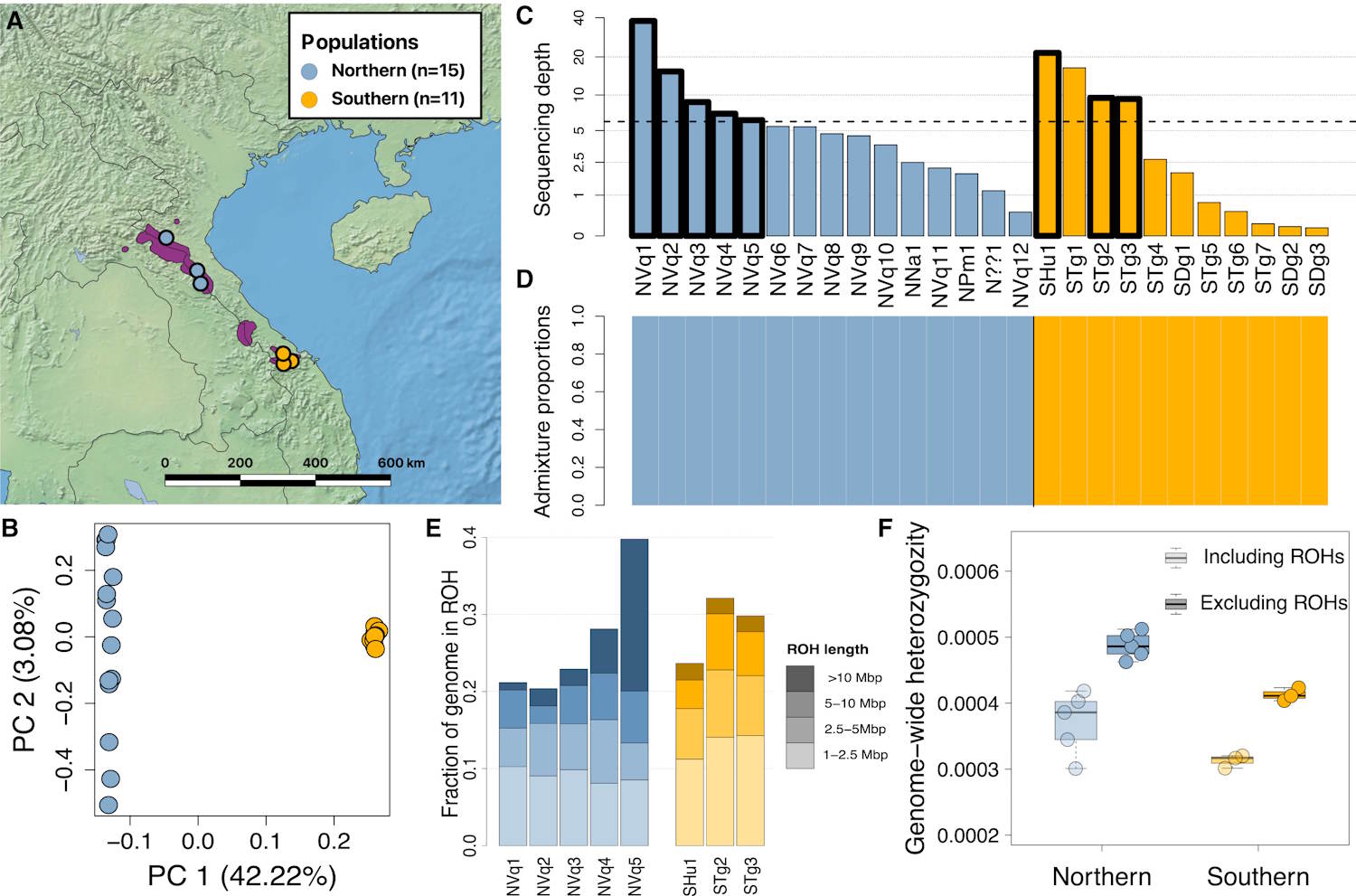
Analyzing fragments of saola remains collected in the hunters’ houses, the researchers generated Complete genomes for 26 Sola: This has provided new information on the history of the enigmatic cattle and its future prospects.
How it could survive
We were rather surprised to discover that the saola is divided into Two populations with significant genetic differences – explains Genís Garcia Erill, main author of the study – The division took place between 5,000 and 20,000 years ago. Before he was completely unknown, and we could not have known without genetic data. It is an important result because it influences the distribution of genetic variability in this case
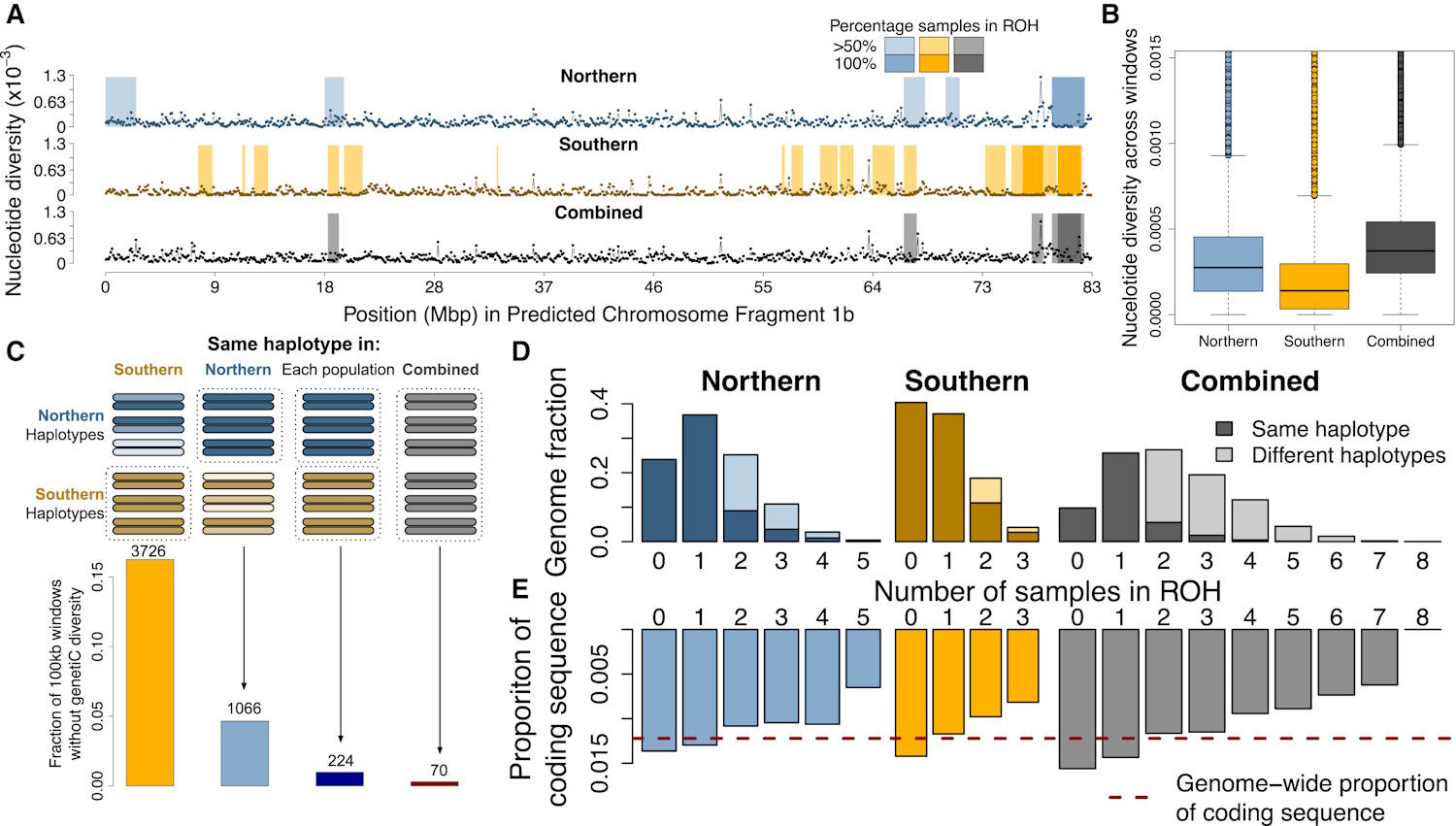
Genetic analyzes also show that both populations are declined from the last glacial era, and, according to the researchers’ estimates, the total population of Sola does not have never exceeded 5,000 individuals in the last 10,000 years.
This long -term decline means that both populations have started to lose genetic diversity. But, fundamental, they have not lost the same genetic diversity.
This means that the genetic variation lost in each population completes that of the other. So if they mix them, they could compensate for what is missing from the other
This could be the solution to save the Sola from extinction. In fact, the researchers calculated the probability of survival of the species in different conservation scenarios and their models show that the Best possibilities of survival They occur if the two populations are mixed in a captivity reproduction program.
If we can bring together at least a dozen saola – ideally a mix of both populations – to form the basis of a future population, our models show that the species would Good long -term survival possibilities. But it all depends on the actual identification of some individuals and the start of a reproduction program – says Rasmus Heller, who led the research – this has already worked in the past, when the species were on the verge of extinction
But does it still exist?
Find 12 Sola, however ,. But the new research could help solve this problem. Genetic mapping opens new possibilities for the use of different technologies to locate the last remaining saola.
Many researchers have attempted without success To find traces of saola through methods such as environmental DNA in water and even in leeches, which live in the same habitat – says Minh Duc Le, co -author of the work – these techniques are all based on the detection of tiny fragments of DNA and, now that we know the complete genome of the Sola, we have a Much wider instrument set To detect these fragments
Researchers nourish Many doubts about the possibilities of finding living saola.
In fact, scientists have been looking for Sola individuals since the 90s, and since then the research has become increasingly difficult, because at the time they were more numerous. I am not excessively optimistic, I admit it, but I really hope the saola is still out there
But even if it was discovered that saola is extinct, the new research results could still be useful:
Our results could theoretically be used if you ever be able to Bringing Sola back to life through genetic de-extinction technologiesgreat topic. In this case, our new knowledge on the genetic variability of saola could make a huge difference in the creation of a vital population
The work was published on Cell.
Sources: University of Copenhagen / Cell
