
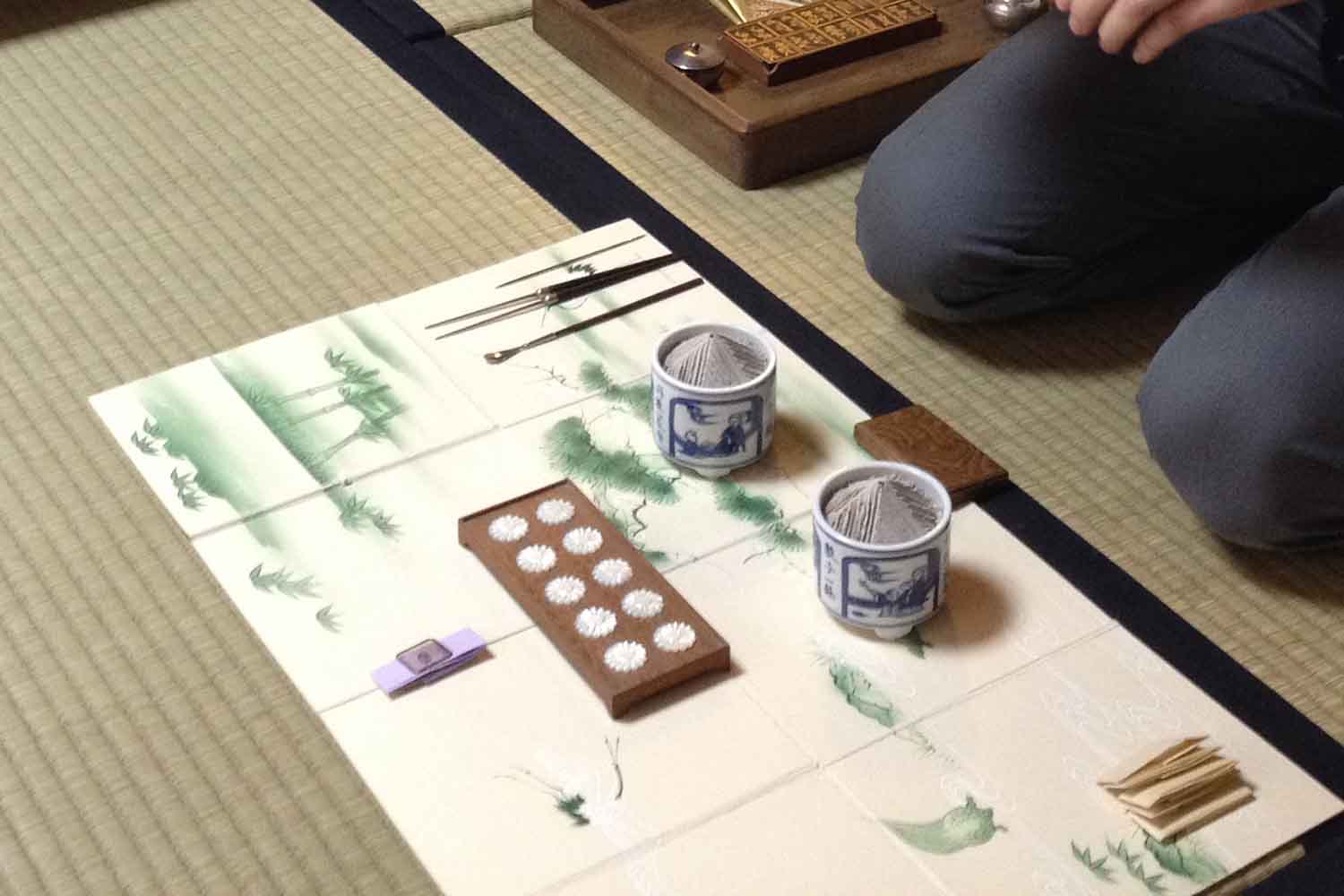
On the one hand there is the tea ceremony, called Sadōon the other the Via dei Fiori, known as Kadō, and then there is The kōdō, the way of incense.
The first testimonies date back to the 6th century, but the Kōdō is also intertwined with the ancient Japanese custom of framing clothes, hair and even the armor of the warriors. The real Kōdō, however, is formalized during the Muromachi period (1336-1573).
If initially this form of traditional art was widespread mainly among the nobles of the imperial court, later it also spread among the intellectuals, among the rich merchants and landowners.
But what exactly does it consist of? It is An olfactory and meditative experience out of the ordinarya journey into oneself guided by natural incense.
The ritual does not simply consist in annusing the fragrance, but in listening to it, letting it flow within itself, so that the two souls – ours and that of perfume – can come into contact.
Nothing, of course, is left to chance: in a Kōdō ceremony, the participants gather in a room, sitting on the knees on a tatami, and turns, try to guess the fragrance prepared by the Komoto, or the person assigned to the preparation of the incense burner.
As the “Japan Up Close” site explains, – Kōdō’s fragrances are divided into Rikkoku Gomiwhich means six countries, five tastes. THE rikkoku There are six types of perfumed wood: Kyara, Rakoku, Manaka, Manaban, Sumarara and Sasora. THE gomi These are the five flavors: Amai (sweet), Nigai (bitter), Karai (Spicyhot), Suppai (Sour), Shio Karai (Salty). –
Ultimately, Kōdō is much more than an olfactory art: it is a spiritual ritual, a shared meditative practice, in which the perfume is savored as a bridge between mind and spirit. A moment of silent connection with the soul of the fragrances and with the most intimate part of itself.
Sources: Japan Up Close/Nippon Kodo
