
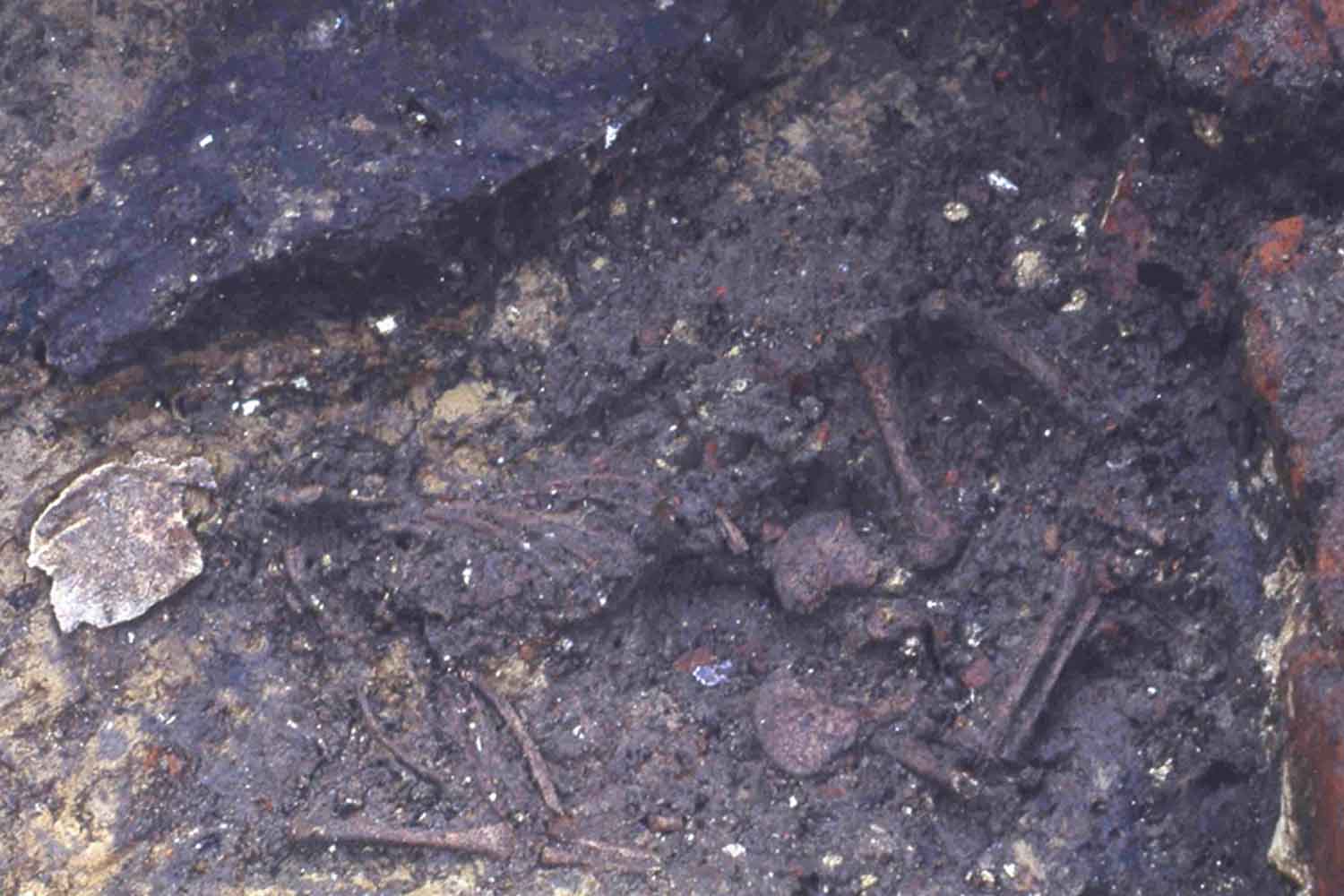
In the heart of the Flemish city of Aalstduring some archaeological excavations conducted in 1998 in view of the construction of the square Oude Vismarkta reality forgotten for centuries has emerged. Archaeologists have brought to light a building dating back to 14th centuryrecognized thanks to characteristic structures and documentary sources such as a medieval brothelknown by the name of “Nederstove”. But what really upset the researchers was the discovery, within the structure, of skeletal remains of a newborncarefully buried under the floor. The child was only three months old.
A discovery that, after over 20 years, has pushed a group of scholars led by Maxime Poulaintogether with Céline bon And Jessica Palmerto investigate the causes of the child’s death through analysis of DNA Ancient And stable isotopes. The results, published in the magazine Archaeological and anthropological sciencesoffer a human and profound look at the life of women in the places of medieval prostitution – away from stereotypes and moral judgments.
The child was well fed and had no signs of violence
The first step of the researchers was to understand if the death of the newborn could be traced back to a practice unfortunately widespread in the historical literature linked to prostitution: infanticide. However, isotopic analysis showed healthy diet, consistent with a regular breastfeeding. No signs of malnutrition or nutritional deficiencies.
Parallel, the DNA Ancient made it possible to establish that it was a maleand excluded the presence of serious bacterial diseases such as plague, leprosy, tuberculosis And cholera. No trace of violence or abuse. But then, why did he die?
In the Middle Ages, the child mortality it was very high – it is estimated that he died about 30% of infants – And the viral infectionsoften trivial today, could easily be lethal. In addition, babies, for biological reasons, are more vulnerable than females. It is therefore plausible that the baby is died of natural causesdespite being loved and well cared for.
Why wasn’t he buried in a cemetery?
One of the most disconcerting aspects of this case is the place of burial. In the late Middle Agesit was a rule that everyone – especially children – were buried in the cemeteries of the churchesoften a few days after baptism. Yet this newborn was buried in the bath housenext to the hearth. Why?
According to Dr. Poulain, the childhood bombs they are extremely rare. In Belgium, this is the only known case. In Europe, there are very few similar examples, found in France or the United Kingdom. The most likely hypotheses:
A reality recognized historically but difficult to trace in the finds
The identification of the building as medieval brothel It is confirmed by its structure: two key ovens used as heated bathrooms, a hearth for cooking and archival documents that speak of the city tolerance towards prostitution in the city’s bathrooms. A source even mentions a brothel with Sixteen beds and the names of the women who worked there.
However, explains Pulain, Archaeologically identifying a brothel is far from simple. The objects found – ceramics, bobby pins, dishes – do not differ much from common ones in other medieval buildings, such as taverns or private houses. The environments, however, were often quite refinedto attract a wealthy clientele.
The discovery of the newborn buried in Aalst offers a rare and precious occasion: An intimate and human look at the life and difficulties of women who lived and worked on the margins of medieval society. Not only bodies to sell, but mothers, daughters, sisters who tried, like all, to survive and love in the world around them.
As Poulain concludes:
Now we are studying the skeletal remains from a bruges red light neighborhood to understand how much diseases were widespread in these areas compared to other parts of the city. And we hope to return to Aalst soon to examine the environmental remains preserved in the clay floors of the brothel: they could offer us new keys to reading on everyday life in these places forgotten by history.
