
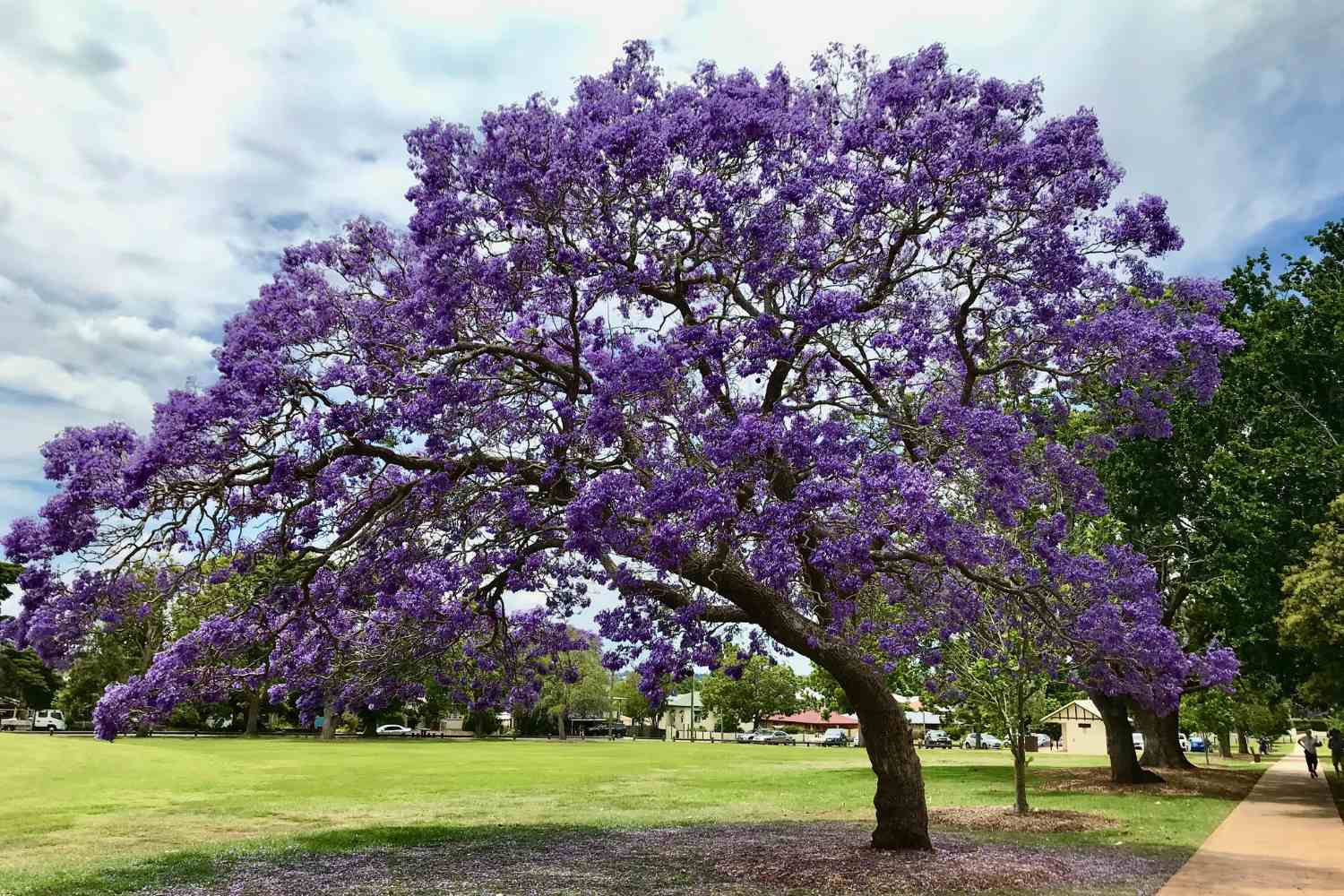
When spring arrives, a natural show transforms the streets of many cities in the world into a purple-blue corridors: it is the flowering of the Jacaranda, one of the most loved ornamental trees and photographed on the planet. This magnificent tropical tree produces bunches of fragrant flowers in the shape of a cob and arched branches that form a hair similar to an inverted umbrella.
Origins and characteristics
The Jacaranda (Jacaranda Mimosifolia) belongs to the Bignoniaceae family and is originally from South America. Also known as “Black Poui” or “Blue Jacaranda”, it is a quick growth tree that in tropical environment can also earn 3 meters a year in the early years of life, and then slow down to moderate growth when it is cultivated outside its ideal habitat.
The mature dimensions are impressive: it can reach 15-25 meters high with a hair that extends for 5-9 meters wide. The leaves are delicate and finely divided, similar to those of the ferns, while the purple-blue or sometimes white tubular flowers create an unforgettable show during spring and summer flowering.
Where it thrives: climate and ideal conditions
Jacaranda is happier in the hottest areas, such as Hawaii, Florida, Southern California and some parts of Texas, where it grows easily thanks to the hot-humid conditions ideal. However, its adaptability has made it popular in many other places in the world with a temperate-caldo climate.
The tree prefers the areas of Rusticity USDA 10-11, although some specimens can occasionally tolerate temperatures up to -7 ° C. It requires constant humidity throughout the year in slightly acidic soils and prefers exposure in full sun for at least 6-8 hours a day to ensure optimal flowering.
How to cultivate Jacaranda
Where to place the Jacaranda tree
Avoid planting the Jacaranda near swimming pools, vialetti, patios and sidewalks due to the fragile wood, the fall of flowers and leaves, and the significant superficial roots that can disturb the structures.
What land to use
Jacaranda thrives in sandy soil, well drained and slightly acidic. It also tolerates clayey and lemonish soils, but it must never be planted in heavy, humid or low draining mixtures, since the stagnation of water can cause radical rot.
How and how much to irrigate
As a general rule, the tree water when the first 8-10 centimeters of soil are dry to the touch. Concentrate irrigation to the drip line (where the water drips from the tips of the branches) rather than close to the trunk. During periods of intense heat or drought, the frequency of watering increases, while in winter you reduce to once a month.
How to fertilize Jacaranda
Feel the Jacaranda annually with a balanced fertilizer for trees, but be careful not to exceed with nitrogen, which can compromise flowering. A good ratio is 10-10-10 NPK (nitrogen-Fosphoro-Potassium).
How many varieties of Jacaranda exist
There are several remarkable varieties of Jacaranda Mimosifolia that offer unique characteristics. The ‘Alba’ O ‘White Christmas’ is a complete tree that can reach 12 meters high and 18 in width, producing splendid white flowers that often bloom before the other varieties, already in April in some climates.
For those with more contained spaces, the ‘Blue Blue’ is a Nana cultivar with intense purple flowers that matures only 3-4 meters high. The Jacaranda Jasminoides is equally compact, which grows between 3 and 8 meters producing tubular flowers from lilac to dark purple.
How to propagate the Jacaranda
The propagation for cutting is the most advantageous method because the plant will flow much earlier than a greedy seed. Cut a branch of 1-2 centimeters in diameter, at least 8-10 centimeters long, just above a knot. You can root the cutting in a jar of water filtered at room temperature for about two weeks, then plant it in the soil, or plant it directly in a humid sandy substrate.
The seeds must instead be collected by dried pods directly from the tree, immersed in water for 24 hours and then sown in containers with soil. They sprout in 2-8 weeks, but you have to wait eight months before the transplant.
When the Jacaranda blooms
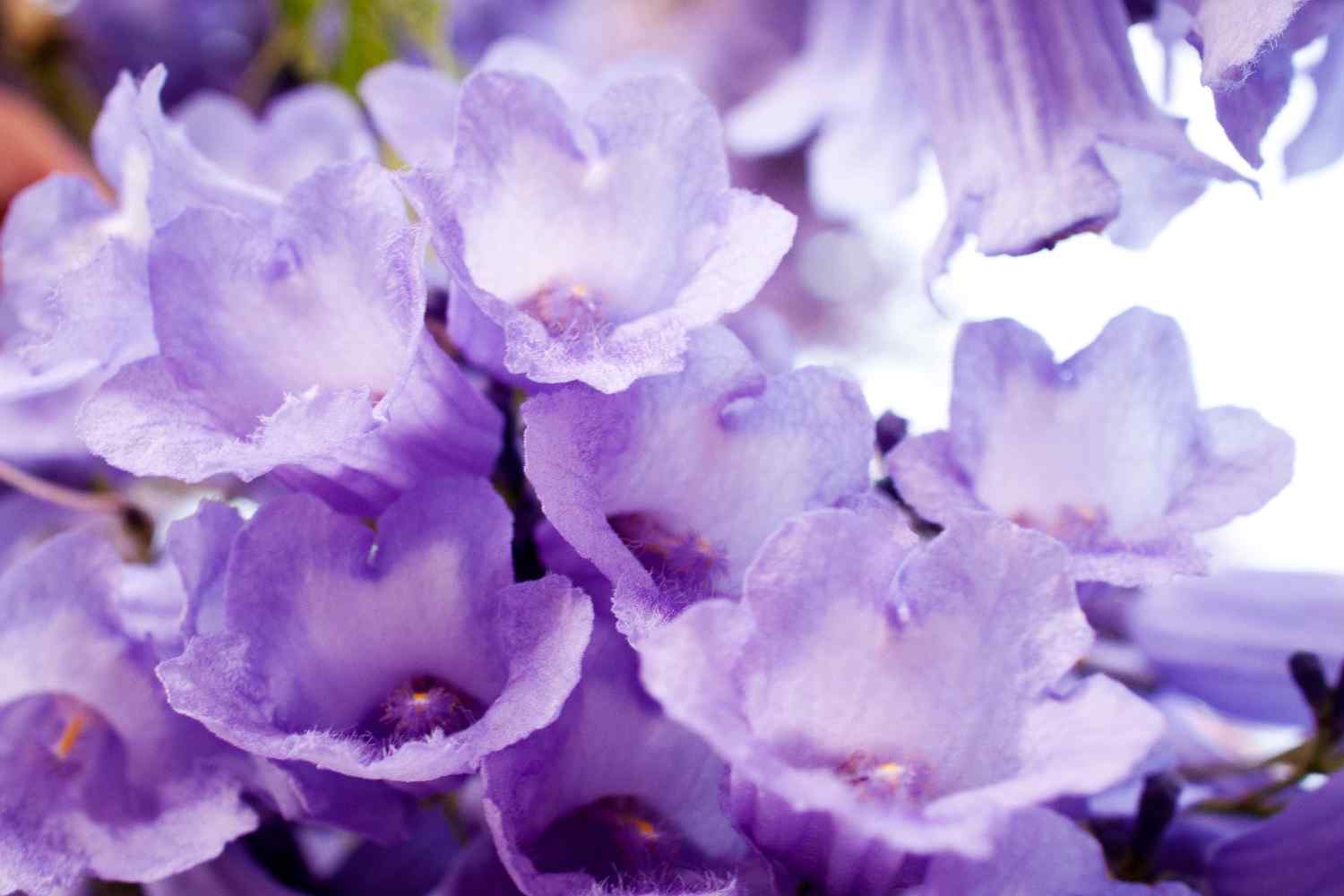
Jacaranda cultivated outdoors blooms twice a year: once in spring between the end of May and early June, and again in autumn. Trumpet purple flowers have a fresh and fragrant perfume, even if their decomposition produces a pungent smell when they dry and fall.
To encourage more abundant blooms, plant the tree in a sunny area with well -drained soil, keep the soil wet but do not zuppo, protect it from strong winds and avoid fertilizing the surrounding grass, since the excess of nitrogen inhibits the production of flowers.
How to cultivate Jacaranda in pots
In the colder climates, Jacaranda can be grown as a container tree, reaching about 2-3 meters if pruned annually during the dormant period. The containers must be at least 20 liters, using a sandy-limous mix that drains quickly.
During the winter, the pot plants must be brought indoors and water less frequently, leaving the ground to dry slightly. A dry winter period stimulates more blooms in spring, while too humid winter means less flowers.
Common problems and practical solutions
Yellowed leaves: often caused by insufficient irrigation that causes chlorosis. The solution is to provide plenty of water following a regular program.
Brown and dying leaves: they could indicate the presence of the leaf bacteriosis caused by the annoying Xylella insect. Unfortunately, there is no cure for this disease, but you can extend the life of the tree with frequent irrigation.
Tips of the dry leaves: usually caused by excess fertilizer that alters the mineral relationship of the ground. Remove the damaged leaves and irrigate abundantly to dilate the excess fertilizer.
Parasites to keep under control
The Jacaranda can be attacked by aphids and ladybugs, as well as by the spitting from the glass wings. All these parasites can be managed with insecticide soap or horticultural oil. If grown at home, it can attract aphids and white flies.
An important warning: invasiveness
It is essential to know that Jacaranda has invasive behavior in the tropical areas of Hawaii, Queensland in Australia, Juan Fernandez islands in Chile, Kenya, Tanzania, South Africa and Zambia. Its groups of plantules can reduce the biodiversity of an area, therefore it is important to carefully evaluate its introduction into sensitive ecosystems.
The diffusion in the world
Although it is originally from South America, Jacaranda has conquered the world thanks to its extraordinary ability to adapt to temperate and subtropical climates. Today it is possible to admire it in:
Where to admire the flowering of Jacaranda in Italy
The Jacaranda in Italy can be admired above all in the southern regions and in the islands, where the climate offers ideal conditions for its growth. In Sicily, cities like Palermo and Catania are famous for their flowery avenues of Jacarande, while in Sardinia spectacular specimens are located in Cagliari and along the Costa Smeralda. Campania also gives unforgettable views thanks to the presence of this plant on the Amalfi coast and on the island of Capri. Finally, in Liguria, the gardens of the Ponente Riviera host some Jacarande thanks to the mild climate that characterizes the area.
Documented benefits of Jacaranda Mimosifolia
Antioxidant activity
The methane and watery extracts of the flowers of Jacaranda Mimosifolia have shown a high antioxidant capacity, attributed to the presence of polyphenols such as oaks, Gallic acid, coffee acid and rutin. These compounds are known to neutralize free radicals, contributing to the protection of cells from oxidative stress.
Antimicrobial properties
The same extracts have shown antimicrobial efficacy against different pathogens, including Staphylococcus aureus, Escherichia coli, Listeria MonocyTogenes and Streptococcus Mutans. In particular, the methane extract has inhibited the growth of Listeria MonocyTogenes and Streptococcus Mutans with an 86%effectiveness, suggesting a potential use as a natural antimicrobial agent.
Anti -inflammatory activities
Recent searches have isolated compounds such as chloroflavonin A from the flowers of Jacaranda Mimosifolia, which show a significant anti -inflammatory activity. These compounds inhibit pro-inflammatory enzymes such as the cycloossigenasi-2 (COX-2) and the Nadph-Ossidase-5 (NOX-5), indicating a therapeutic potential in the treatment of inflammatory conditions.
Traditional uses
In traditional medicine, Jacaranda Mimosifolia has been used to treat wounds, ulcers, diarrhea and disturbance. In some cultures, hot baths are used with Jacaranda leaves to treat skin infections and acne. Although these practices are supported by anecdotal evidence, further scientific studies are necessary to confirm their effectiveness.
Curiosity and legends about Jacaranda
Jacaranda is surrounded by fascinating stories and popular beliefs that testify to its deep cultural impact. In Australia, where flowering coincides perfectly with the period of the university exams, the popular saying “when the Jacaranda blooms, it is time to study” was born. The students have developed a real superstition: if a flower falls on a student’s head, this will be lucky in the exams. On the contrary, some believe that studying under a jacaranda in bloom ports bad luck, pushing many to avoid the tree -lined areas of the campus during the study period.
In South Africa, Pretoria is nicknamed “Jacaranda City” for its over 70,000 specimens that every October transform the entire city into a purple sea. Flowering has become a tourist event of this scope that the Town Hall organizes dedicated festivals and specialized photographic tours.
In Brazil there is a romantic legend according to which if a flower of Jacaranda spontaneously falls on a person, this will receive luck and prosperity throughout the year. An Argentine variant of legend, instead, claims that the couples who kiss under a Jacaranda in full flowering will be destined to be together forever.
The phenomenon of “purple carpet” is particularly fascinating: when flowers fall, they create purple rugs along the roads that can last weeks. This natural show has become so iconic that many cities plan events and weddings during the flowering period to exploit this fairytale scenario.
Another botanical curiosity concerns the fact that some centenary specimens have become real natural monuments. The most famous is located in Buenos Aires and is over 150 years old: it is protected by a municipal decree and considered the botanical heritage of the city. These historical giants can reach circumferences of the trunk over 4 meters and heights that touch 30 meters.
