
Summer 2025 marks a turning point in the panorama of Italian sustainable tourism. While the most famous destinations continue to suffocate under the weight of the loveourism, a pioneering project in the Northeast is experimenting with a completely different way: to transform the river landscapes into creative workshops where art, science and local community meet to reinvent the very idea of tourism.
Water as the guiding thread of a new narrative
The “Lab Village – Tourism, Culture and Creative Industry” project, led by the Ca ‘Foscari University of Venice, has chosen the water element as the protagonist of an unprecedented social experiment. It is not just about promoting alternative destinations, but of building a completely new model of territorial use that focuses on environmental and social sustainability.
In the tourism sector, in particular in that of cultural tourism, innovation has not yet found its own way “, explains Fabrizio Panozzo, professor of cultural policies and scientific manager of Spoke 6 of inst.” This despite being tourism one of the most important industries, also in terms of turnover, of our region. In our research we carried on the innovation factor in strong connection with the creative dimension, rethinking the meeting between tourism and culture in the area with a close relationship with the communities.
From the suggestive Treviso Prealps – by touching hidden pearls as a cavaso del tomb, Segusino, Valdobbiadene – up to the territories of Cerea and Carmignano di Brenta, a network of widespread laboratories is animating the summer with a revolutionary approach: to bring out the potential of areas considered marginal through innovative artistic languages.
Beyond tourism: human biodiversity laboratories
The first laboratory, started in Carmignano di Brenta, offers an illuminating perspective on what could be the future of conscious tourism. There Filmmaker Alessia Zampieri It is producing an ethnographic documentary on the “human biodiversity” of the river banks: ethnic groups, families, young people, fishermen who populate these spaces considered peripheral but in reality very rich in meaning and potential.
This methodological choice is far from casual. In an era in which homologous mass tourism destinations and experiences, rediscovering local specificities becomes an act of cultural and ecological resistance.
The path as a philosophy of sustainable life
The collaboration with the festival “The right distance” introduces another key element: the path as a privileged dimension to rediscover the territory. From 4 to 8 July, the directing laboratory in nature “wild notebooks” by Michele Bandini has combined the performative dimension to the teaching one, creating an innovative format that could be replicated in other contexts.
Maurizio Busacca, professor of economic sociology and head of the “Lab Village” project, frames this choice in a wider context:
Outdoor tourism is a rapidly growing phenomenon, all over the world and in Italy in particular give the characteristics of our territory. Today it concerns not only campsites and on the road tourism, but also the paths, sports tourism, rural and cultural tourism. It represents an unmissable opportunity to create new value, social as well as economic.
Busacca’s vision is particularly illuminating:
In fact, it allows you to open new tourism routes far from those overcrowded by the beaches, the sea and the cultural cities and create new economic opportunities for marginal areas of the country: hills, arguments of rivers, wooded areas. Making innovation in this sector can mean drawing a future where tourism manages to combine economic value, social innovation and environmental sustainability
Significant is the international artistic residence “eighty -fourquattromilapassi (Walking Filming)”, which has attracted fifty young people from Brazil, the United States, France, Germany, Austria and Italy. Two selected videomakers will reinterpret the path through short films that will debut at the Lake Film Fest in Revine Lago, demonstrating how creativity can become a vehicle for authentic territorial promotion.
Hydraulic infrastructures: from problem to narrative resource
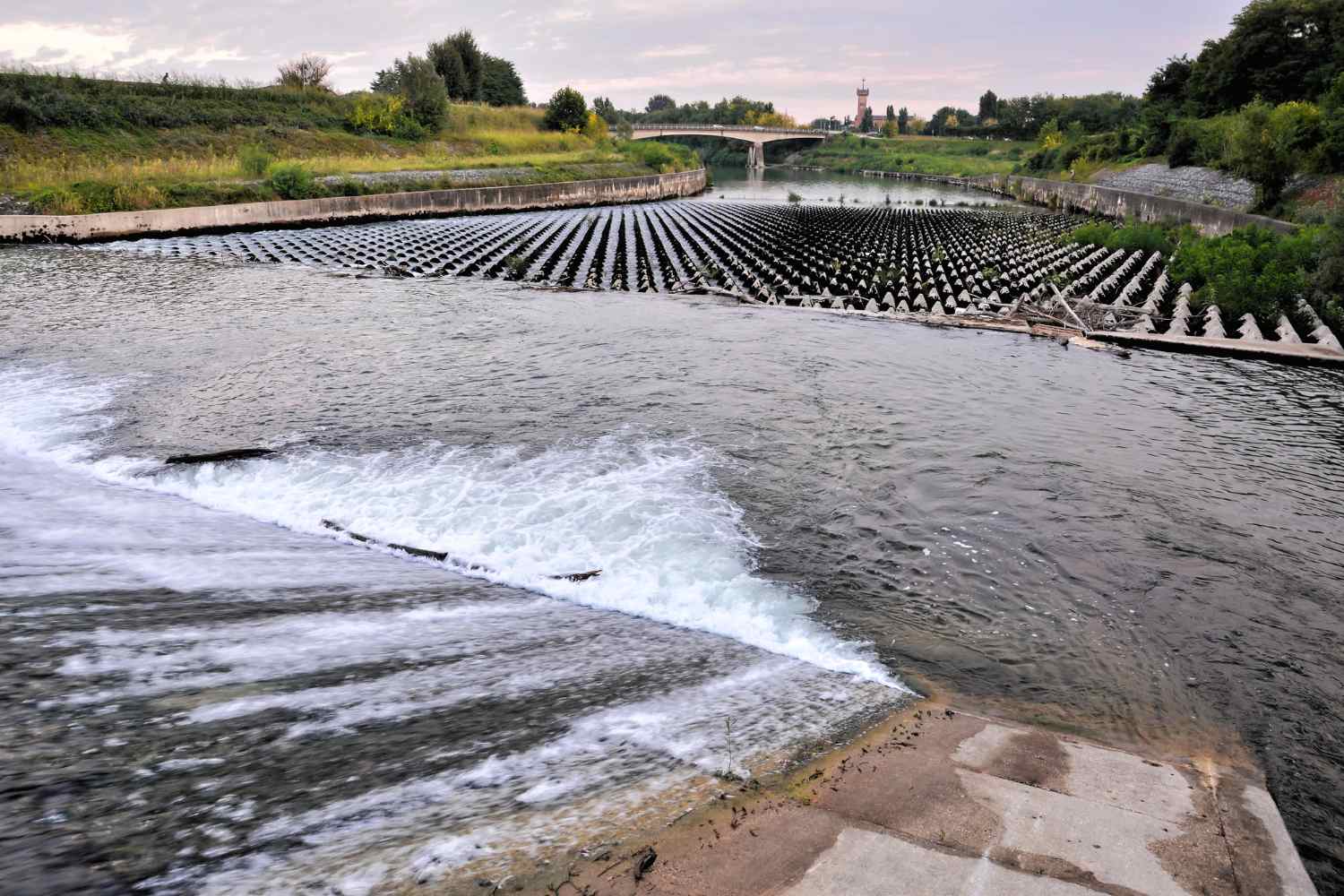
The third laboratory, curated by the artist Piero Ramella together with the sociologist Giorgio Osti, perhaps represents the most innovative aspect of the entire project. In the area of the lamination basins of Cerea, a group of teenagers is involved in a creative educational tour for transform hydraulic artifacts into “narrative objects” capable of telling the climatic challenges and the complexity of the management of water resources.
This cultural operation is revolutionary: transforms infrastructures often perceived as intrusive into elements of tourist and educational attraction, creating a new ecological awareness through art.
The atlas of the banks
The collaboration with Marco Paolini and the “Atlas of the Rive” project adds a dimension of civil theater to the initiative. The goal is ambitious: to tell Italy through hydrographic districts, restoring awareness of the physical geography of the country and the management of the water resource.
This narrative approach represents a paradigm change: no more passive consumption tourism, but active tourism of knowledge and participation.
A model replicable for the future
The Lab Village project is not limited to local experimentation. The experiences developed last winter on the Cimbri plateaus – with the works of the photographer Marco Zorzanello, of the playwright Diego from the street and the musician Fabio Bonelli – have already become a format replicable in other territories.
This scalability is crucial: It means that the multidisciplinary and participatory approach experienced in Veneto can be adapted and widespread, contributing to a systemic transformation of the Italian tourism sector.
A creative response to the climatic emergency
In a historical moment in which the climatic emergency requires innovative solutions and the Overurism threatens the balance of fragile ecosystems, the Lab Village project offers a perspective of hope. It shows that it is possible to imagine forms of tourism that not only do not damage the environment, but actively contribute to its enhancement and protection.
On September 28, on the occasion of the World Rivers Day, all the workshops will merge into a presentation event that promises to take stock of a summer of experimentation. But beyond the specific results, this project has already achieved an important success: it has shown that the future of sustainable tourism necessarily passes through creativity, participation and a new alliance between culture and territory.
The challenge is now transforming these experiments into a systemic model, capable of influencing national and international tourist policies. Because if the Overurism is the problem of the present, projects like Lab Village could be the solution of the future.
