
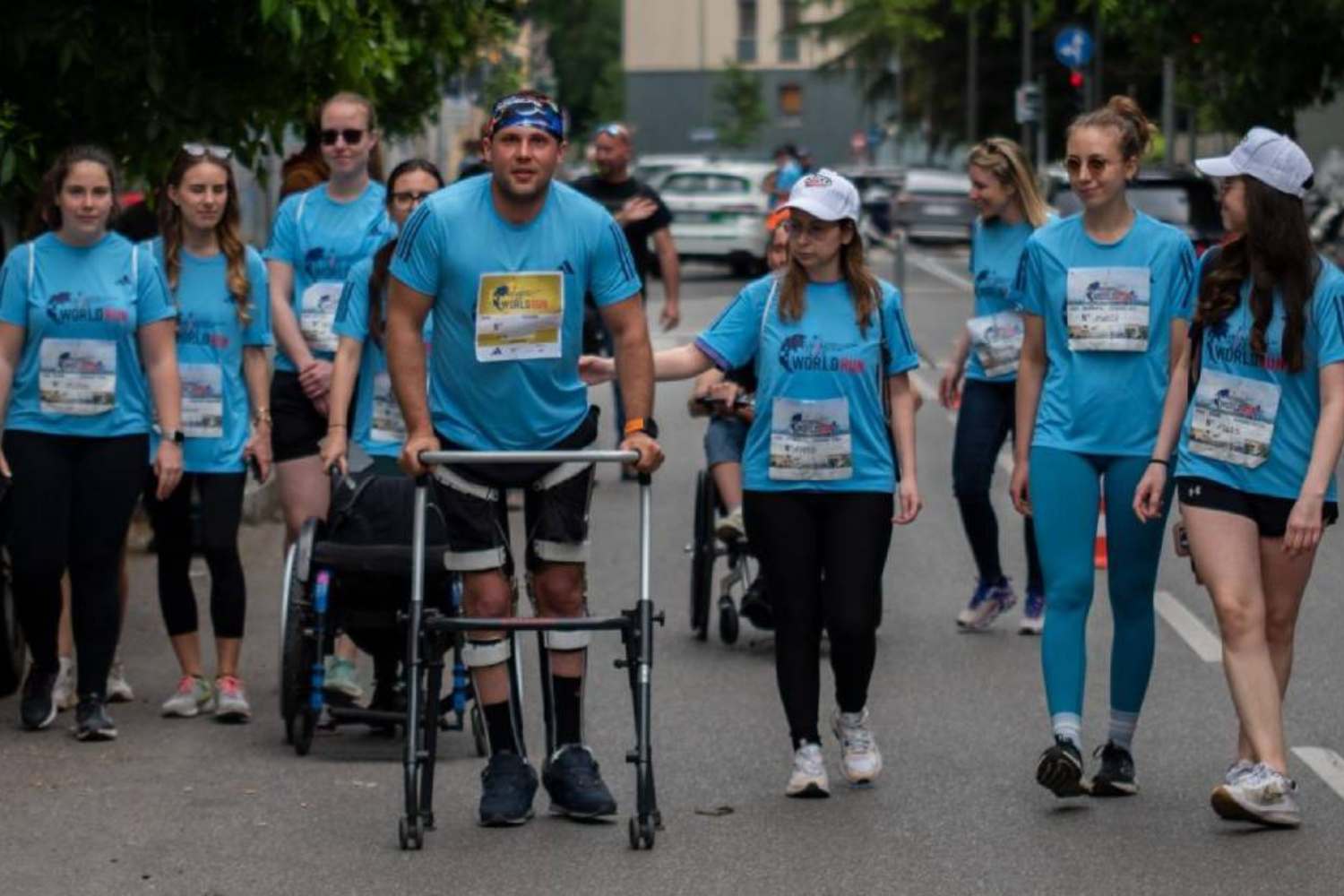
Walking again, after years of paralysis in the lower limbs, is no longer just a dream. It really happened in Milan where a 33 -year -old paraplegic patient returned to his feet thanks to revolutionary therapy. The case, first in the world of its kind, was published on the prestigious Scientific Magazine Med-Cell Press and bears the signature of an all-Italian multidisciplinary team of the IRCCS San Raffaele Hospital, of the Vita-Salute University of San Raffaele and the Sant’Anna High School of Pisa.
The protagonist of this extraordinary clinical affair is Andrea (Fantasia name), a young man who four years ago had undergone a serious medullary lesion at a low thoracic level (T11-T12), extended to the medullary cone. The accident at work had made him paraplegic, with damage to the central and peripheral nervous system. Despite two intensive rehabilitation cycles, Andrea could no longer stand or walk. It seemed like a definitive condemnation. Instead, science rewritten the ending.
The team led by Professor Pietro Mortini and Dr. Luigi Albano surgically implanted a neurostimulator in the epidural space. It is a device with 32 electrodes positioned between the T11 and L1 vertebrae, which, once activated, has “rekindled” the residual nerve circuits. Everything was accompanied by a high -tech personalized rehabilitation program, which also included exercises in virtual reality and sensory feedback.
The results obtained and the new hopes for the future
The results were surprising: after three months, Andrea began to improve the mobility of the hip, control of the trunk and the seated posture. In six months, with the only help of walking and guardians, he managed to walk for a kilometer. Unplackable clinical progress until a few years ago.
In addition to the resumption of motor functions, stimulation also had a positive impact on neuropathic pain and the quality of the patient’s overall life. As Dr. Albano explained, this is the first case documented in the world in which a patient with such a complex injury to the medullary cone was able to return to walk.
The success of this medical enterprise is the result of teamwork that involved neurosurgery, neurologists, physiotherapists, bioengineers and researchers. This study opens up new hopes for thousands of patients in the world affected by serious spinal lesions, especially those that affect the medullary cone, one of the most difficult areas to be treated for its anatomical and functional complexity. Traditional therapies in these cases have very reduced recovery margins. With this new technology and approach, instead unimaginable scenarios are wide open.
Andrea’s feat, also celebrated during the “Wings for Life World Run” sports event, is not only a personal victory, but a turning point for rehabilitation medicine. It is the concrete demonstration that, with technological innovation and multidisciplinary work, even the most insurmountable limits can be exceeded.
Don’t you want to lose our news?
You may also be interested in:
