
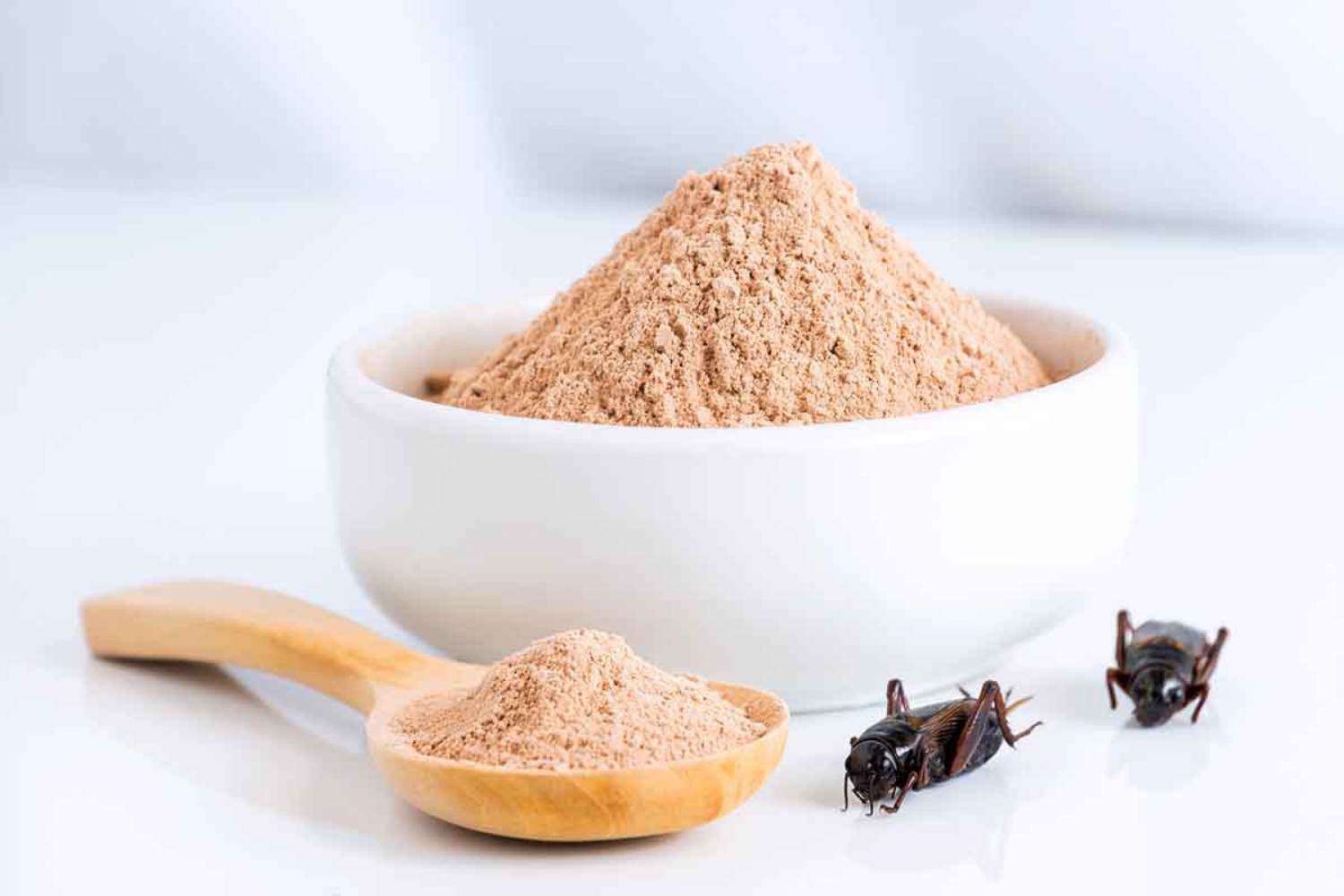
In recent years, there has often been spoken of the insect flour as one of the most promising solutions to reduce the environmental impact of food production. Alternative protein source, innovative and rich in potential (although very opposed in our country), has found growing space in the debates on novel food, cultivated meat and protein sources of the future, especially in the United Kingdom, a country on the front line on these themes. But now a new scientific research brakes enthusiasm.
According to what reported by the newspaper The Timeseating insects, from a climatic point of view, may not be a good idea. To question the sustainability of insects as food is A recent study commissioned by the Department for the Environment, Food and Rural Affairs of the United Kingdom (Defra). The research, conducted by the consultancy company Ricardo, focused in particular on the production of proteins from larvae della Moscow black soldier (Hermetia Illuccens), used to obtain protein flours for both human and animal use.
The result is clear: even if these larvae are bred with food – a method that should theoretically increase sustainability – Their impact on climate change is six times higher than that of the production of soy proteins and almost double compared to fish. The main reason? The industrial processes necessary to transform the larvae into flour: refrigerated transport, sterilization and drying, all at very high energy intensity.
The situation worsens further if, instead of food waste, commercial feeds are used to feed the larvae: in this case, the climatic impact can reach up to 14 times greater than that of soy.
If compared with beef or pig, the production of insects remains less impactful. However, the study underlines that there are no sufficient environmental motivations to promote the insertion of insects into the human or animal diet, if not in the presence of a strong preference by consumers.
Among the strongest arguments in favor of the consumption of insects there is their high efficiency in converting food into proteins: just think that in order to obtain the same protein quantity, a cricket needs much less water than a cow or a chicken. In addition, the possibility of nourishing them with food waste potentially contributes to the reduction of waste.
But, as clarified by Ricardo’s researchers, these advantages risk being canceled if the production cycle is not optimized, in particular from an energy point of view. Without the use of renewable sources and low -consumption technologies, the insect industry could aggravate, rather than improve, the climatic crisis.
High costs and cultural barriers
In addition to the environmental question, the insect flour clashes with two further obstacles: the costs and prejudices. The production systems are still too expensive to compete with traditional proteins and, in western countries, the consumption of insects continues to arouse diffidence, if not real disgust, among consumers.
In short, despite the efficiency in the use of resources and prospects related to waste management, it seems that insect flour – at least for now – cannot be considered a truly sustainable solution. Its environmental impact, high costs and the difficulties of social acceptance strongly limit its effectiveness as an alternative “green”, at least according to this last research.
The British study reminds us that sustainability is not only a matter of resources used, but also of how the processes are managed. In order to truly become an integral part of a more ecological food system, insects, it will be necessary to invest in cleaner technologies, reduce the energy intensity of the processes and overcome cultural and commercial obstacles.
Until then, it seems that the insect burgers will remain more a promising idea than a real solution.
