
The last bell played, the parents are faced, again, to always the same long -standing problem: what do I make my children do? The long long summer holidays from school do not match the needs (and the possibilities) of Italian families anymore: the “holiday” of the past, in which mothers went on vacation with children since June and the dad remained in the city, the habits and needs have changed totally changed.
But we are still far behind in meeting the needs of the new millennium: the closure of schools for over 100 days, in a nutshell, costs us dear and bitter. More and more.
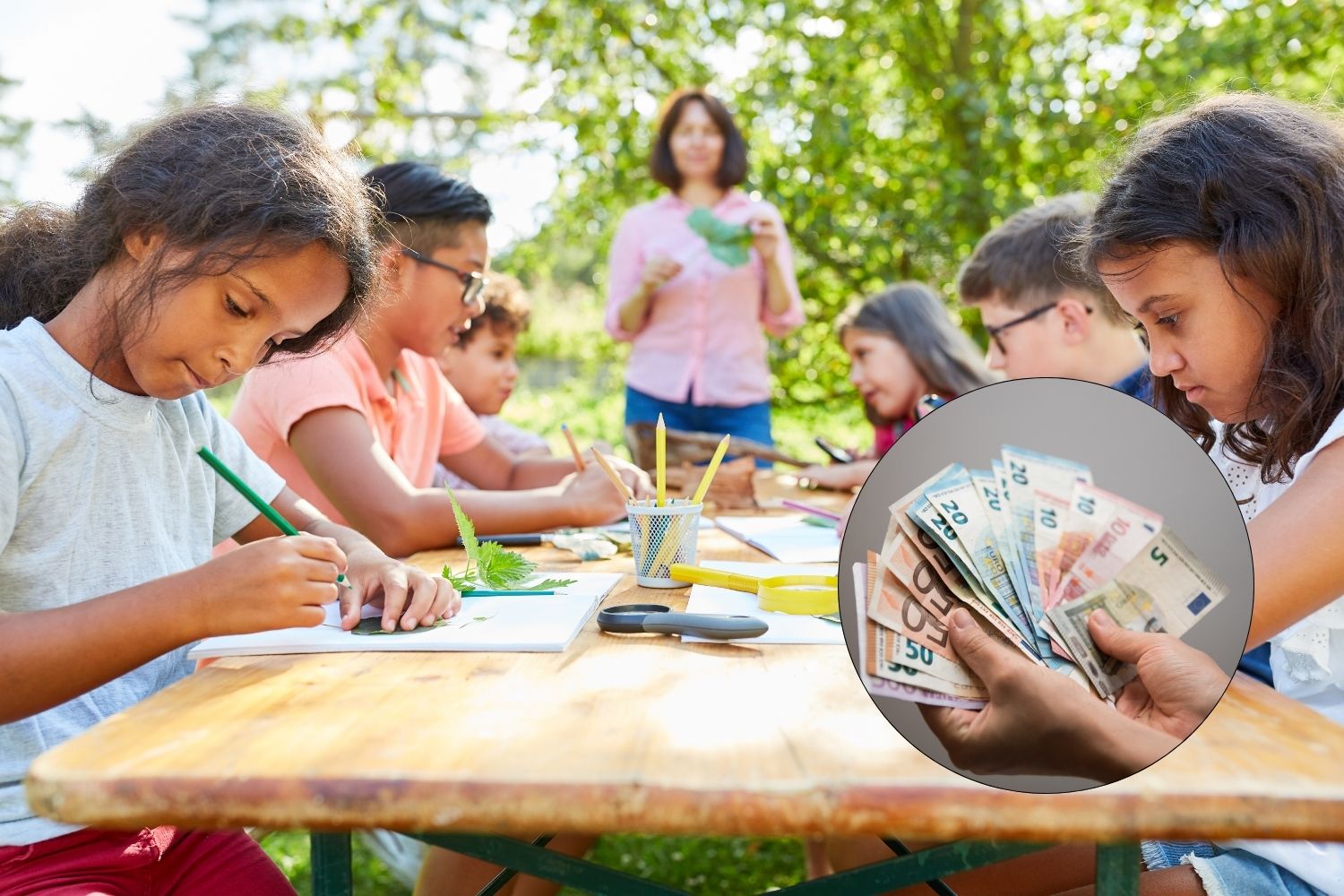
The alternatives are now the so -called “fields” or summer centers. Which will also be places of fun for children, but for mothers and dads correspond to a real room.
How much the summer centers cost
According to the latest investigation carried out by Adoc and Eures, who for the third consecutive year has conducted a “mystery client“Out of about 200 summer centers in eight Italian cities (Milan, Turin, Bologna, Rome, Florence, Naples, Bari and Palermo), the costs of the summer centers recorded an average increase of 12.3% compared to 2024 and an increase of even 22.7% compared to 2023.
The average weekly cost of a full -time summer center in Italy stands at 173 euros. For a family with a single child, who needs eight weeks of the summer center (considering a month of parents’ holidays), the average expenditure touches 1,400 euros (1,384 euros). The situation worsens considerably for families with two children: the total cost can reach 2,671 euros, equivalent to about once and a half a monthly average salary. This is because the average discount for brothers, when applied (only in 40% of cases), rarely exceeds 10%.
The refection service is present in 71.7% of the summer centers, while the remaining 28.3% requires the “packed lunch” (also delegating the burden of the preparation of the meal from home) or the payment of a further share for this “extra”.
The territorial disparities are marked:
Milan confirms the most expensive city, with an average weekly cost full time of 227 euros, almost double compared to Bari (109 euros). Following Florence (177 euros) and Bologna (172 euros). For eight weeks of full -time summer center, the Milanese families come to spend almost 2,000 euros for a child (1,816 euros) and over 3,500 euros for two children (3,505 euros).
The increase in costs is definitely higher than average annual inflation (equal to 1.7% in 2025 according to estimates of the International Monetary Fund). Between 2023 and 2025, the major increase is recorded in the center (+31.7%), followed by the South (+27.6%) and the North (+18.9%).
Once again, in view of the long summer, families find themselves having to face a real economic and social emergency, “says Anna Rea, president of Adoc. The closure of schools for 10 or 13 weeks, depending on the school cycle, places the numerous families who cannot count on a family support – grandparents, uncles, etc. – in the condition of having to allocate huge financial resources to make up for what seems to be an anomaly. Few European countries where schools’ go on vacation for three full months, against 6-8 weeks of Germany, France or the United Kingdom.
We expected greater attention to policies in support of parenting and children. Instead, not only do not see any step forward on the school, but we witness an unjustified increase in the costs of the summer centers compared to previous years. This is not a policy in favor of children, families and, in particular, women. A truly serious and irresponsible inconsistency for a country with the lowest born in all of Europe, which risks more and more to age, where young people run away to go to work and build a family abroad.
We strongly ask for an overall revision of the calendar of the school year, to ensure greater educational continuity and reduce the summer “hole”, the deductibility of the costs of the summer centers in the 730 model and policies that demonstrate a real proximity to families, with effective and tangible parenting support measures, beyond mere proclamations.
Here the complete study.
