
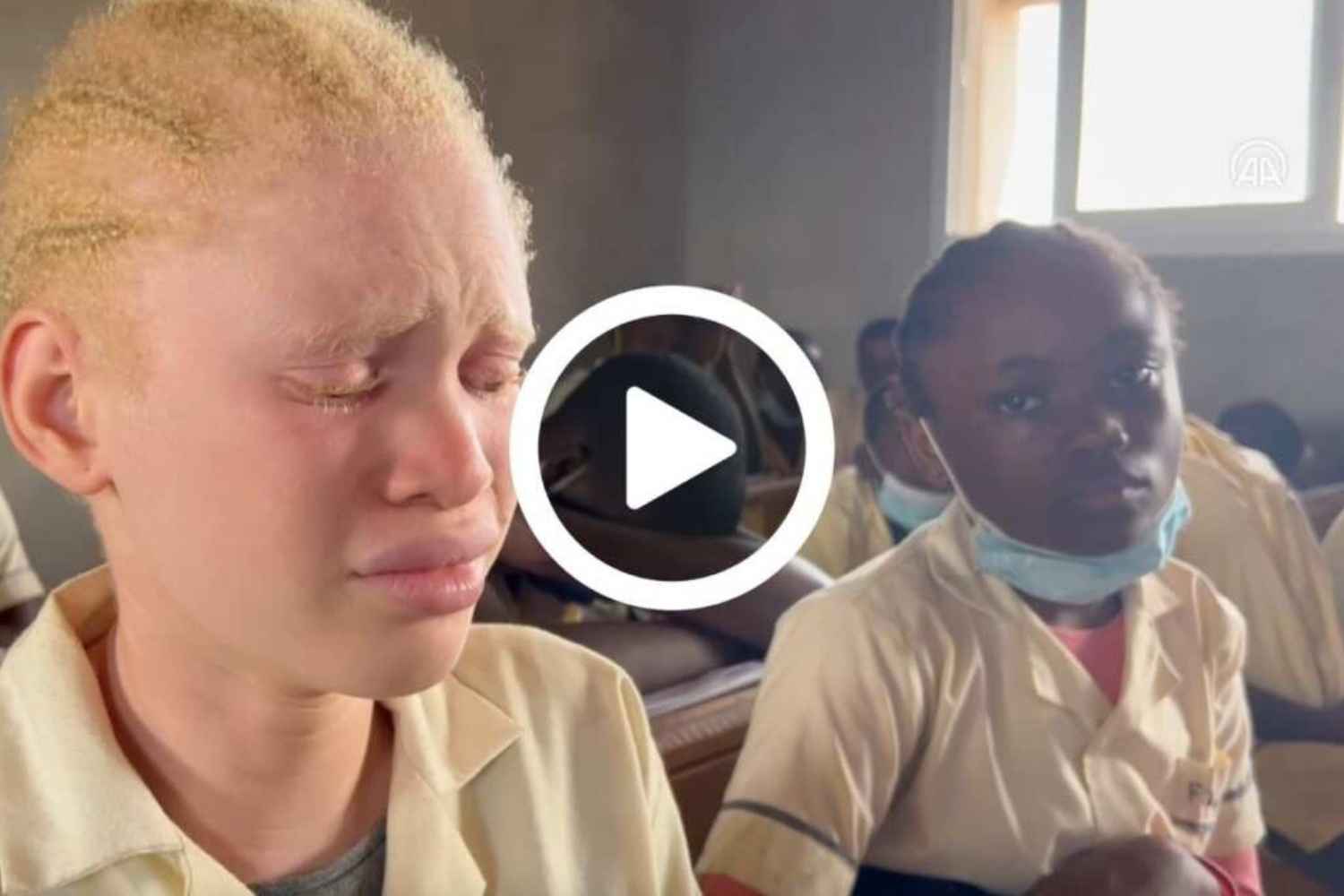
Little is talked about, but in different African countries, People with albinism They live constantly under threat due to superstitious beliefs linked to witchcraft. Some local traditions attribute magical powers to their arts, considered able to bring luck, wealth or healing. This has led to real acts of violence: arms and legs are amputated to be used in potions or transformed into amulets to be sold, fueling a brutal and dangerous market driven by greed.
Kakmeni Wembou Raphael, head of the Cameroon association for the promotion of the albine (Capa), told the Anadolu agency that Albini children grow in fear, since discrimination is very common in the country, where many people with Albinism are kidnapped.
The Albini limbs are sold for $ 15 or 30 on the black market
Raphael told. Beliefs lead to superstitious absurd gestures:
They told my mother to put me in the attic. We, in Africa, dry our corn in the attic. They wanted to put me in the attic where they dry the corn so I became black again.
The elementary school student Douangni Sandrine, who was unable to hold back the tears while describing the difficulties he lived, said nobody ever wanted to approach her:
Everyone thinks that I am cursed
He complains about the girl.
My family refused me. My family doesn’t want to see me. It doesn’t matter what I do, they ignore him because I’m Albina. I have no dignity in their eyes.
He added Njoko Kom Sandra.
Meanwhile, Chamga Rostand, a history teacher, said that although there are no more kidnappings and killings as before, these rituals continue:
We found the body of an albina girl near the garbage bin. Half of the body was disappeared. Certainly, half of the corpse was used for rituals of sorcerers. Because they believe that placing the cut limbs of an albino on the foundations of the construction makes the house lucky: many people will want to rent it and the tenants will pay a lot of money
In addition to the social problems they encounter, the Albini in Africa get sick easily of skin cancer if they do not protect themselves from light. Many of them cannot afford to buy solar creams and for this they find themselves exposed to the rays of the scorching African sun. It is necessary to put an end to these episodes of poverty and social discrimination. To push the authorities to make more in defense of the Albina population, Amnesty International has launched a petition, with the hope that, from a greater awareness of the problem, even a solution may arise as soon as possible.
To sign the petition, click here.
