
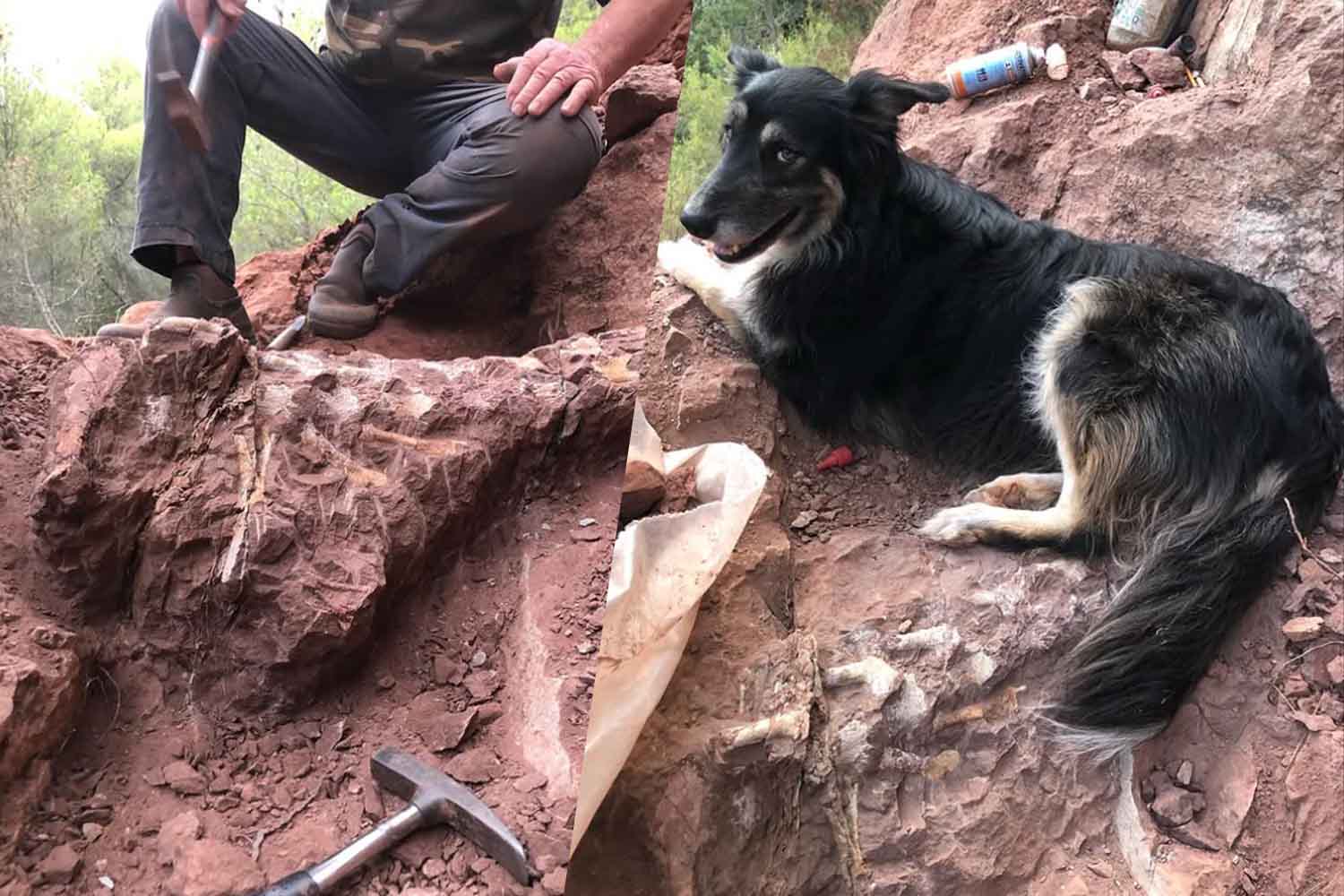
A simple walk through the hills of the south of France has turned into a historical moment for paleontology. Damien Boschetto25 years old, a passionate self -taught of fossils, he was taking the dog around the surroundings of Montauliersin Cheault, when he noticed something unusual: large bones that emerged from a rocky wall, made visible by a landslide that took place a short time before.
His intuition proved to be right. Those bones belonged to a Titanosaurone of the largest dinosaurs ever lived on earth, and what has left everyone speechless was the level of conservation of the fossil: Almost a whole skeleton, about 9 meters long.
An almost complete and well preserved skeleton
The discovery, which took place three years ago but made public only now, immediately attracted the attention of a local association engaged in the protection of cultural, archaeological and paleontological heritage. With the support of the experts of the Museum of the area, it was possible to start the excavations in a professional way.
What emerged from the ground was incredible: An almost intact body of titanosaurus, herbivorous lived about 70 million years agoduring the upper Cretaceous. The bones were arranged in such a way as to make an almost complete reconstruction of the skeleton possible. Given the fragility and size of the finds, the use of cranes was necessary for transport.
In paleontology, finding remains so complete is very rare. Most of the dinosaurs are discovered in fragmentsoften incomplete and damaged. To make a comparison, it is estimated that during the Cretaceous they existed Over a billion and a half of Tyrannosaurus Rexbut to date we know less than 100 specimens, and almost all incomplete.
View this post on Instagram
The giant herbivores of the past and the importance of the “random” finds
The titanosaurs, herbivorous dinosaurs with a massive body structure and elongated neck, they lived in the land between 150 and 66 million years ago. Although they were present in all continents, it is really difficult to find remains in good condition.
The discovery of Montauliers joins that of the“Australian” Savannasaurus Elliottoruma titanosauro described for the first time in 2016, which helped to shed light on the diversity of these colossal creatures.
This find also underlines how precious the observation of passionate citizens can beeven without academic training. In this case, the readiness of a young fossil lover was enough to return to the world a piece of prehistory that would otherwise have been buried forever.
