
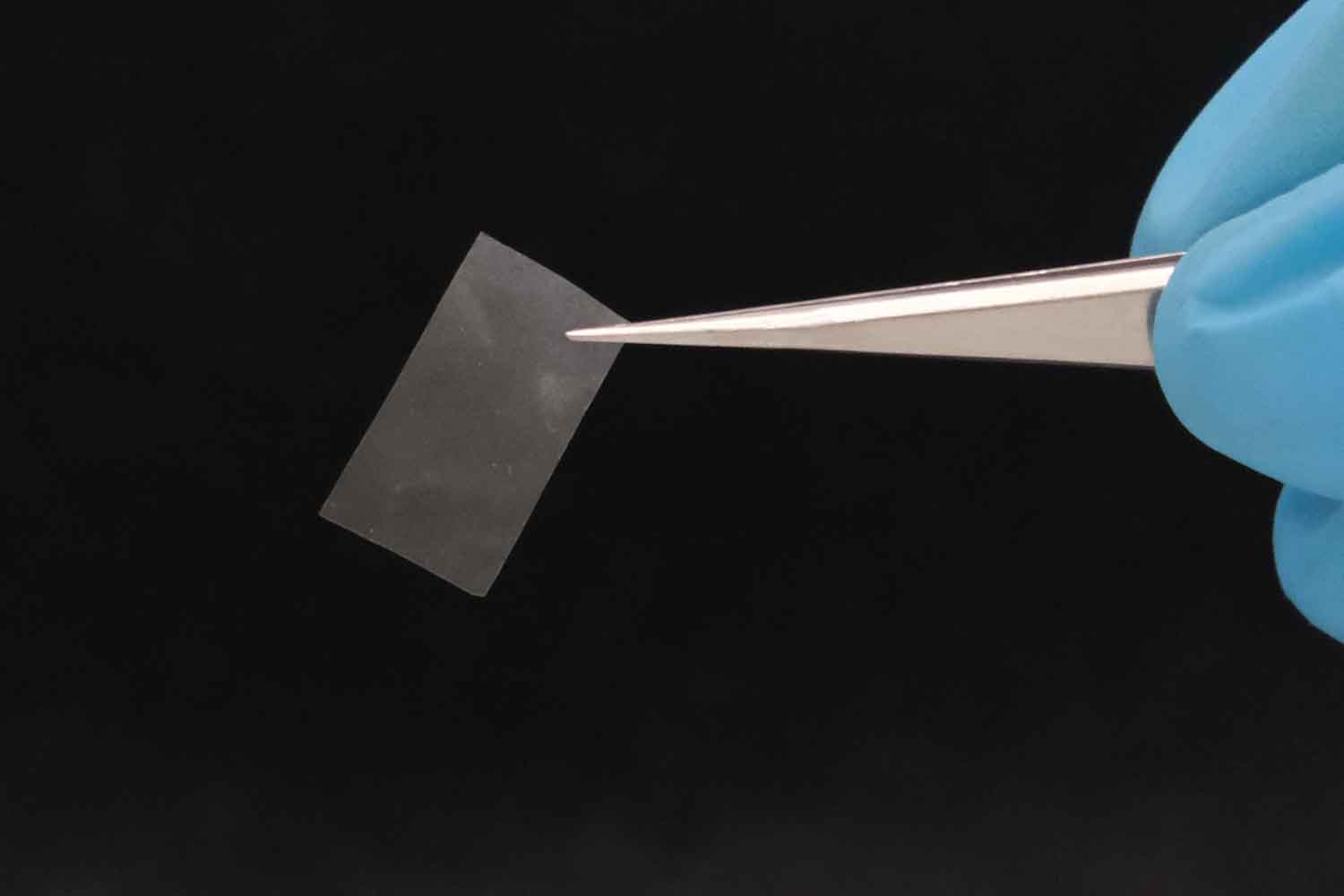
A team of researchers from the Swiss laboratory EMPA (Swiss Federal Laboratories for Materials Science and Technology) has developed an innovative material that could revolutionize the future of plastic. The mixture, called “Living fiber dispersion” (Living Fiber Desverion, LFD)was created starting from Split-Gill mushrooman edible species, and is capable of imitating many of the characteristics of traditional plastic – but without the harmful environmental impacts.
The mycelium of the Split-Gill mushroom: a versatile and sustainable resource
The heart of this discovery is the myceliuma structure similar to roots that constitutes the base of the mushrooms. These deadly fibers are already known for their versatility and are widely used in the production of ecological packaging, sustainable fabrics, Green construction materials and even in nourishing foods.
Unlike common techniques, where deadly fibers are chemically treated to improve their performance, the Swiss team has decided to leave them intact. This choice allowed the mushrooms of naturally develop your extracellular matrixan biological network of fibrous macromolecules, proteins and bioactive substances. This structure not only physically supports the mushroom, but it protects from external agentsat the same time giving him unique mechanical and functional properties, as he explained Ashutosh SinhaEmpa researcher:
The mushroom uses this extracellular matrix to give shape and functionality. Why shouldn’t we do the same?
A flexible, resistant and stable material over time
After selecting a particularly variety resistant and flexible of Split-Gill, the researchers managed to create a material in the laboratory gelatinous but modelableperfect for being used in various sectors.
Among the first applications tested, there are:
But the real strength of this dispersion of living fibers is that Keep living even after processing. The mushroom at the base of the material constantly emits stabilizing moleculesa natural process that makes it more stable over timeunlike most chemical emulsions that tend to degrade.
This is probably the only emulsion that improves its stability over time.
While the world fight against plastic pollution, both in ecosystems and in our organisms, the development of biodegradable and safe alternatives like this represents a concrete hope. And the idea that future sustainable products can be created by a live, flexible and edible mushroomit is not only promising, but fascinating.
