
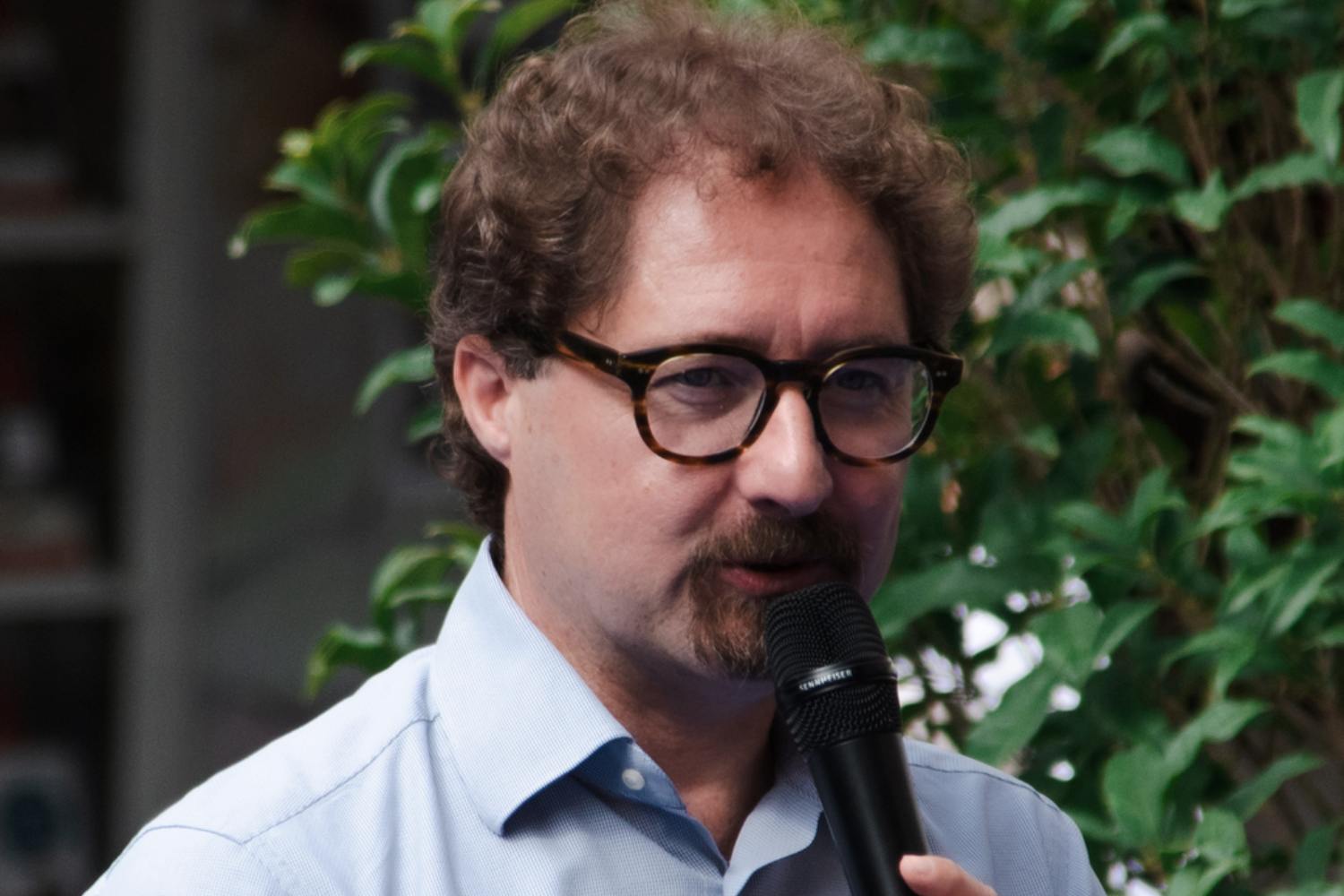
Among the traces of the first test of the 2025 high school exam, it is the one proposed by Telmo Pievanifor type B (argumentative text), to have reported the environmental theme at the center of the school debate. The philosopher and scientific popularizer invites students to reflect on the “imprint” that our civilization is leaving on the planetdefining the current era as “a quarter of era of celebrities”: a short time but capable of deeply altering the geological history of the earth.
The focus is on cementing and on the destruction of the natural landscapean implicit complaint to the reckless consumption of soil. A theme that finally reports the environmental theme also to maturity, inviting students to reflect on their role in the challenges that await them.
Who is Pievani and what teaches
Pievani, born in 1970, is an ordinary professor at the University of Padua, where he teaches Philosophy of biological sciences, Bioethics And Naturalistic dissemination. His formation combines evolutionary thought, ecological consciousness and critical spirit. He is the author of numerous essays on biodiversity, on evolution and limits of our development model.
His reflection focuses on the relationship between man and nature, on the irreversible consequences of cementingof soil consumptionfrom the loss of landscape. A theme that finally also arrives on school desks.
The importance of developing critical thinking
The choice of the Ministry of Education to insert a similar track in the Italian test is significant: it asks the boys not only to argue, but to position. In front of an increasingly tangible climatic crisis, the school can and must become a place of formation of environmental consciousness. Pievani’s approach is clear: it is not enough to know the data, it is necessary to develop a critical thinking capable of imagining alternatives.
“Karma Climate” by Marlene Kuntz
In this sense, his message is perfectly intertwined with a musical project like Karma climate of the Marlene Kuntzan album entirely dedicated to the ecological crisis. The disc combines poetry and denunciation, landscape and sound. The texts speak of broken balance, of lossing bonds with nature, of collective responsibilities. Songs like Secular prayer or Life on Mars They resonate as emotional echoes of Pievani’s words.
When science and art meet, a fertile space for the awareness. And if today maturity asks us to write about violated, cement and future landscapes, it is because we can no longer allow us to remain silent. Neither on the benches, nor elsewhere.
