
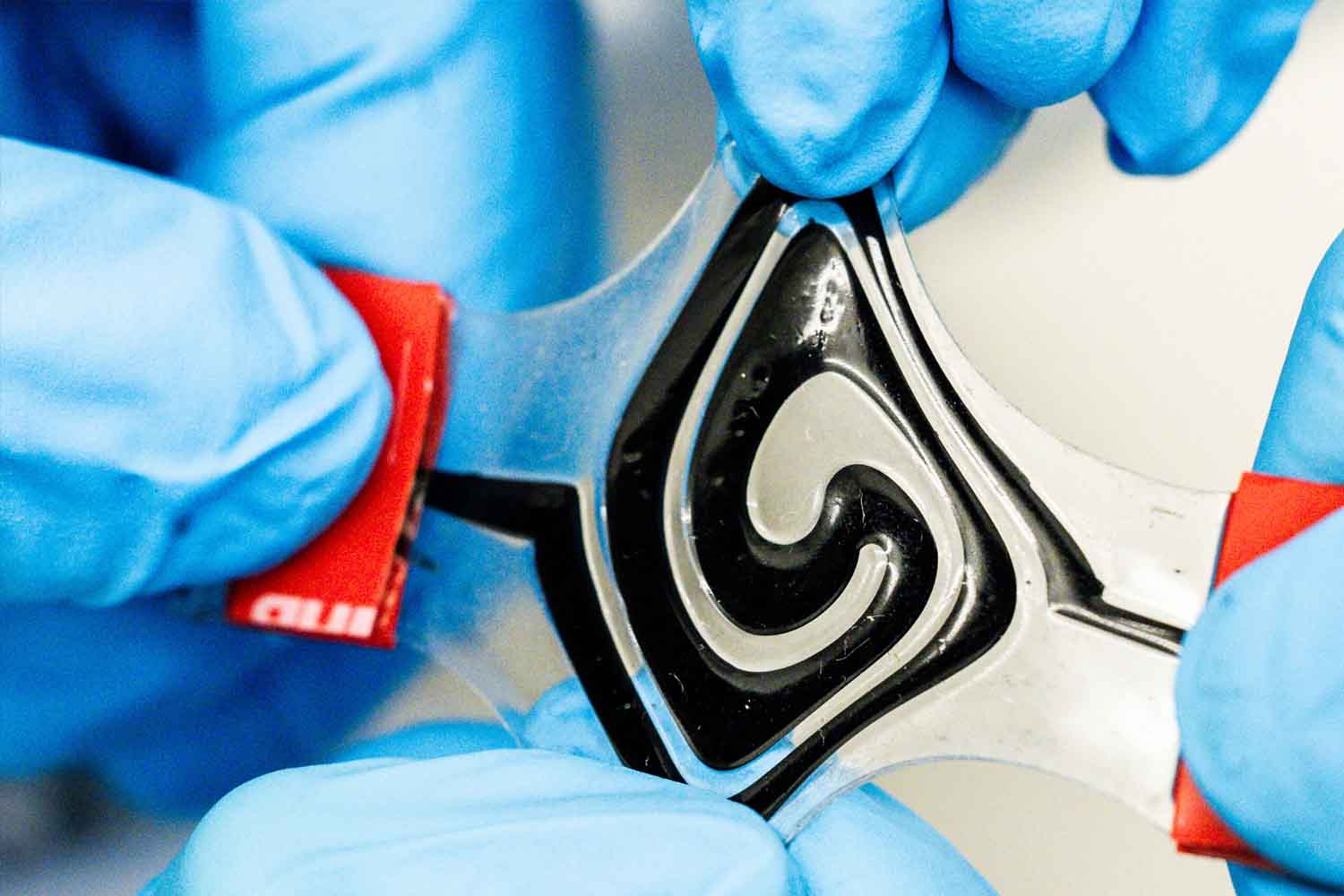
A fluid batterymalleable and recyclable, capable of taking any form: no, it is not science fiction, but a reality already working in the laboratories of the Linköping Universityin Sweden. This small masterpiece of sustainable technology was developed by a group of researchers from Organic electronics laboratory (LOE) And it could change our relationship with electronics forever.
The most surprising aspect? AND soft and working like toothpaste. Yes, just like that: it can be modeled with a 3D printer to adapt to any object, surface or device. A battery that not only feeds, but integrates. Which does not impose limits, but adapts. And that could, between not much, feed the wearable technologiesi medical devicesThe neural systemsThe e-textile And even the soft robotics.
No longer rigid and bulky batteries
The world goes towards an explosion of connectivity: it is expected that within ten years beyond a trillion of devices It will be connected to the Internet. And if we want these tools to be really useful and discreet – just think of pacemaker, insulin pumps, health sensors, prostheses and brain systems – we need new Intelligent energy sourceslight and adaptable.
As Dr. Aiman Rahmanudinfirst author of the study published on Science Advances:
The batteries are today the most voluminous component of electronics. They are rigid and impose limits on design. But with a fluid, soft and modelable battery, we can completely rethink the integration into the devices.
The LOE team therefore abandoned the classic idea of the rigid battery to create a system in which The electrodes are no longer solidbut liquids. In this way, the battery can adapt to any form without losing abilitya conquest never reached before. The previous research on flexible batteries had collided with the rigidity necessary to guarantee high performance. This time, the compromise has not served.
A central aspect of innovation is the choice of materials. No rare or dangerous metals. No toxic substance. The researchers used conductive polymers – already used in organic electronics – e ligninaa plant by -product obtained from the paper production process. The result is a battery that It can be recharged more than 500 times and which maintains its efficiency even if it is stretched up to twice its length, as pointed out Mohsen Mohammadipost-doc and co-author of the research:
Lignina is an abundant waste, and transforming it into battery material is a way to give value to what is discarded today. It is an important step towards a real circular economy.
In the past, similar attempts had been made with liquid metals such as the Gallium, but with disappointing results: they solidified, they only worked as anods and were not ecological at all. Here, however, the goal is clear: a more sustainable electronicsflexible and integrated into the body and in the environment.
The next goal? Increase the voltage and make it even more performing
Despite the extraordinary results, the battery still has room for improvement. Currently, The maximum voltage reached is 0.9 volts: enough for many applications, but not yet optimal for the most demanding electronics.
The team is therefore working on the insertion of New chemical compounds to enhance the tension. Among the candidates there are metals like zinc and manganeseboth abundant in the earth’s crust and already widely used in other energy technologies.
Our goal is now improving performance without compromising flexibility and sustainability.
This fluid battery could be the first concrete step towards a future in which energy adapts to our body, our clothes and even our thoughts. An energy that follows the form of life.
