
With the aggravation of the climatic crisis and the consequent increase in the demand for air conditioners, the risk of further fueling the problem also grows. Traditional air conditioners, in fact, use polluting refrigerant fluids which, if on the one hand cool the internal environments, on the other hand download heat towards the outside, aggravating urban overheating. In this context, more sustainable alternatives emerge, including technologies Low-tech of passive cooling.
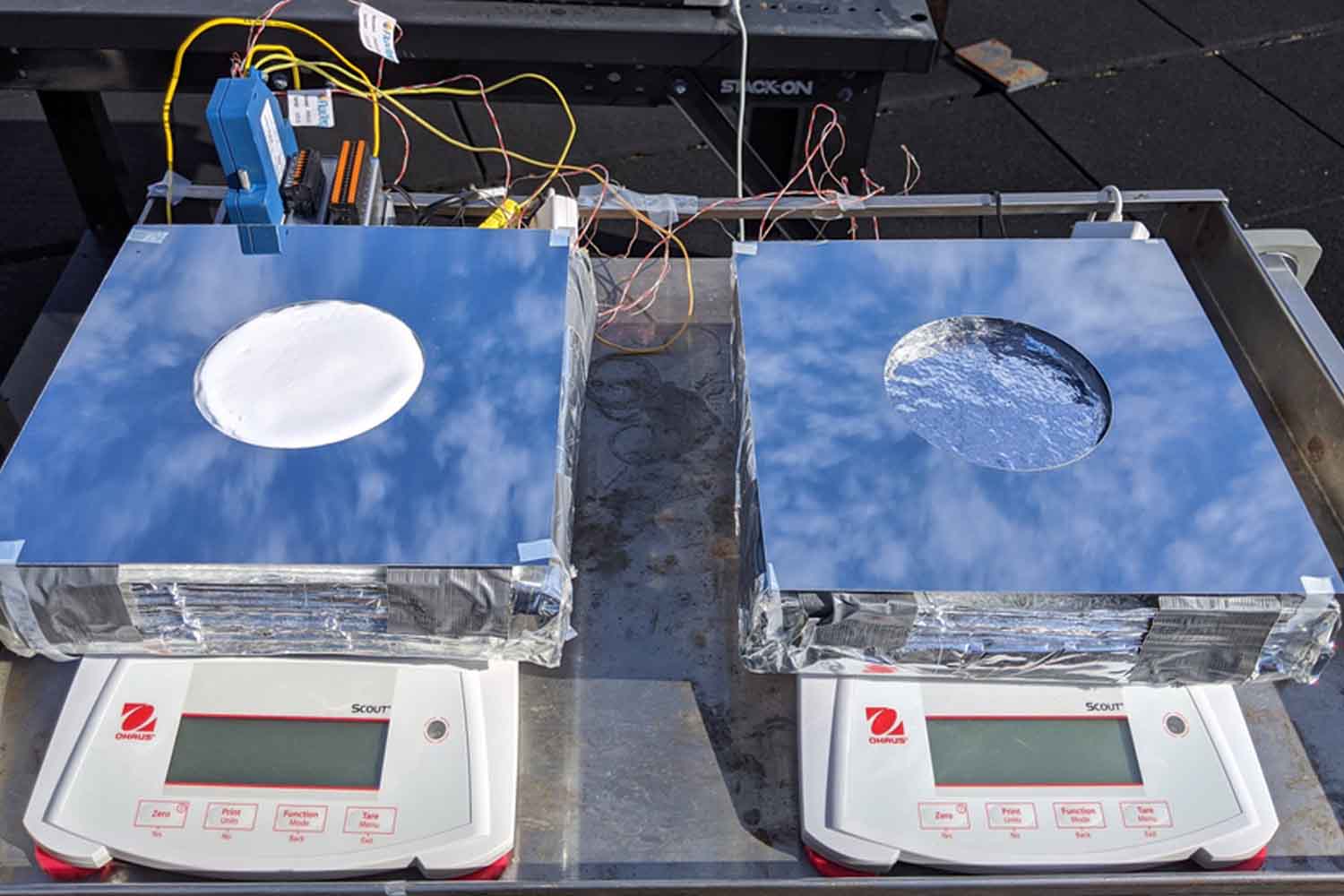
A team of researchers from Mit (Massachusetts Institute of Technology) recently developed a state -of -the -art device called ICER (Isolated Cooling by evaporation and radiation). This innovative system uses cooling for evaporation, infrared radiation and thermal insulation In a single compact device, similar to a small sun panel.
Tested on a prototype of only 10 centimeters in diameter installed on the roof of a MIT building, the ICER system has shown that it can reduce the internal temperature of up to 9.3 ° C compared to the surrounding environment. What makes this technology particularly interesting is his ability to maintain high performance even in unfavorable weather conditions.
The device is able to generate a daytime cooling power of 96 Watt per square metera value that represents an increase of 300% compared to the best current radiative cooling systems. Second Zhengmao lupost-dictate researcher at MIT, during the summer the ICER could prolong food conservation of 40% in humid climates and even 200% in dry oneswith a minimum water charging frequency.
How the passive cooling of the MIT works
The heart of the device is one three -layer structureeach with a specific function to ensure effective cooling without electricity:
During the operation, the water in the hydroge heats up, evaporates and crosses the aerogel, bringing part of the heat with it. The residual heat is emitted in the form of infrared radiation directly in the atmosphere and spacethus contributing to the overall cooling of the device.
Despite the promising results, the large -scale diffusion of ICER has to face a significant obstacle: The high costs of the Aircoel production. Its manufacture requires the use of solvents that must be removed with extreme caution in order not to damage the structure. This process implies the use of Special equipment for the “Critic Submission” (SPC)which significantly increase costs.
Mit researchers are already evaluating Alternative solutions to reduce production costsconvinced of ICER’s revolutionary potential especially in those regions where Access to electricity or water is limited. Such a technology could become a fundamental resource to ensure the cooling of the environments, improving the quality of life in many corners of the world.
