
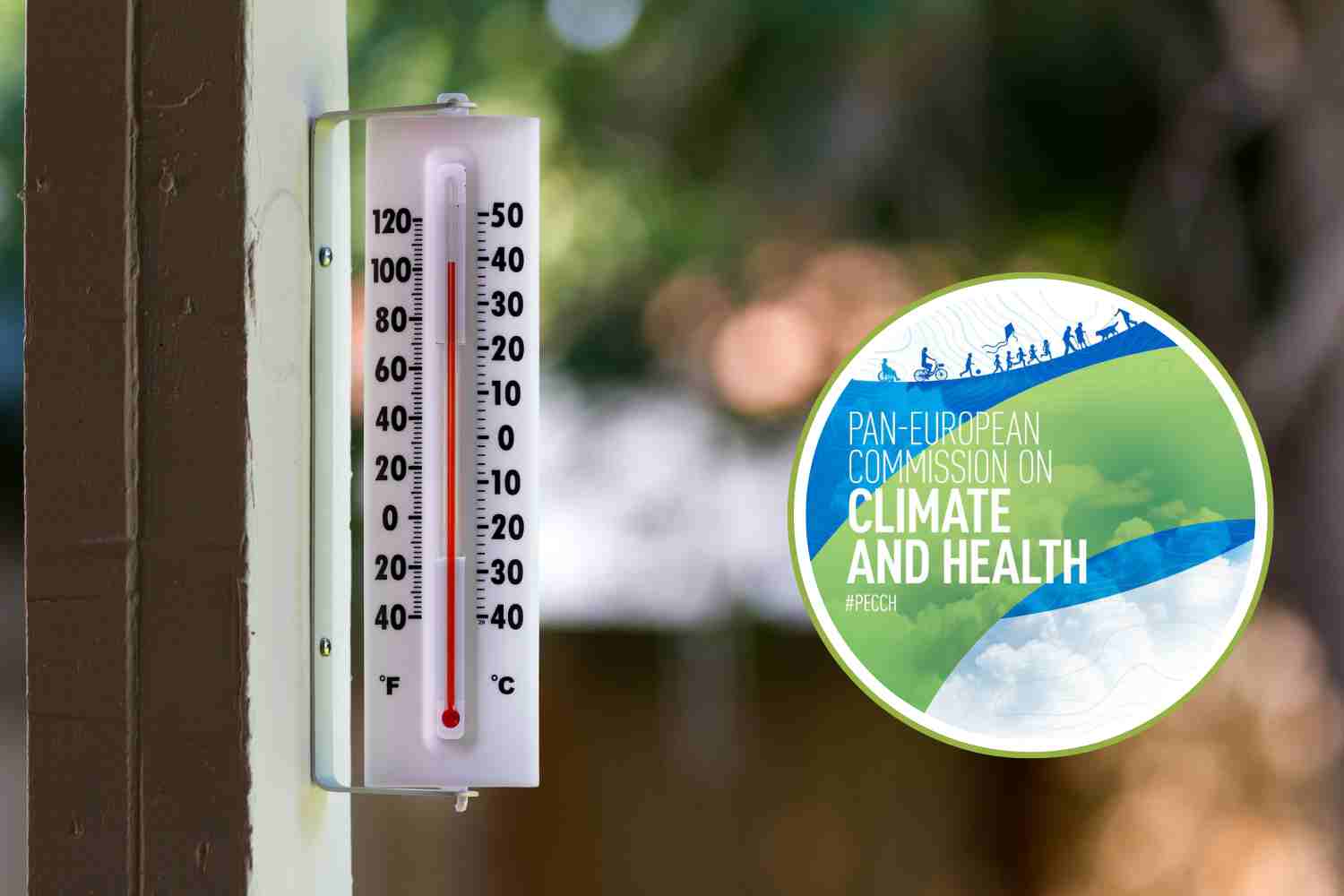
The balance is dramatic: in the two-year period 2022-2023, about one hundred thousand people died due to the extreme hot in 35 European countries. A number that transforms the climatic crisis into a health emergency, pushing theWorld Health Organization of Europe To launch an unprecedented answer.
Was born like this on June 11, 2025, the Pan-European commission on climate and health (Pecch), the first initiative of the genre to deal with what Hans Klugeregional director of the WHO, defined as “one of the most important health challenges of our time”. “It is time to recognize an undeniable truth: the climatic crisis is a health crisis. It is already killing us and, without an urgent action, it will worsen considerably,” said Kluge during the presentation.
First-Ever Pan-European Commission on Climate and Health #Pecch Launched Today
LED by former Icelandic PM Katrín Jakobsdóttir, The Commission BRINGS TOGETHER 11 Leaders from the European Region
Their Mission: Deliver Actionable Climate-Health Recommendations by Spring 2026 pic.twitter.com/9pmivauwsj
– Who/Europe (@who_europe) June 11, 2025
An increasingly warm and vulnerable Europe
The numbers are clear: Europe is the WHO region which heats up more quickly in the world. A third of all global -related global deaths occurs already in the European continent, while four of the hottest years ever recorded have concentrated from 2020 to today. 2024 established the absolute record of temperatures.
The effects multiply beyond the extreme heat. One in ten citizens in European cities lives in areas at risk of flood, and climate change makes floods nine times more likely. By 2030, 80% of Europeans will live in urban areas, further increasing the vulnerability of the populations.
“2024 was the hottest year ever recorded. We are directed towards a catastrophic increase of 3 ° C of global temperatures. Public health will be devastated,” he underlined Katrín Jakobsdóttirformer Icelandic Premier who will guide the Commission together with Andrew Haines from the London School of Hygiene & Tropical Medicine.
The most vulnerable pay the highest price
The health impact of climate change does not affect all in the same way. Children, elderly people, pregnant women, immunosuppressed And indigenous populations they represent the most at risk categories. The effects are manifested both on the physical level, with the increase in respiratory diseases, heat strokes and infections, and on the psychological one, with a growing wave of disorders related to environmental trauma, including the so-called eco-anxiety.
The situation is destined to worsen. Globally, almost half of humanity – 3.6 billion people – already live in areas highly susceptible to climate change. In addition to the heat, the extreme weather events, floods and infectious diseases transmitted by insects are multiplying, while air pollution causes half a million deaths per year in the European region alone.
A commission for concrete solutions
The new commission brings together 11 high -level experts from the whole European region of WHO, with the aim of formulating practical, sustainable and applicable proposals for make health systems more resilient. The approach will be pragmatic, focused on solutions that can “improve health results while reducing costs”, as Kluge explained.
The areas of intervention will range from the reduction of waste to the construction of efficient health facilities from an energy point of view, up to the strengthening of early alert systems for heat waves. The Commission will also work with representatives of other regions to develop shared solutions, paying particular attention to small Member States and islands, often at the forefront of facing climatic impacts.
The involvement of the territory will be central. During the first hearing, the mayor of Cesena Enzo Lattuca He brought the experience of the flood that hit Romagna in May 2023: “What we lived in Romagna is not an isolated accident. It is a preview of Europe’s climate future”, he said, underlining how “local governments cannot face this challenge alone”.
This morning I took part in the work of the first hearing of the Paneuropea Commission on the climate and health …
Posted by Enzo Lattuca on Wednesday, June 11, 2025
“The scientific evidence speaks clearly: we must reduce emissions and adapt health systems to a more unstable world,” concluded Andrew Haines. A message that acquires even more weight considering that the health sector alone contributes to 5% of global emissions, exceeding the entire commercial aviation sector.
The challenge is twofold: on the one hand, reduce the environmental impact of the health system itself, on the other, prepare it to face the consequences of an increasingly extreme climate.
