
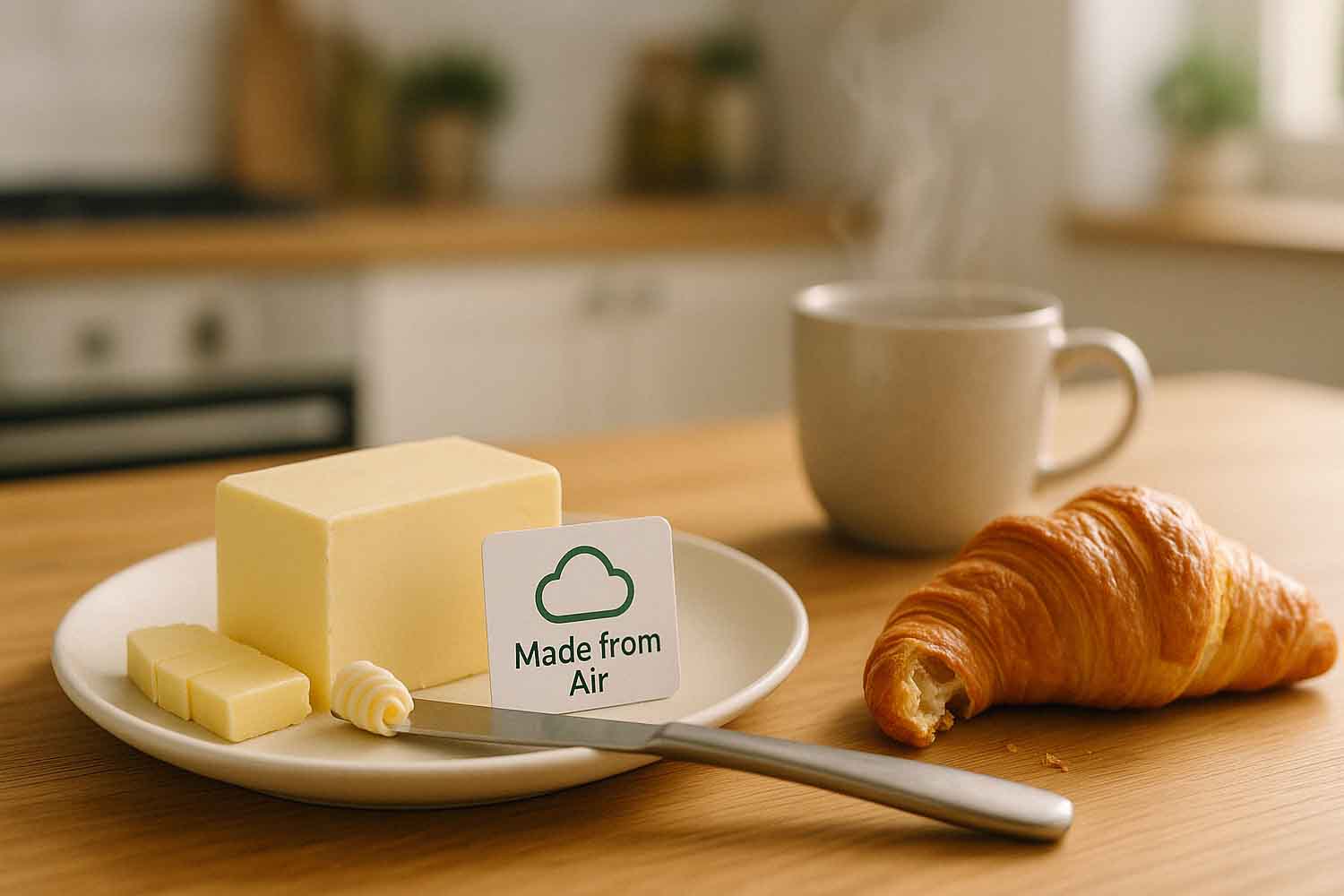
No cows and no milk, in the United States a startup created a butter starting … from the air. We need “only” carbon dioxide, hydrogen and an innovative chemical process. Among the supporters of the project there is also Bill Gates, who after tasking it said: “I couldn’t believe that I was not eating real butter“.
Gates has invested about 33 million dollars in the Californian Savor startup Through its Breakthrough Energy Ventures background, supporting the development of a pilot system in Illinois and the start of large -scale production.
Everything we know about air butter
As already announced, the Californian startup is called Savor who has developed the so -called “air butter”. The name makes you smile, but behind there is a very serious technology that aims to revolutionize the food industry. The principle is simple: all fats are carbon and hydrogen chains. If you can recreate these artificially chains, no more animals or plants are needed to produce them.
And that’s exactly what Savor did, the startup carbonic anhydride directly from the air and combines it chemically with hydrogen and oxygen to synthesize fatty molecules identical to natural ones. These synthetic fats are then mixed with water and emulsifiers to obtain the consistency of the butter, while beta-carotene and rosemary oil reproduce respectively the typical color and flavor of traditional butter.
According to those who tried it – including Gates – the flavor and consistency of air butter are indistinguishable from those of traditional butter. But the real revolution is environmental: The air butter does not emit greenhouse gases, does not consume agricultural soil and requires less than a thousandth of the water used in conventional agriculture. And it could become a sustainable alternative to fatal and vegetable fats, such as palm or coconut oil, whose production is often linked to deforestation and intensive exploitation.
The numbers are clear: the zootechnical industry is responsible for up to 20% of the anthropic greenhouse gas emissions. Reducing the consumption of animal products is one of the most effective strategies against the climatic crisis. But, as Gates points out, we cannot expect everyone to give up the foods they love: for this reason, concrete, tasty and accessible alternatives are needed.
When it arrives on the market
Savor has already opened a pilot system in Illinois and is working to bring air butter to the market. To guide his commercial expansion is an Italian, Chiara Cecchini, who explained how the process uses already tested in other industrial sectors, a premise that could facilitate a future large -scale production.
The main challenge remains the price. To be successful and become a valid alternative to traditional fats, air butter must cost how – or not – of animal or vegetable ones. If Savor manages to reduce costs, this product could open the way for a new food paradigm, based on foods produced without land or farms. We will see.
