
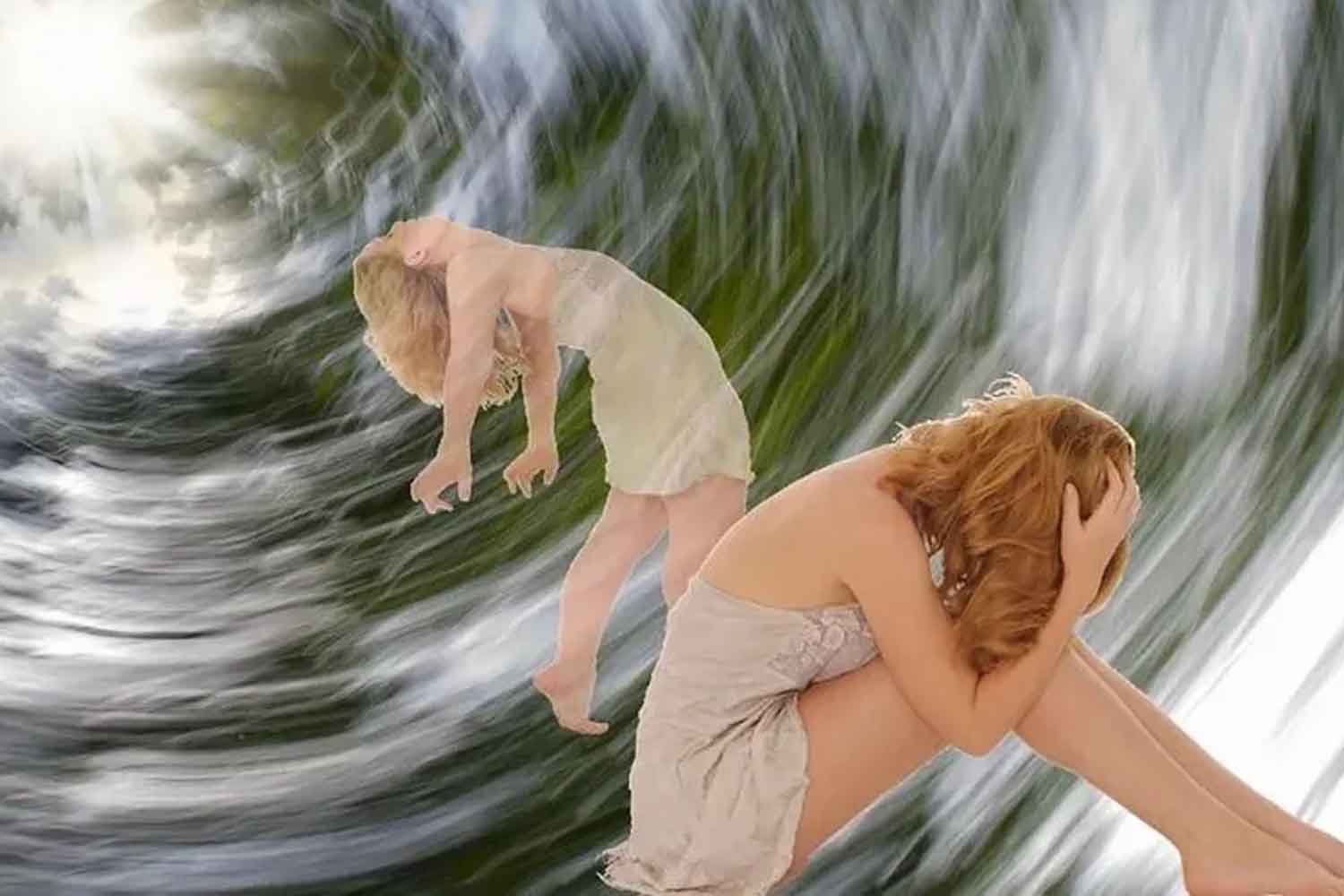
It is not the intensity of the experience lived to determine how a psychedelic journey with Ayahuasca can do it well, but but how similar, sustainable and integrating in one’s own world view is that experience is assimilated. To support it is a study published on Journal of Psychoactive Drugswho analyzed the experiences of people who participated in retreats with Ayahuasca in countries where its use is legal and regulated.
The researchers instead observed that, when theAWE – or that state of reverential amazement and sense of vastness – becomes too intense, it can be destabilizing, making it more difficult to integrate the experience and reducing the positive effect.
The study involved participants who had taken part in Legal withdrawals with Ayahuascaorganized in contexts regulated in countries where the substance is allowed for ritual and therapeutic purposes. The goal of the researchers was to understand What was the link between the AWE perceived during the mystical experience and the psychological well -being reported subsequently.
Ayahuasca, a traditional drink of the indigenous populations of the Amazon, is obtained from the Union of Liana Banisteropsis Caapi with the leaves of Psychotria viridiswhich contain DMT, a natural and very powerful psychedelic substance. In recent years, the use of theyahuasca has also spread in the West, where it is often taken in ritualized contexts, led by expert facilitators, with the intent to activate Deep processes of inner healing.
The research suggests, however, that, but rather The person’s ability to elaborate and contain what he has experienced. In particular, when the AWE reached very high levels, the sense of vastness could become unmanageable, generating emotions like confusion, anxiety or sense of loss.
When vastness becomes excessive
The research team, coordinated by Lee Kannis-Dymand of the University of Sunshine Coast, involved 60 adults, mostly from the United States and Europe. Everyone had participated in at least one retreat with Ayahuasca. Through a series of validated questionnaires, the participants told how much they felt changed, how much well -being they perceived, and how intense the mystical experience lived had been.
Two aspects of the AWE were particularly deepened: on the one hand the “Vastity perceived”that is, that sense of smallness that is felt in the face of something immensely bigger; on the other, the “Need for cognitive reworking”that is, the degree in which the experience had questioned its inner certainties.
From the results it emerged that The most moderate experiences, in terms of vastness, were associated with higher psychological well -being. When instead the AWE became too intense – a condition defined in the report as “Superfluous Vastness” – The benefits tended to decrease, leaving room for a more difficult emotional experience to integrate.
The researchers highlighted that There is a sort of “optimal zone”call Sufficient vastnessin which wonder is strong enough to stimulate reflection and change, but not so much to become destabilizing.
Feeling small can help, but only if you don’t feel canceled
Among the most interesting data collected by the researchers, one in particular attracted attention: the participants who had reported that they felt “insignificant in front of what they had seen” tended to report higher levels of well -being. This suggests that Confronting with one’s own smallness can facilitate a process of redefinition of the selffavoring introspection and transformation.
However, the team clarified that. When the experience makes you feel canceled, overlooked or without control, it can become a source of psychological distress. In these cases, The impact of mystical experience is too strong to be understood and integratedcompromising potential benefits.
The benefits of theyahuasca also depend on the context and preparation
Another factor that influenced the results concerns the context in which the withdrawal takes place. The study confirms what the scientific community has been repeating for years: The effectiveness of psychedelic experiences depends strongly on the “set and setting”that is, from the mental state of the person and the emotional, relational and cultural environment in which the intake takes place.
The participants who had taken part in more recent retreats tended to show a higher well -being, while those who had participated in several retreats over time reported a less intense AWE. According to the authors, this could depend on a sort of emotional adaptation: With repeated exposure, the experience becomes less disruptive and more familiar.
The study also observed some differences related to age and gender. The younger participants reported greater well -being and tended to consume Ayahuasca several times during the same retreat. Men, on average, had participated in a greater number of retreats, while women reported a more intense experience concentrated in a single event. However, none of these variables seemed to have a direct influence on perceived well -being.
Finally, the researchers underlined the importance of choosing serious and safe contexts: structured retreats, conducted by competent and rooted figures in local traditionsthey are fundamental to guarantee transformative experiences without risk for the psychological balance.
The intensity does not always bring healing
The study opens up to an important reflection on how we experience the experience of mystery and vastness. According to the authors ,.
Those who work with psychedelic paths – therapists, facilitators, spiritual guides – are therefore invited to create protected spaces, where emotions can be explored with respect, awareness and supportavoiding that the power of the experience overwhelms those who live it.
The team that conducted the research will continue to study the AWE in different contexts: from nature to experiential tourism, to virtual worlds. According to scholars, Finding opportunities for wonder in everyday life – even if only in front of a landscape, a sunset or shared silence – can become an antidote to solitude and contemporary emotional unease.
