
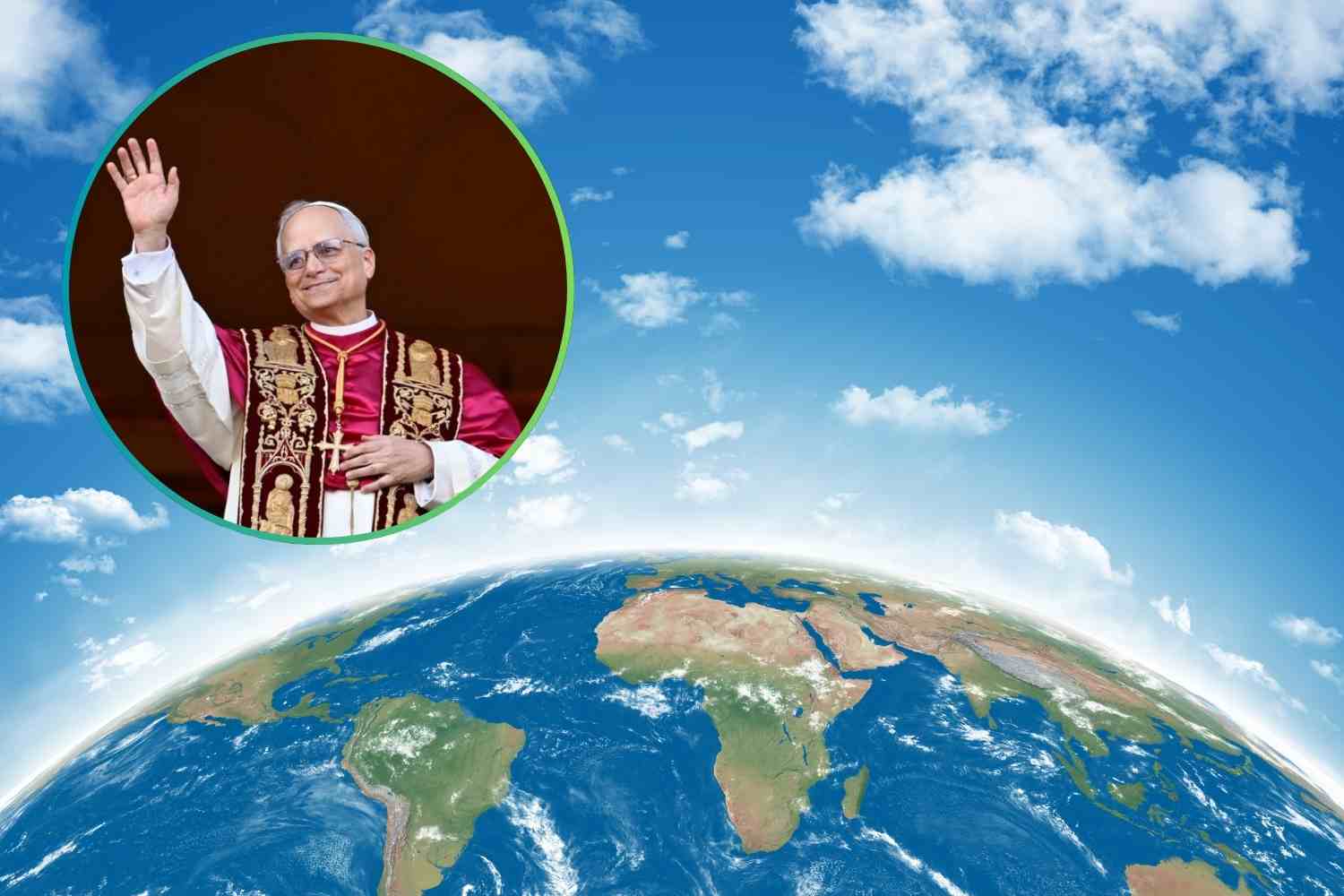
Pope Leone XIV He chose to break the usual summer confidentiality of the Pope in Castel Gandolfo to launch a strong appeal: “We live in a burning world, both due to global warming and armed conflicts”. Net words, pronounced on Wednesday 9 July during a special mass for the care of creation in the gardens of the papal residence, which clearly report the centrality of environmental issues in the new pontificate.
The Pope, elected last May 8 following the death of Pope Franciswanted to give a concrete signal by anticipating his participation in a celebration according to the new Catholic rite dedicated to creation, recently published by the Vatican. The choice to insert a specific liturgical rite for the ecological crisis – made public on July 3 – represents a significant development of the church’s commitment on these issues.
From the terrace that dominates Lake Albano, the Pope has addressed a pressing invitation not only to Catholics, but to the whole humanity: “We must pray for the conversion of many people … who still do not see the urgency of take care of our common home“. A phrase that echoes the encyclical Laudato yes of its predecessor, but which takes on a new weight in the light of the current extreme climatic events, such as The flash flood that hit Texas causing, until the day before the celebration, at least 109 victims.
“Even when this requires the courage to oppose the destructive power of the principles of this world”, underlined Leone XIV, indicating how the care of the environment is also a choice of civil disobedience against unsustainable economic and political models.
The Pope’s intervention was not accidental or symbolic: the decision to stop the holidays, which would have had to continue until July 20, was defined by the cardinal Michael Czernny – one of the main organizers of the Mass – as a clear sign of priority: “celebrating this mass … At the beginning of his holidays, Pope Leo is giving a beautiful example of thanks for the great gift of God and prayer so that the human family learns to take care of our common home”, he told theReuters Agency.
The location was not chosen at random. The gardens of Castel Gandolfo – 55 hectares of cured and symbolic green, already transformed by Pope Francis into a Ecological institute open to the public – They have become the stage of a liturgical and political action together. A way to give continuity to the environmental commitment of the Catholic Church, which under Francis had found new vigor with the explicit support for the Paris agreement and numerous appeals against climatic inaction.
Pope Leone, the first US pontiff, thus inherits not only a spiritual legacy but also an ecological agenda already traced. However, his choice to interrupt the moments of rest to reaffirm the urgency of the collective commitment could mark a more clear turning point. More than a declaration of intent, the gesture appears as a political position in a time when the climatic crisis has become everyday life.
While in Castel Gandolfo the residents hope that the papal presence can relaunch tourism and animate the religious celebrations scheduled for 13 and 20 July, the question that remains suspended between the perfectly pruned hedges of the Papal Garden is only one: how many other voices will have to get up before the ecological conversion becomes reality?
