
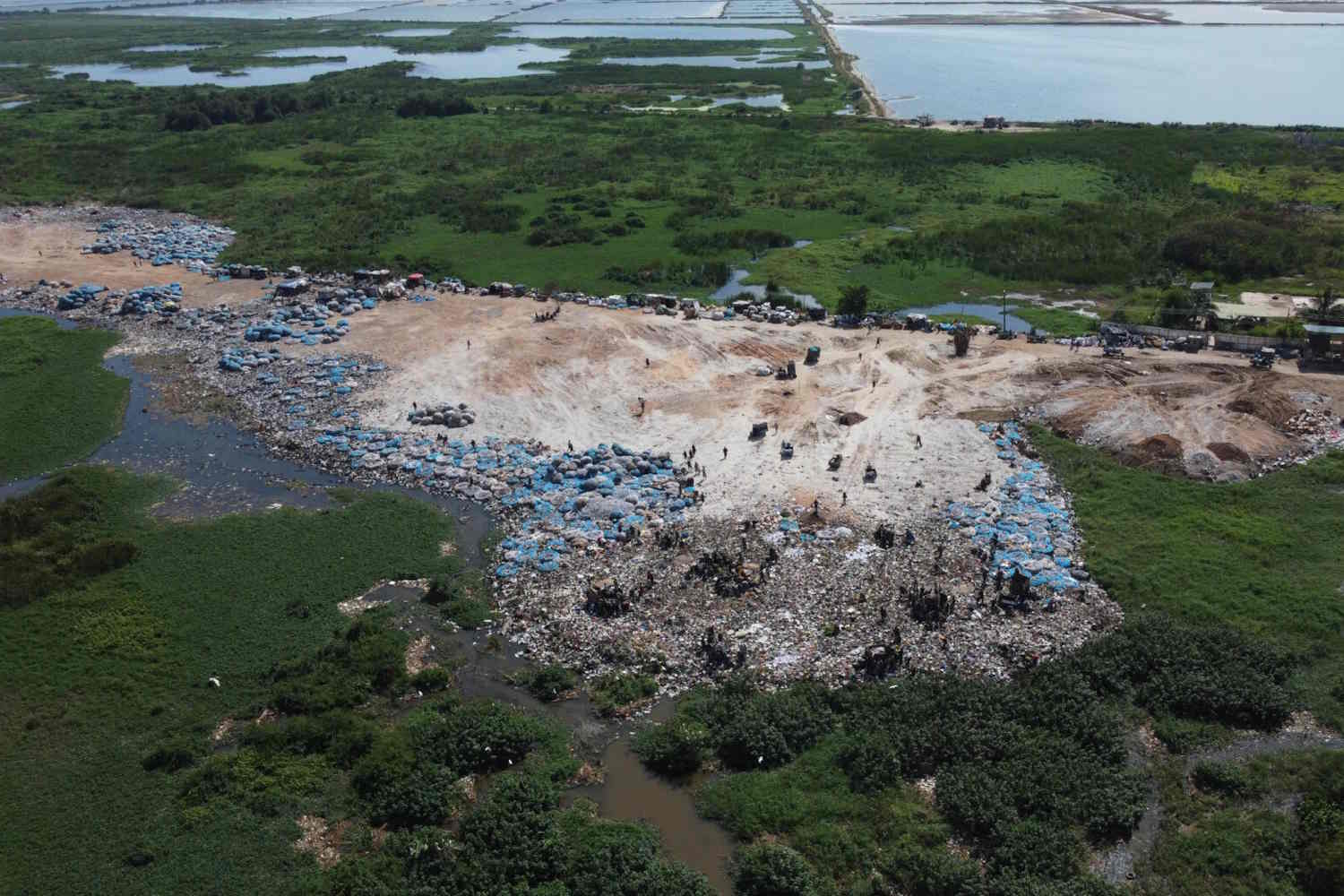
There are about 83 million tons of textile waste produced every year in the world, 65% of which is made from synthetic fibers derived from fossil fuels, while every second the equivalent of a garbage truck full of clothes is burned, dispersed in the environment or started in landfills.
The main destination of textile waste? Africa, which in 2019 received the 46% of the textile used by the European Championship: For half these are gap clothing that end up polluting the environment.
These are some of the data reported by “Draped in injustice“, New report by Greenpeace Africa that offers an overview of the trade in second -hand clothes, revealing the impacts of textile waste imported on the continent.
Among the most impactful countries there are:
Which, overall, in 2022 imported almost 900 thousand tons of used clothes. Only Kenya, in 2021, had received 900 million second -hand garments, mainly from Europe and the United Kingdom: 50% of these clothes, however, was unable to be unable for its poor quality or damaged, ending up in landfills such as Dandora’s, burning outdoors or polluting waterways such as the Nairobi river. While in Uganda, which in 2023 imported 100 thousand tons of clothes used above all by China, USA and Canada, it is estimated that up to 48 tons of garments every day become textile waste.
Another unsustainable situation, already reported by Greenpeace, concerns the Ghana which welcomes in its markets 15 million of second -hand clothing per weekalso for almost half inventable and dispersed in the environment.
We talked about it here: from Zara’s shelves to Ghana landfills: the dark side of Fast Fashion (and the clothes we throw)
Just in recent days, an investigation conducted by Unearthed And Greenpeace Africa documented as clothes discarded by British consumers have been found in gigantic open -air landfills near Accra, within one of the wetlands recognized of international importance by the Ramsar convention, habitat of three species of sea turtles. The local inhabitants also report that Fishing networks, waterways and beaches are clogged with synthetic Fast fashion garments exported by the United Kingdom and the rest of Europe. In another landfill on the banks of the river that leads to the area, the reporters have found clothes of M&S, Zara, H&M and Primark.
The disaster of the fashion industry
The fashion industry is responsible for up to 8-10% of greenhouse gase emissions, caused by high energy consumption in the global supply chains and aggravated by a expensive business model such as Fast Fashion, which produces US-throwing clothes designed to become waste after a few weeks.
The fabrics synthetics They contribute to the dispersion of microplastics in the environment, also compromising the ability of the oceans to absorb carbon and accelerating climate change. The fashion supply chain is then a great consumer of chemicals: of 3 thousand Use, for example, in the washing and tincture processes of the textile, at least 250 are known to be dangerous. Large volumes of abandoned clothes often end accumulated in illegal open -air landfills, obstruct the exhausts and pour into the waterways, increasing the risk of diseases transmitted through the pollution of soil, air and water bodies.
Looking at the regulations on the subject, in March 2022 the European strategy for sustainable and circular textile products was approved, which involves extending the responsibility of the producers (EPR) to the entire life cycle of the textile product and more severe rules on the export of the textile to non -OECD countries: the regulation is being developed, but so far nON managed to include a clear global framework that guarantees the full responsibility of the producers For the entire cycle and which effectively supports the regions most affected by the consequences of exports from the European Union.
