There is a sound that makes no noise in our consciences. Yet it has a frenetic, compulsive, inexorable rhythm and devours the future one piece at a time. Is the soil consumption: two square meters per second, in Italy. Two square meters that disappear under the asphalt and the cement while I drink a coffee, while I read an email, while I breathe.
It is with this thought that I listen to the intervention of Paolo Pileriprofessor at the Polytechnic of Milan, at Picasso Food Forest of Parma, the first stage of a day dedicated to the “choices”, the main theme of unsustainable festival. The choice today is clear: to stay on the soil side.
There Picasso Food Forest It is a small miracle of urban disobedience. Where before there was a meadow infragized by human interventions, a teeming ecosystem, a public and edible park born from the initiative of Parma citizens, is expanding, by naturally expanding. More than three hundred species of plants, a lake for biodiversity, vegetative layers that help each other. It is an oasis, of course, but it is also a garrison. Reminds us Francesca Rioloone of the souls of the project, telling us of a roundabout that threatens to “eat” a piece of this dream. The urban planning of the “terraciattisti”, as he will define it in a little pilers, does not look at anyone in the face.
And then comes, in fact, pilers. And the questions that ask the foundations of our weak certainties shakes. “What is the soil for? What is it that we don’t see or we don’t want to see?”. His answer takes us to a invisible worlda universe under our feet. Soil is not a surface, a void to fill, but a alive volumepuller of bacteria, mushrooms, life. He tells us about an atavistic link between the plants and the earth, a unique cooperation in which the CO₂, the gas that removes sleep, is transformed into glucose and injected into the ground to nourish billions of microorganisms. In return, they give the nitrogen and phosphorus plant. It is a perfect cycle.
“In the first meter of earth,” says Pileri, “there is a amount of carbon four times higher than that of all the vegetation of the globe”. A bulldozer takes ten seconds to destroy millennia’s work, to free that carbon and transform a life bank into a climatic debt. It is madness, repeats, looking at each other. A madness that in Parma, a city that boasts of being green, travels at the same rhythm of Milan: nineteen hectares cemented in a year (i.e. 190,000 square meters, just to be clear).
How do you come out? His response is not technical, but cultural. You have to create “epistemic communities“, Aware and prepared citizens, who ask questions, demand answers and direct the actions that follow. While it speaks, they think about the small soil square that holds my body. No longer a simple support, but a complex and fragile organism of which we ignore almost everything too often.
The afternoon we move. We leave the small urban forest to immerse ourselves in a forest, born from an act of faith. The Spaggiari Bosco It welcomes us in the silence broken only by the frinire of the cicadas. Before meeting Roberto Spaggiari – the one who today holds this green lung – we immerse ourselves in a workshop on wild herbs, exploring spontaneous biodiversity that grows on the edge of the fields. It is a moment of silence and observation that prepares a philosophy of life with those who have made spontaneity and welcome.
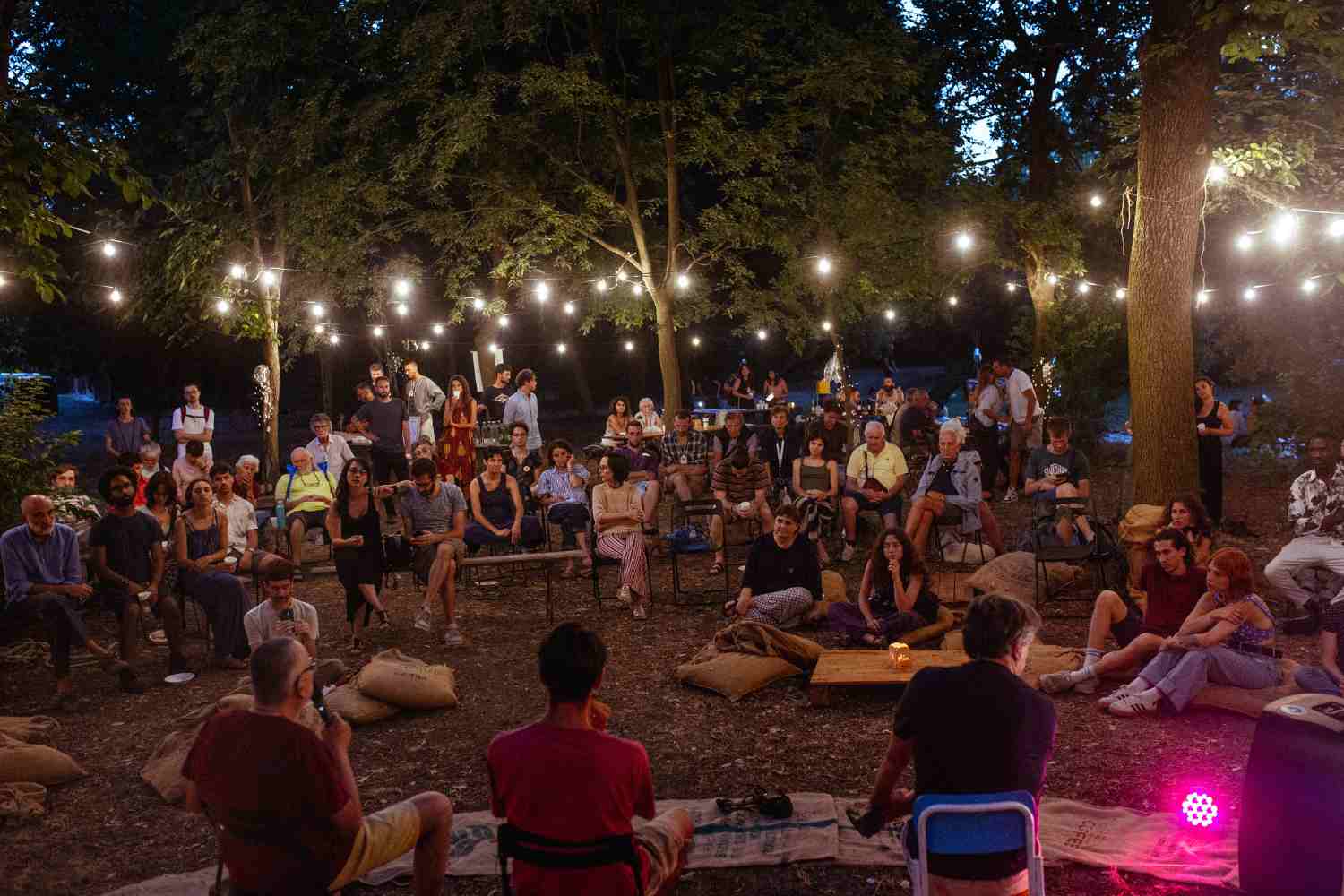
Here, among trees that form a green cathedral, we meet in fact Roberto. He speaks with a peaceful smile, that of those who are at peace with their choice. “This is an agricultural land that has been ours since time immemorial”, begins, tracing a line of love that binds him to his grandfather, born a hundred years before him.
The wood was not born from a project, but from a father’s gesture of love, who began to plant trees where before there was a vineyard. An almost instinctive gesture, which grew up with the European calls until it becomes 14 hectares of Cornioli, Frassini, Meli, Olmi, Noci, Plugoli, oaks and spontaneous herbs. “In a society where the only need is to create constraints, fences, cameras,” Roberto reflects, “I made a radically opposite choice”. His is Filoxenia, love for the foreigner, welcome.
Its story becomes public by chance, with a fanpage email and a video with a friend’s drone. But the heart of his testimony is another. It is the choice, made twenty years ago, not to sell. This land was building, it could become a neighborhood. Instead Roberto kept the trees. And in this choice there is not only ecology, there is politics. There is the refusal of that “Monolatria of the construction site” that covered Parma 25 years ago, the refusal to get used to living in inhuman places.
His story goes back over the centuries, up to the terramaric civilization, up to those copper bars with a dry twig, found here in 1871. Ex vote, probably left by people who for 750 years has considered this sacred place. “Sacred”, he explains, comes from a root that means “separated”. And that’s what he recreated: a place separated from the logic of profitone world more 500 meters from the Via Emilia.
Next to him, Filippo and Marco Fervino sit of the protection committee of the Bosco Hospice of Reggio Emilia. Theirs is a parallel and bitterly different story. Theirs is also a wood of about 25 years but spontaneously born on the ashes of a demolished hospice, on public land. There, where nature had recovered its spaces by creating a natural amphitheater, now a Conad supermarket looms.
The difference is cruel: while Roberto has chosen not to give in to the cement, in Reggio the state has given a common good to a private individual. The paradox is that the “House of Health”, used as a justification for the sale, today could be built with the funds of the PNRR, maintaining the public area. Instead, to eliminate an alleged “degradation” – the fault of the forest was to “make too many insects” – a spontaneous and unrepeatable ecosystem is destroyed.
“You cannot compensate for a spontaneous forest,” they say, from the committee, with the firm voice of those who know they are right.
Filippo gives the powerful image of their struggle. He says he has seen people, elderly and boys, climbing on stools and stairs to look beyond the concrete cows erected to prevent the vision of the woods. “No, wait, is there something in front? No, I want to see what’s beyond.” In that gesture there is all the meaning of the day. There is the cultural battle of Pileri, the will to see, and keep the invisible. There is the non -violent resistance of Spaggiari. There is the dignity of a community that refuses to accept a wall and that claims the right to contemplate what belongs to her and all of us. And that tells it in a festival.
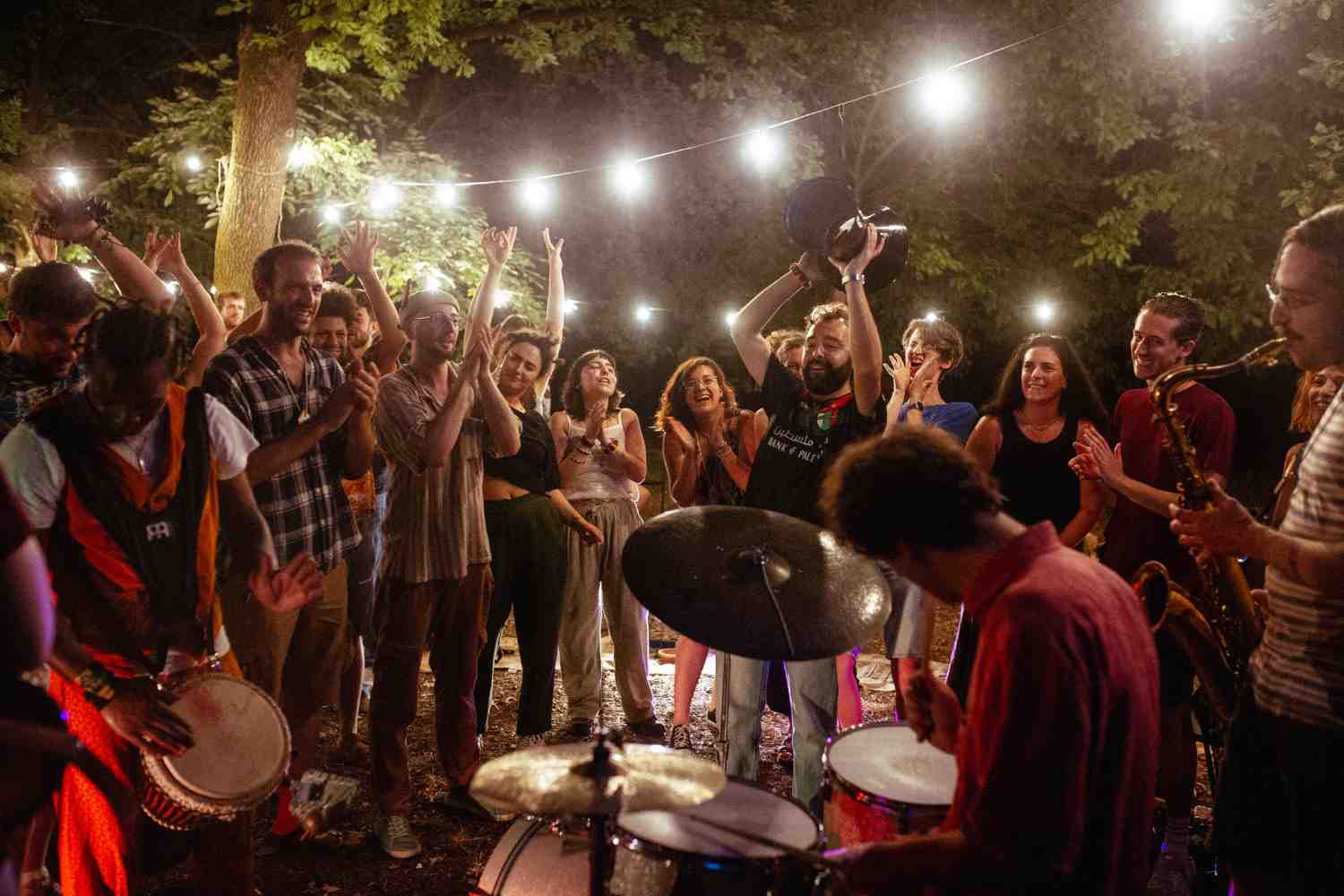
I leave the woods Spaggiari while the sun has set for a while and a dancing party fills it with sharing. Roberto’s words resonate me on my head: “Planting a tree is basically an act of faith, because we give life to beings that will probably survive us”. Today I saw this faith come to life. I saw the choice to keep the earth, to welcome the “foreigner”, to look beyond a wall.