
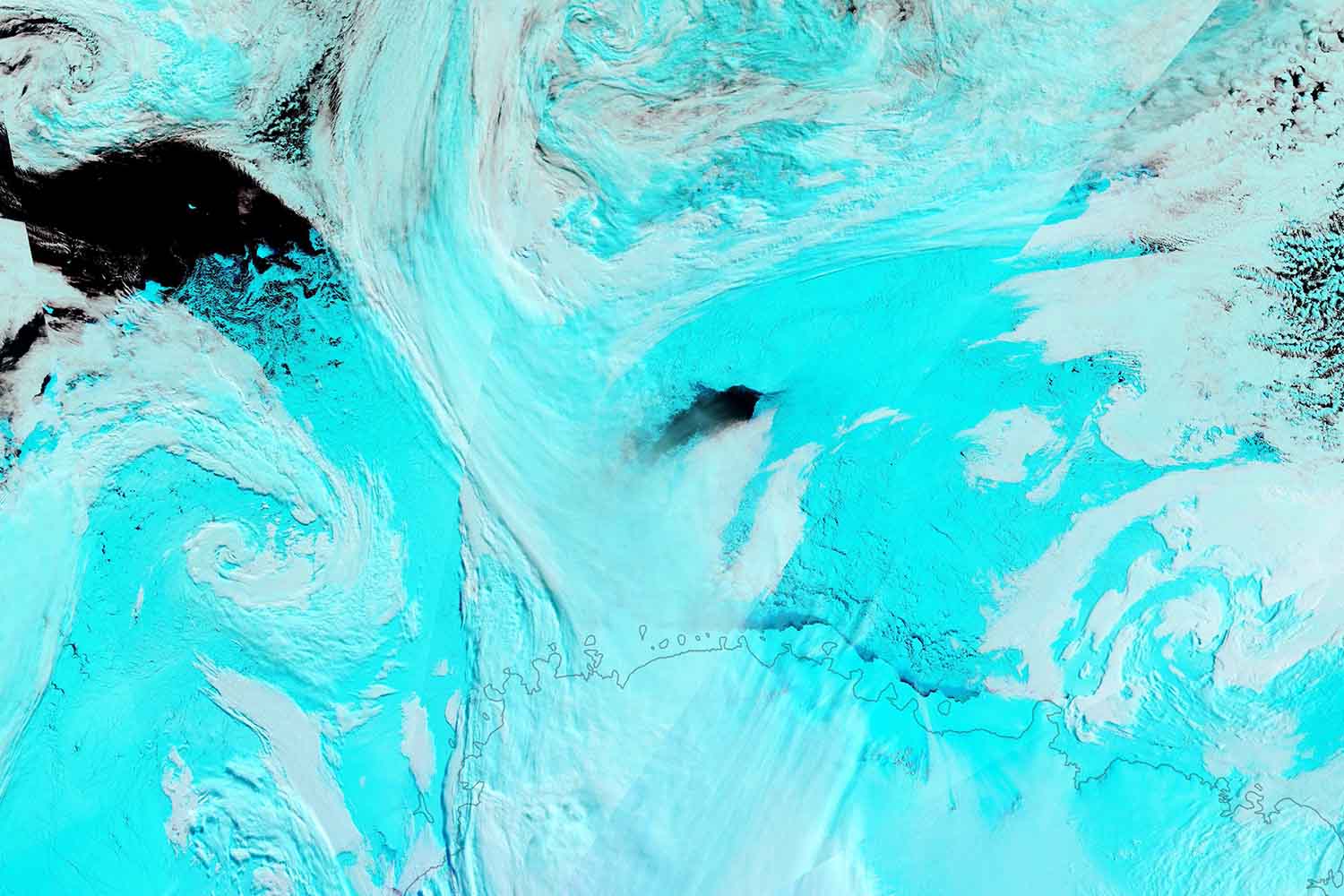
A hole as big as Switzerland He continues to open up and close himself in the ice of the sea of Weddell, in Antarctica, above the Maud Rise region. But now the scientists have finally discovered the cause.
The phenomenon, known as Maud Rise Polinya, was observed for the first time in the 70s, since then he has reappeared sporadically, but in 2017 he reached an unprecedented size and duration, remaining open for weeks, offering scientists to observe it more carefully.
The phenomenon of Polyrya It occurs when the hot water of the lower layers of the ocean dates back to the surface, dissolving the sea ice and preventing the formation of new ice. However, in the open sea and far from the coastal winds, as in the case of the Polyrya Maud Rise, the holes in sea ice are less likely. This left the researchers perplexed, giving birth to questions about the real causes behind this anomaly.
In 2016 and 2017 they discovered that the oceanic current of the Weddell sea, called Weddell Gyre, was stronger than in other years, facilitating the transport of salt and heat to the surface. In fact, Maud Rise is located near an underwater mountain and, thanks to the most intense current, the salt was around the Maud Rise as the wind blowed on the surface. This has created a spiral effect that pushed the salted water on the surface, lowering the freezing point and allowing the Polyrya to persist.
The discovery is crucial to understanding the impact of Antarctica on the global climate: climate change is intensifying the polar winds, and this could lead to the formation of more polynias in the future, with potential impacts on the climate and oceans. Polynye not only influence ocean currents, but also the transport of heat to continental platforms.
Sources: ScienceVances/Live Science
