
In the heart of the Indian Ocean, off the north-eastern coasts of Madagascar, the sandy seabed of Nosy Boraha -Once known as île Sainte-Marie-they had kept a secret for over three centuries. Today, thanks to Sixteen years of silent but obstinate researchtwo American archaeologists, Brandon Clifford and Mark Agostinibelieve they have finally identified the wreck of the Nossa Senhora do Caboa Portuguese ship sacked in 1721 by one of the most feared pirates in history: Olivier Levasseurnicknamed “the Nibbio”.
The discovery, published in the magazine Wreckwatchis based on Sonar scans, historical analyzes and over 3,300 finds recovered from the bottom of the sea. Although the study has not yet been subjected to scientific revision, the picture drawn by the researchers is solid and suggestive.
The history of the Cabo – abbreviation often used to identify the ship – begins in January 1721, when it sailed from Goain India, directed to Lisbon. On board were the Outrous viceroy of Portuguese IndiatheArchbishop of GoaAnd Over 200 slaveized people coming from Mozambique. The journey, however, turned into a tragedy.
April 8 of that same year, off the coastRéunion Islandthe boat was intercepted and attacked by a pirate fleet. Driving, Olivier Levasseurwho took advantage of the bad conditions in which the ship was poured – back from a storm and without much of the artillery – for take possession without resistance of an immense loot.
According to historical sources, they were on board Gold and silver ingots, precious coins, thirst, over 400 precious stones including 110 diamonds and 250 emeralds. A treasure that, according to Clifford and Agostini, today would have a value greater than 138 million dollars. But in addition to material wealth, they carried on that ship lives, stories and suffering. And many of them have lost their sea.
A story that goes beyond the myth of pirates
The exact point in which the Cabo sinned was identified in the protected bay by Nosy Borahaabout 650 km away from the place of the attack. Here, the seabed analyzes revealed a accumulation of ballast stones consistent with the structure of a large Portuguese ship. Next to, curved wood belonging to the hull e scattered objectsmany of which are still buried in the sand.
Among the finds already recovered, they stand out religious figures carved in wood and ivoryprobably made in Goa and intended for the churches of Lisbon. One of them depicts the Virgin Maryanother bears the writing “In“, Latin abbreviation of” Jesus of Nazareth, king of the Jews “.
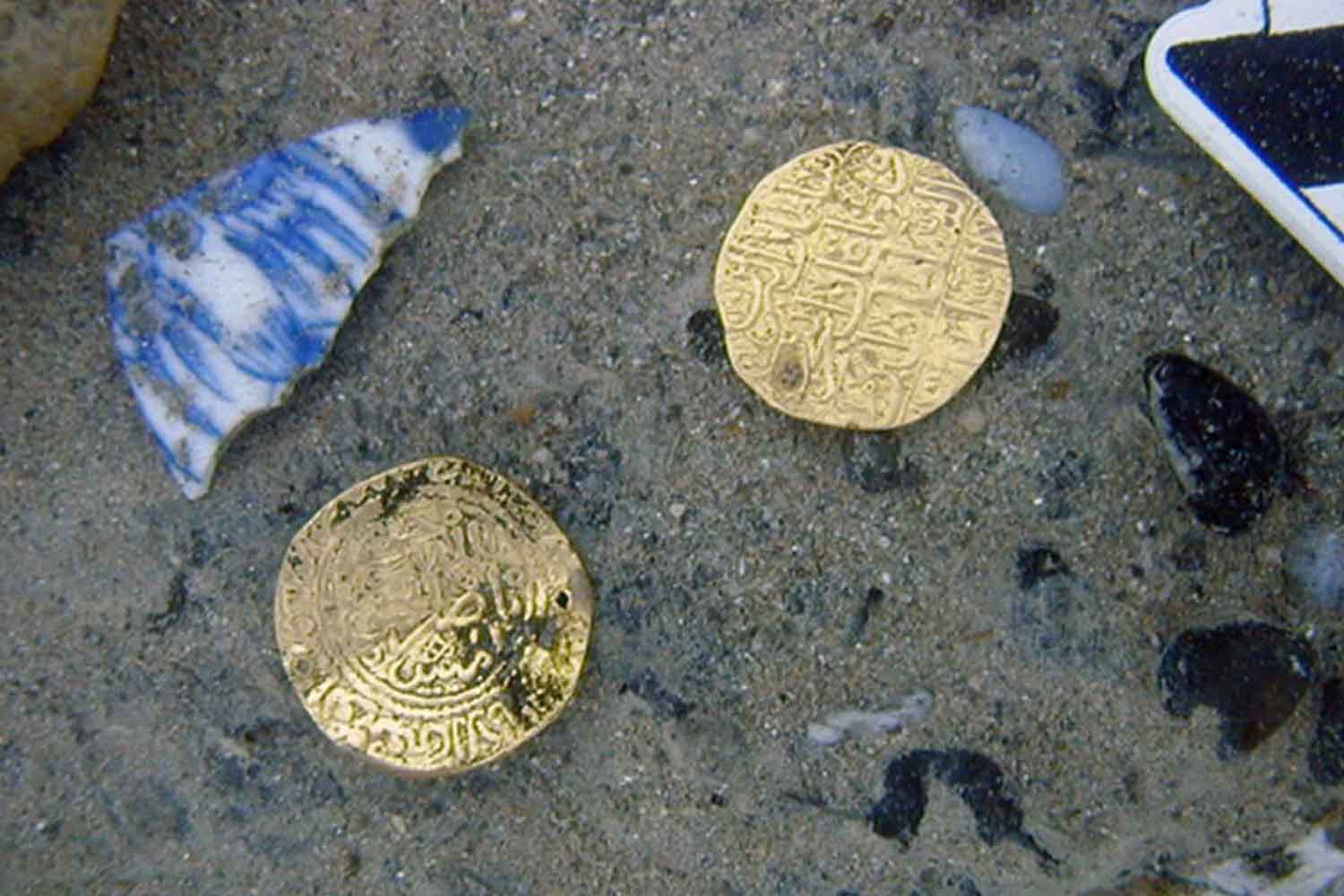
Next to sacred objects, archaeologists have found Golden coins with Arabic inscriptions, Fragments of Asian porcelain And luxury ceramicsas explained by Agostini:
The site is extraordinary and still hides a lot. It takes time, patience and respect to bring to light all that the sea has kept.
But Nosy Boraha is not just an exotic background for pirate stories. In the eighteenth century, this island was a strategic crossroads of international piracya place chosen for the absence of colonial control, the calm waters and the proximity to the commercial routes. It was not uncommon for the sacked ships to come sink voluntarily To hide the bottles.
According to Clifford, between Seven and ten shipsbetween pirate boats and captured ships, they lie sunk near the island. Only in this port would be at least Four identifiable wrecks.
For too long, however, the academic community has ignored the historical importance of this site, as Agostini points out:
It is a place forgotten by research, but fundamental to better understand the encounter – often violent – between empires, trade, piracy and resistance.
The forgotten past of slaveized people
If the discovery of the wreck lights the collective imagination with the promise of gold and mysteries, the truth is that The most important part of the story still remains in the shade. What happened to the beyond 200 humans reduced to slavery transported to the hold? That was of theArchbishop of Goawhose fate is still unknown? Only the viceroy was redeemed and brought home.
This story reminds us that Great historical narratives tend to remember the powerfulleaving the lives of the weakest on the margins. But every found object, every fragment of ship, is one voice from the past asking to be heard.
Today, the work of Clifford and Agostini, but a act of refund of memory. Because even between sand, shells and corals, The story resists, alive and ready to speak. Just know how to listen to it.
