
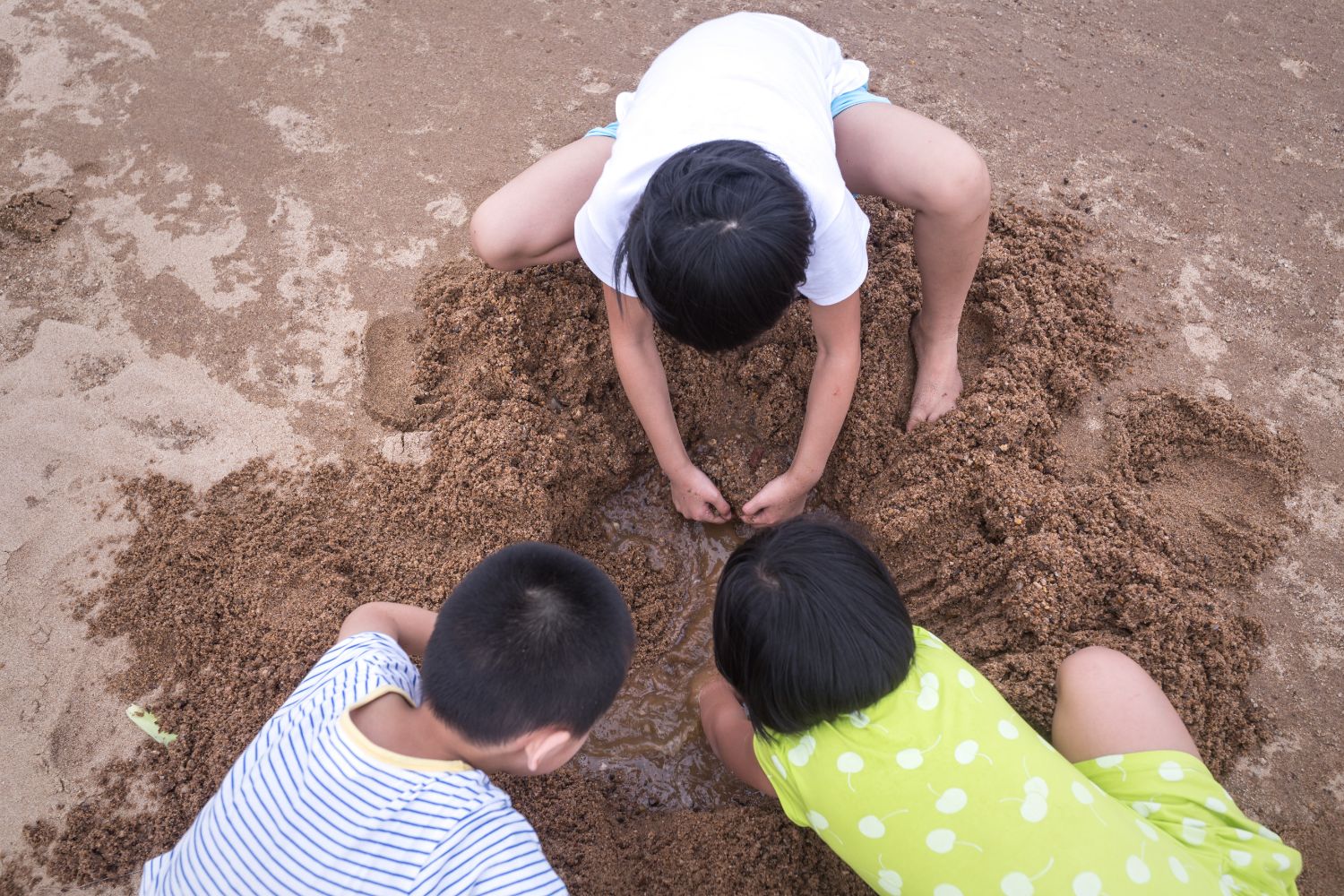
At the sea? Practically nobody comes to imagine it, but suffocation in sand represents a more frequent cause of death than shark attacks.
The experts say that, in the aftermath of the tragedy of Montalto di Castro who involved a young boy, they launch a warning: digging holes on the beach may seem like a harmless activity, but in reality he hides real dangers with effects so rapid that it is often difficult to intervene in time.
As he explained some time ago from Stephen Leatherman, Professor of Coast Science at Florida International University, the most serious and frequent danger is the collapse of the walls of the hole, which can literally imprison the person who is inside (some scholars call the phenomenon “Sand Entapment“,” Sand trapping “).
The sand, especially if dry and loose, is extremely unstable And, unlike the compacted soil, it almost offers no pressure resistance and can suddenly yield.
What the sand is made
It is not a material in the strict sense -explains Leatherman -, but rather a set of spherical -shaped materials and different sizes, which vary from 0.06 and 2 millimeters in diameter.
The type of sand is determined by the materials that make it up. Quartz sand, consisting of silicon dioxide, is the most common sand located on the beaches, with the exception of the tropical coast where there are coral sandy beaches, consisting of calcium carbonate.
The coarser material of the sand is not soft to the touch: it does not create robust sand castles. The silder and clay, which are the finest of the sand, make the water cloudy and are commonly called mud.
But most of the beaches contain a Mineral mixturewhich create a light brown or brown appearance. The minerals that darken the sand are much heavier: dry and loose sand grains will form a pile with an angle of inclination of about 33 degrees, called rest angle. The rest angle is the steep angle to which a pile of grains remains stable and the strength of friction between each grain determines this stability.
Why can you die?
Even the weight of the sand, therefore, depends on the materials of which it is made and the stability increases if the sand is wet.
If you dig a hole on the beach – says Leatherman – this will remain stable as long as the sand is wet. When drying, or when someone stops near the edge of the hole, adding extra weight, this collapses, and grains fill all the spaces open in the hole, leaving no more air to those who are trapped.
In practice: heavy grains fill all open spaces in the hole And this leaves no air available for the breathing of an trapped person.
Like the snow avalanches?
Absolutely not.
The scholar explains that skiers trapped in the avalanches can try to form an air bag by putting their hands on a cup, because the snow is light: with the sand, much heavier, is impossible.
The weight of the sand that collapses, however, can exercise one pressure Incredible on the chest and abdomen, preventing breathing and quickly leading to suffocation.
This is why saving someone from a collapsed sand hole is very difficult because the sand is both heavy and unstable. While the rescuers collect the sand to free the victim, the hole will continue to collapse under the weight of the rescuers and will be filled with sand. The rescuers have only about three or five minutes to save a person trapped in a sand hole before suffocating.
Time also puts its own, because the collapse of a deep hole It happens in a few secondswhich drastically reduces the possibilities of salvation, even in the presence of bathers and rescuers nearby. Furthermore, panic can worsen the situation, making reckless movements that accelerate the instability of the hole.
The solution? Continue to make castles and tunnels, of course, but just look at them from outside!
