
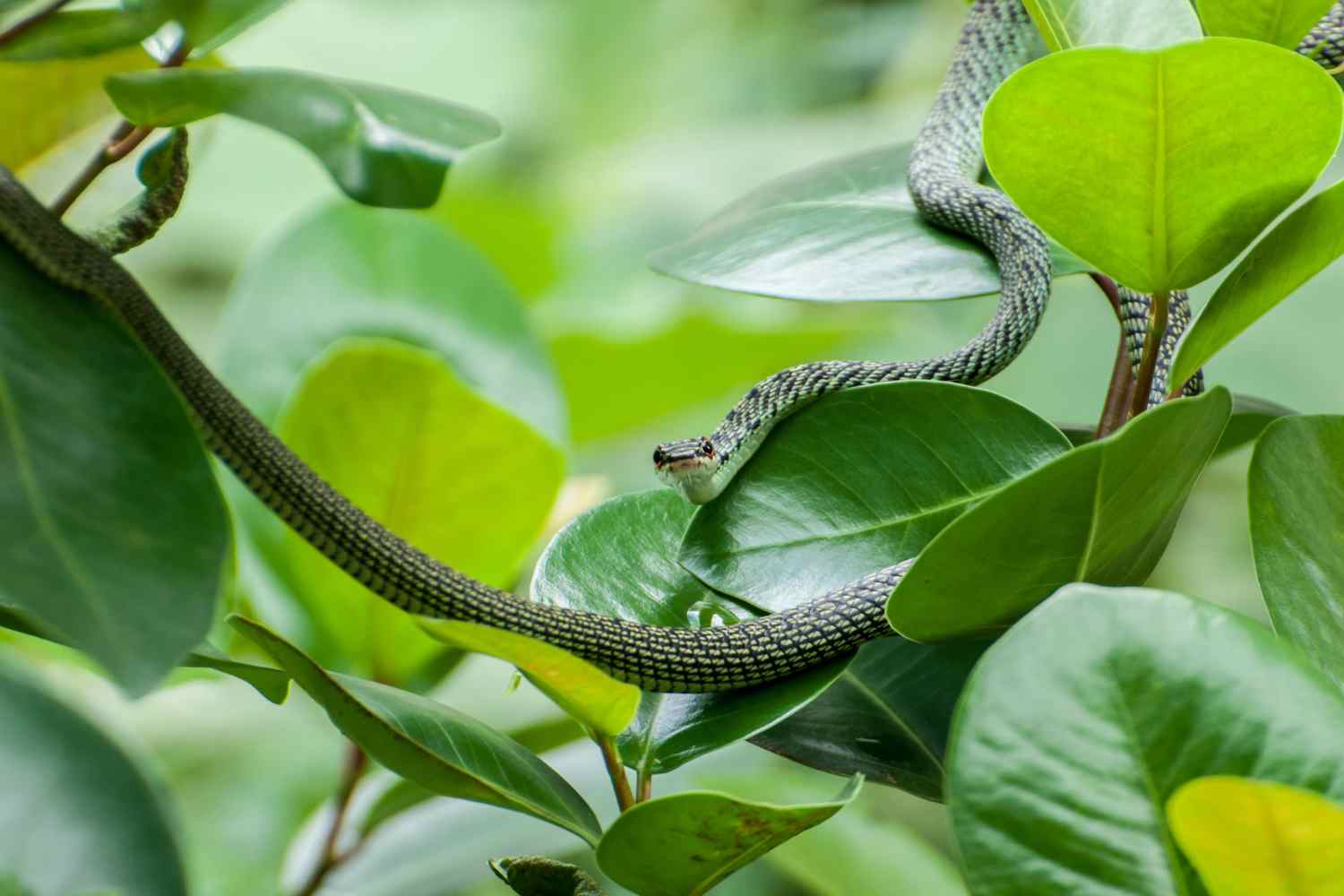
His name is Chrysopelea Paradisi: he is the flying snake of Paradise, a poisonous reptile with a particular feature: he knows how to fly. A study may have discovered how this creature, which should crawl, instead manages to “slip” into the air.
For some, the sight of a snake that crawls on the ground is quite frightening, we do not dare to imagine the flight. The snake of the Paradise tree certainly does not have wings but manages to go through the air on the trees of Southeast Asia. Little was known about how these snakes “flown” before a team of scientists from Virginia Tech published a new research document.
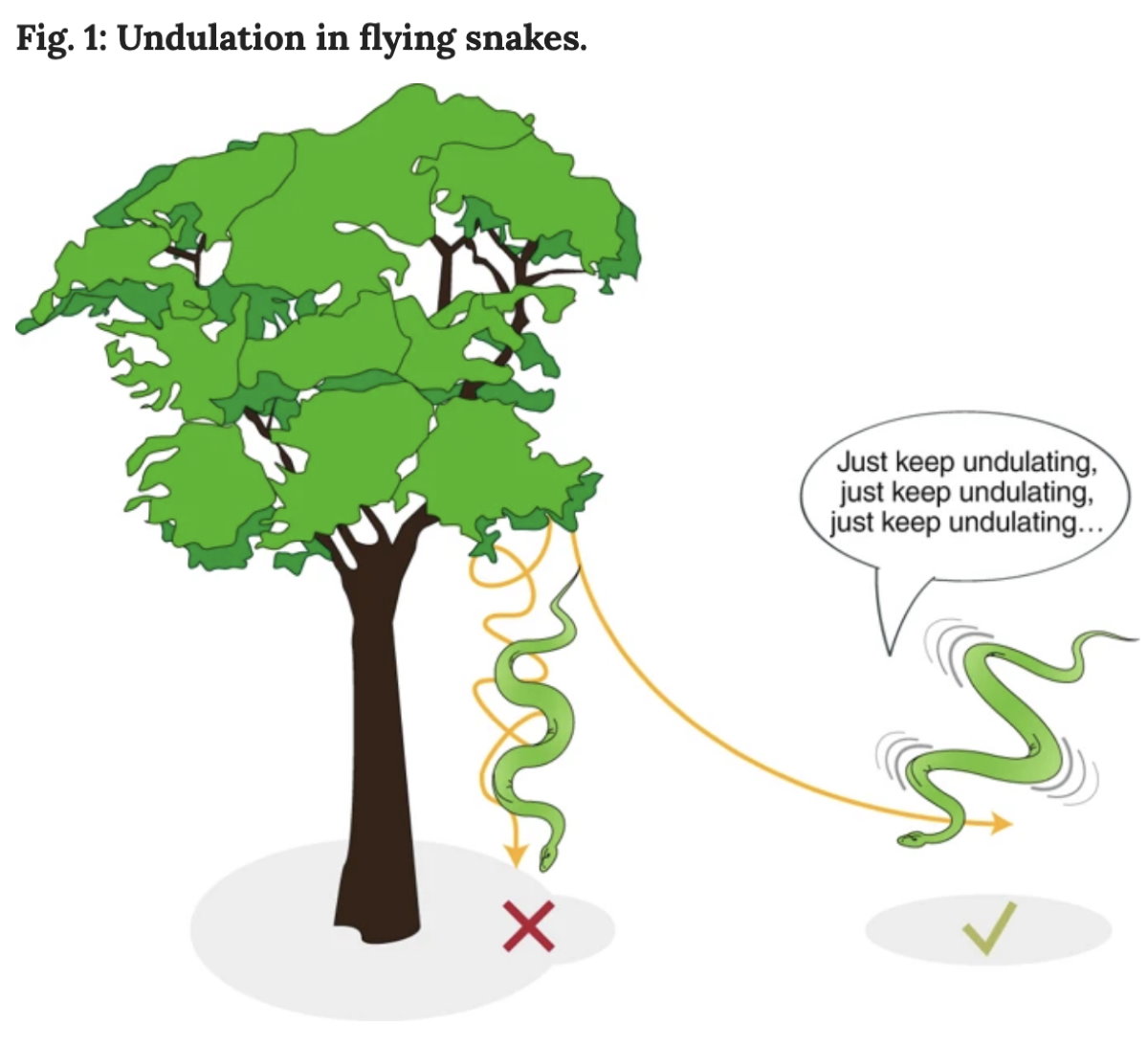
Observing these animals, scientists noticed that snakes moved by carrying out an wavy movement in the air. The team had a basic knowledge of the uninglation, thanks to the previous work conducted by Jake Socha. The researchers started from an assumption: all snakes sway when they move on the ground, but also those “flying” do it in the air, even throwing themselves from the tops of the trees to the ground below.
Socha has studied these creatures for over 20 years, and even if he admits that snakes do not know how to fly in the most common sense of the term, their plans are an impressive undertaking for an animal completely devoid of limbs.
When the snake of the Paradise tree lets go of a high branch, in fact, its body ripples in the air in a series of curious contortions that can sometimes see it also land in a vertical position several meters away.
“We know that snakes sway for all types of reasons and in all types of locomotive contexts,” says Socha, who works in the biomedical engineering sector at Virginia Tech.
But Socha suspects that there is something more. By creating a 3D model of the waves in mid -air of this snake, together with colleagues it has shown that they are crucial for dynamic stability in flight, keeping the snakes straight longer. Without these aerial stunts, the team’s results suggest that the snake of the Paradise Tree would not be far away. It would probably precipitate first to the ground or would land in some other strange and potentially dangerous orientation.
“What makes this study truly unique is that we have been able to progress both our understanding of the Planata kinematic and our ability to model the system,” says the mechanical engineer and the main author of the study, Isaac Yeaton of Virgina Tech. “The serpent’s flight is complicated and it is often difficult to make the snakes cooperate. There are many complexities to make the computational model carefully. But it is satisfactory to put together all the pieces.”
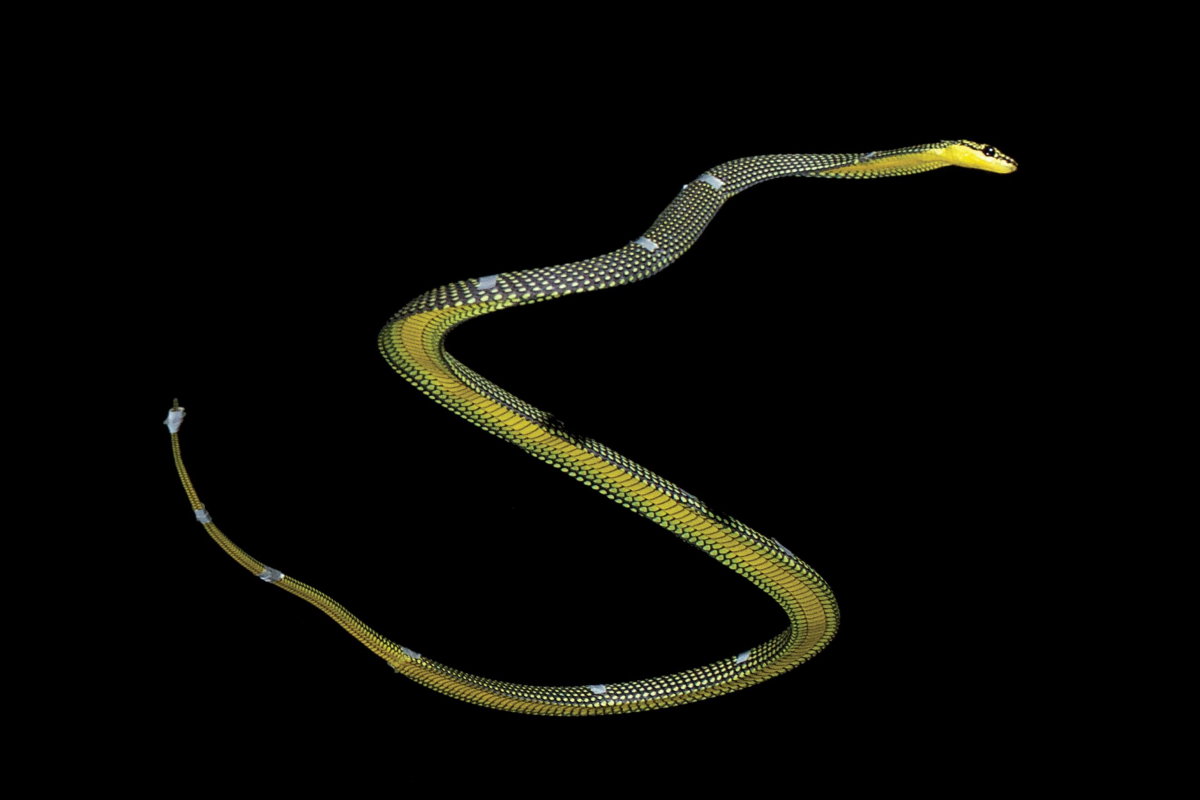
The study began in 2015, when the researchers transformed The Cube, a four -storey theater into a black box with high -speed cameras used to capture the movements. The protagonists in this case were the snakes. By positioning the reflective ribbon in infrared on their bodies in various positions, the researchers were able to use the movement acquisition system to register the movements from all angles.
The team observed 7 different flying snakes of paradise while jumped from an 8.3 -meter tall oak branch (27 feet) to an underlying artificial tree.
By acquiring data from over 130 live planate, the team has created a careful three -dimensional representation of the snake and its aerodynamics.
By manipulating this model, the researchers therefore tested as certain urban impressings, both horizontally and vertically, influenced the struggle of the snake. Their undulating, explain the authors, is a bit like the rotation of a Frisbee: it keeps the snake in a vertical position while sliding in the air.
For short planate, where simulated snakes jumped from a height of 10 meters, almost all the waving plans were stable.
According to the authors of the study, published in Nature Physics, the discovery not only reveals news on the snakes that we did not know but could find applications in the field of robotics: snakes are excellent in moving in complex environments and robots should also be.
Once again nature has something to teach man.
Reference sources: Sciencealert, Phys.org, Nature Physics
