
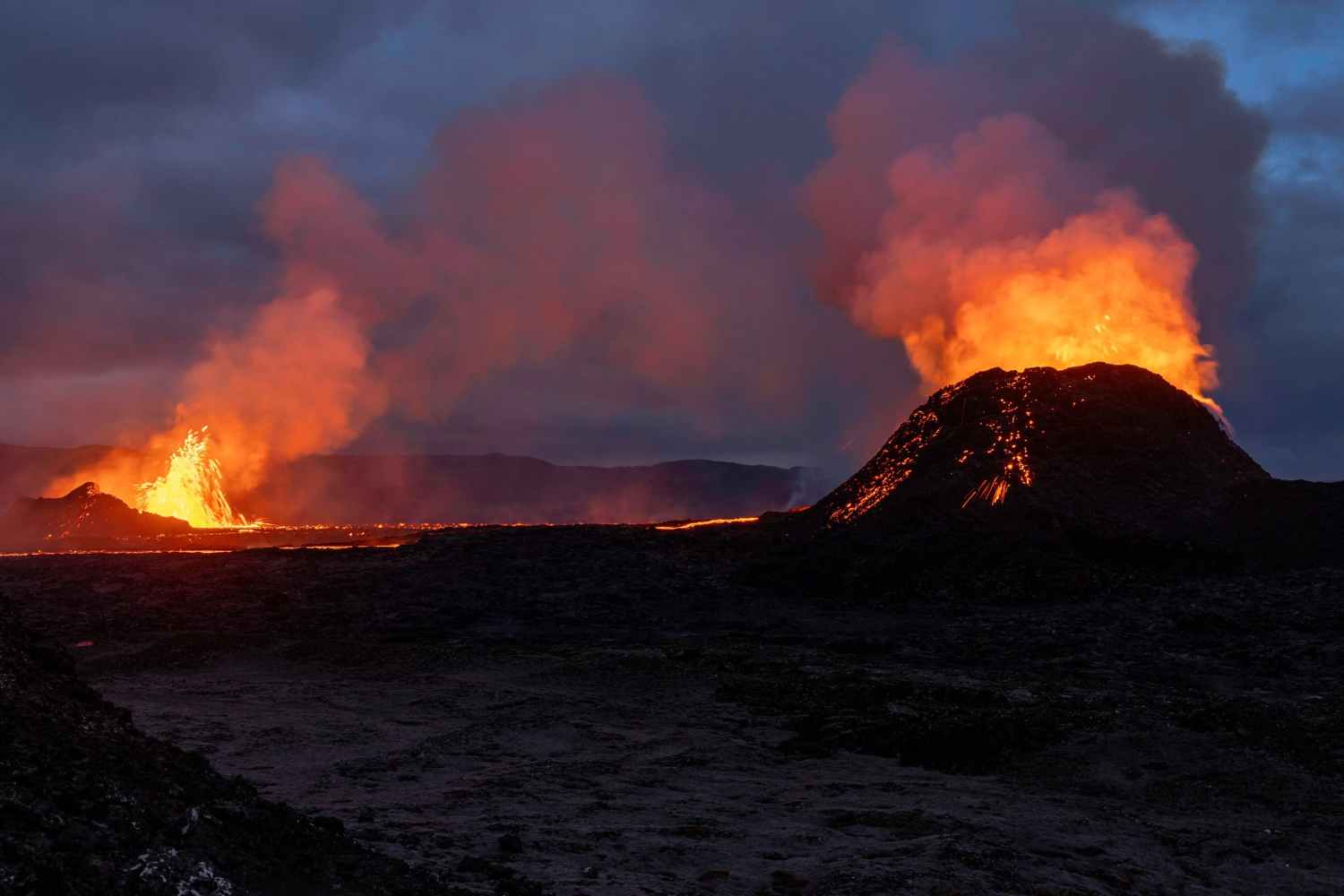
Another volcanic eruption shakes the Icelandic peninsula of Reykjanes. It has been the twelfth since 2021 and the ninth only since the beginning of 2023 Reykjanesbær.
At the first light of dawn on July 16, 2025, a crack opened in the ground near Sundhnúksgrar, in the Reykjanes peninsula, in Iceland. The eruption, which began just before 4 in the morning, is yet another event of an increasingly recurring volcanic activity in the region. The Icelandic Civil Protection has confirmed that it is the twelfth erupting episode in the area since 2021 and, according to the meteorological institute, the event appears “relatively small”, with a long crack between 700 meters and two kilometers.
View this post on Instagram
But the visual power of lava flows, immortalized by the drones of the coast guard, does not tell the whole story. The greatest concerns focus on air pollution. In Reykjanesbær, a place less than 20 km away from the eruption site, the concentrations of sulfur dioxide (so₂) have exceeded the safety limits, inducing the authorities to recommend residents to remain closed and close the windows. The Icelandic site loftgaedi.is It constantly monitors air quality, but the episode rekindles the alarm on the local environmental impact of eruptions.
Second Benedikt ófeigssonGeophysician of the Icelandic Meteorological Institute, “the deformation of the land is not significant and does not seem to have escaped very magma”. However, he specified that seismic activity and geophysical signals indicate that the event may not end in a short time. The position of the slit, relatively isolated, has avoided direct consequences on infrastructure or inhabited centers. Grindavíka town already evacuated in 2023 as a precaution, was again cleared together with the campsite of the Blue lagoonpopular geothermal tourist destination.
Despite the spectacularity of the event, the air traffic to and from the Keflavík International Airport has not undergone interruptions. As in previous eruptions in the Reykjanes peninsula, lava has not generated ashes in quantities such as to threaten the airspace.
The eruptions of the peninsula – defined as “crack” due to the way in which the lava goes up long cracks in the earth’s crust – intensified starting from 2021, after eight centuries of inactivity in the area. Experts believe that these are a new volcanic cycle destined to last for decades, if not for centuries. And this periodicity asks questions about the sustainability of the human presence in the region.
Grindavík, a town that up to two years ago had about 4,000 inhabitants, today is almost uninhabited, evacuated on several occasions due to the risk of lava and earthquake flows. The blue lagoon, an emblem of tourist island, continues to be exposed to natural risk, in a contradiction that involves both development policies and environmental security.
According to an updated risk assessment on the eve of the eruption, it was believed that the amount of magma in the room was about two thirds of the one that had generated the event of April 1st. On that occasion, the pressure had grown to the point of triggering a breakdown of the crust. This time, it happened earlier than expected.
The persistence of volcanic activity and the quality of the air worsened in different locations also raise questions on the health level. The sulfur dioxideirritating gases through the respiratory tract, can cause problems especially to vulnerable subjects such as children, elderly or people with chronic respiratory diseases. Local authorities recommend simple but essential precautions: avoid outdoor activities, stay in closed environments and check updates on pollution levels.
