
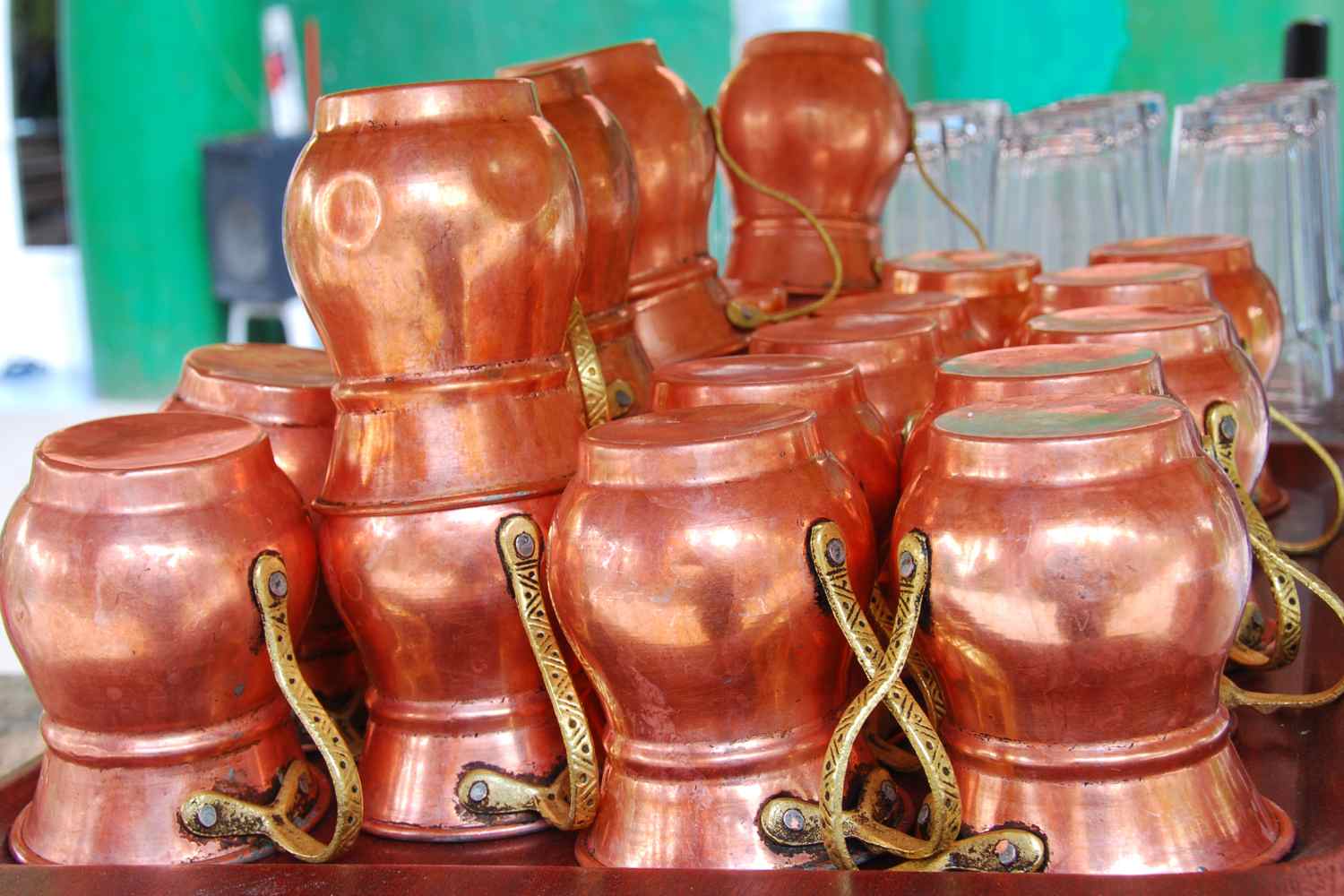
Who does not know the cup of copper used for the famous Cocktail Moscow Mule? In addition to its captivating aesthetic, copper has beneficial effects that go far beyond simple appearance. This metal, often used in the preparation of cold or hot drinks, is considered an ally of well -being, thanks to its antibacterial properties and its positive impact on the human body. In Ayurvedic medicine, copper is considered a metal that balances vital energies (Dosha) and improves digestion, while recent scientific studies have confirmed its essential role as a trace element for our body.
Copper is a metal as ancient as human civilization, used since the bronze age to manufacture tools, coins, jewels and work tools. In addition to the historical value and the undeniable aesthetic beauty, copper is a metal with extraordinary antibacterial propertiesconfirmed by numerous scientific research. A living material, capable of actively protecting the environment in which it is located, so much so that it is defined by many researchers as a true “natural disinfectant”.
A metal that kills germs
The antimicrobial properties of copper have been documented for some time. Already in theAncient Egypt This metal was used to preserve drinking water and disinfect the wounds. Today modern science has confirmed the great effectiveness in fighting a wide range of pathogenic microorganismsincluding bacteria, viruses and mushrooms.
Scientific evidence underlines how copper is able to eliminate up to 99.9% of pathogenic bacteria within two hours of contact. This ability is due to a process called “ionic action”: when bacteria come into contact with a copper surface, copper ions penetrate through cell membranes, altering the metabolism and destroying microbial DNA.
The copper results also effective against antibiotic resistant bacterialike it Staphylococcus Aureus Meticillino-resistanto (MRSA), responsible for serious and sometimes lethal hospital infections. Some studies conducted in the United Kingdom and the United States have shown that The use of copper surfaces in healthcare structures can significantly reduce bacterial contamination And, consequently, the risk of nosocomial infections.
Copper everyday objects: a strategic choice
In light of these evidence, the use of copper in public and private environments is back in vogue, especially in contexts where hygiene is a truly indispensable factor. Hospitals, schools, means of transport and even airports are increasingly adopting copper surfaces or copper alloys (like brass and bronze) to counter the spread of pathogens.
Doors of doors, handrails, railings, switches, taps, support plans: all these elements, frequently touched by many people, represent i Vehicles ideal for the transmission of germs And the choice to make them in copper actively contributes to the sanitization of the environments without the need for chemical or disinfectant agents.
Even the keyboards of the ATMs, the lift buttons and credit cards readers are available today in antibacterial versions, thanks to the application of copper coatings or copper-nichel mixtures, capable of keeping the antimicrobial properties intact over time.
The copper cups
A particular case, which combines tradition, aesthetics and well -being, is represented by copper cupsoften used to consume hot or cold drinks, such as the iconic Moscow Mule cocktail. In the Ayurvedic Medicinecopper is considered a charity metal for the human body, capable of rebalancing doshas (vital energies) and promoting digestion. Drinking water preserved for a few hours in copper containers, a practice known as “Tamra Jal”, is considered useful to strengthen the immune system and improve the metabolism.
Even from a scientific point of view there are interesting indications. Copper is an essential trace element for the human body: it participates in the production of enzymes, the absorption of iron and the formation of red blood cells. The presence of copper is therefore necessary for the correct functioning of the brain, heart and immune system.
Drinking from copper cups and glasses can therefore release very small quantities of this mineral in the water and contribute, albeit in a modest way, to the recommended daily contribution. Be careful, however, not to overdo it: an excessive copper intake can have toxic effects. It is important that The containers are made of pure copper and not treated with chemicalsand that they are carefully cleaned, avoiding aggressive detergents that could compromise the metal surface.
A sustainable ally in the fight against pathogens
Copper also represents a sustainable choice. It is a 100% recyclable material without quality loss, corrosion resistant and durable over time. The innate ability to self -defect itself, combined with the total absence of harmful emissions, makes it a precious ally in the construction of healthier and safer environments.
It is not surprising, therefore, that copper is finding new applications also in the urban furniture, school construction and public transport sector. Some European cities are already experiencing copper flooring in underpass and underground tunnels, where hygiene is difficult to guarantee with traditional methods.
