
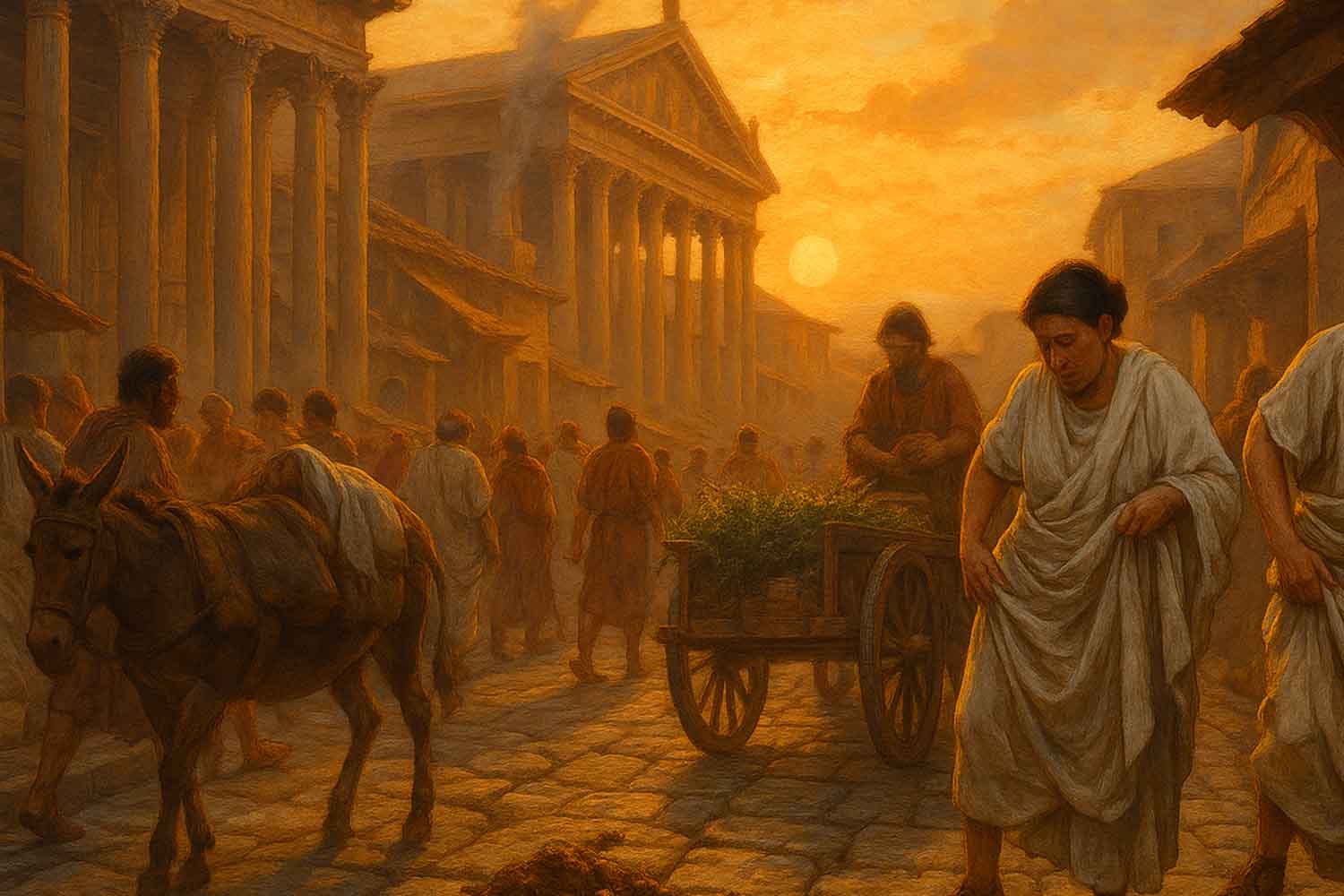
When we imagine ancient Rome, we think of the roaring Colosseum, the glories of the temples, the life that animated the forum. But there is a detail that we often forget: smell. And no, it was certainly not a delicate essence. Indeed, Rome smelled. And also a lot.
We cannot “smell” the past, but thanks to ancient texts, archaeological finds and environmental testimonies, we can get a rather clear idea of what was felt with the nose while walking through the streets of the ancient capital of the empire.
A pungent smell
The daily reality of Rome was much less elegant than marble statues suggest. The popular neighborhoods were overcrowded and dirtyand the waste, humans and animals, were a constant presence. Despite the efficiency of the Roman sewers – an impressive engineering work – most of the house baths, to prevent bad smells (or mice) from dating back to the houses.
Many Romans used Public latrines or night vaseswhich were then emptied in black wells. But this possibility was reserved for those who had a home. Much of the population lived in tiny or street roomshelping to make the city’s air really heavy.
In the streets, then, they were there donkeys, mules, horses and cattle intended for sale or slaughter, and their dejections accumulated everywhere. THE famous “stone passages” of Pompeii They served precisely to cross the streets avoiding trampling the mud … and much more.
To all this was added the problem of corpses. Not everyone could afford a burial or cremation, and the bodies – humans or animals – they were often abandoned. A macabre anecdote arrives from Svetonio: a dog would bring one human hand on the table of the Vespasian emperor. An image that says a lot about the urban hygiene of time.
Little hygiene, drinking deodorants and public bathrooms that are anything but clean
The human body also contributed to the smell of the city. Most of the population did not wash every day And the soap, although known, was not very used. The Romans preferred sprinkle with olive oil (sometimes perfumed) and then scratch it away with a bronze tool called strigile. The mixture of oil, sweat and dead skin was then … launched against a wall or left to run away.
Public bathrooms, today splendid archaeological sites ,. Tanks shared by eight or twelve people, stagnant water, closed and humid environments: ideal for the proliferation of unpleasant bacteria and smells.
But the Romans did not surrender to the Alezzo. In the classic texts we find Recipes for natural deodorantseven if some would turn their noses today. Some deodorants went ingested or chewedin the belief that by stimulating urination or digestion you could “clean” the smell of the body. One of these was obtained boiling golden thistle root in wine.
Even for the teeth there were rudimentary pasta, but the concept of fresh breath was very different from today.
Perfumes and spices: the refined side of Roman odors
Luckily, . The Romans also loved i perfumes, incense and exotic aromasthanks to the vast trade with the East. After the invention of the Blowing of the glass in the first century BCthe perfume bottles became common, and many were found in archaeological excavations.
Ointments were obtained by infusing Vegetable or animal fats with essences of pink, Iris, saffron, cinnamon, incense and myrrh. The roses of Paestumin southern Italy, were particularly valuable. Not surprisingly, right in Paestum forum was discovered a perfume shop.
The spices imported from India and Arabialike pepper and cinnamon, were stored in the center of Rome, in real perfume warehouses. But the sense of smell also had a spiritual function.
According to the archaeologist Cecilie Brøns, The statues were also anointed with fragrant oilsin particular based on pink. In some cases it was also used beeswax to fix the aroma. The Romans believed that perfumed the deities was an act of veneration, and garlands, incense and perfumes They were part of the religious rituals.
Ultimately, Ancient Rome was a total olfactory experience. A mixture of Faci, urine, wood smoke, burnt meat, cooked food, corpses, floral perfumes and oriental incense. A chaotic aroma, often nauseating, but deeply linked to daily life.
Nevertheless, the Romans did not seem to complain about it. Perhaps, as the historic Neville Morley suggests, that was simply the smell of the house, or even the scent of civilization.
