
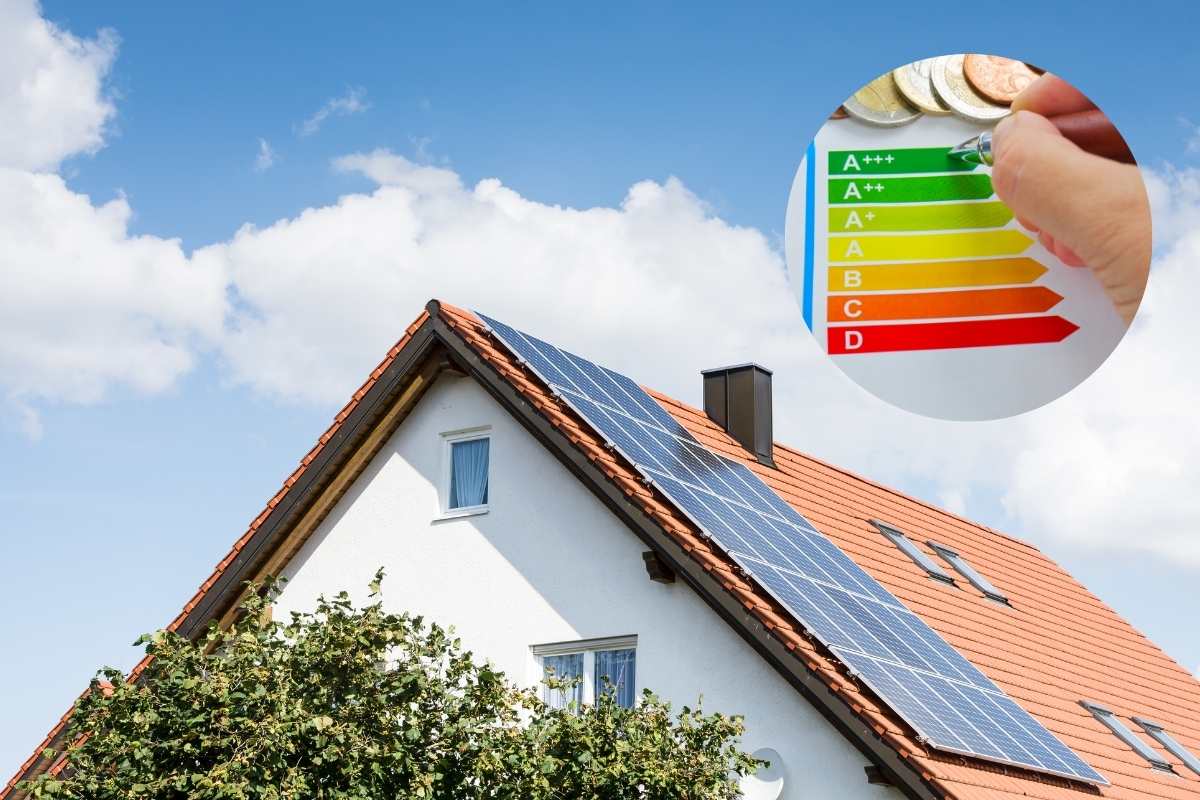
While the extreme heat tightens Italian cities in a grip, over three quarters of our homes continue to waste energy as if we were in the 70s. Yet, the European directive that could reverse this route – the so -called “Green houses“-It is once again put into stand-by by the Government. A choice that risks transforming an environmental and economic opportunity into a new political emergency. Approved by the Council of Ministers on 22 July 2025, the European delegation bill once again excludes Directive 2024/1275 EPBD (” Case Green “) among the measures to be received. While Brussels asks the Member States to accelerate in the energy redevelopment of the building heritage, Italy chooses not to include one of the most incisive measures in the national regulatory package for Reduce consumption and emissions In the residential sector. A decision that has raised strong criticism from many environmental realities and that risks slowing down the path towards ecological transition.
The EPBD directive and binding objectives
Entered into force on 29 May 2024, the EPBD directive establishes a roadmap for improve energy efficiency of European buildings. Member States have until 2026 to receive it in their own system. For Italy, this means facing an important challenge: redevelop at least 44% of residential buildings in energy class and, f o g, equal to about 9.7 million units, with the aim of reducing the consumption of the sector of at least 16% by 2030, and 20-22% by 2035.
These are not only climatic objectives, but also economic and social: more efficient buildings mean Less onerous bills, less emissions and less dependence on fossil sources. According to the data reported by the environmental associations, a redevelopment action on a national scale could avoid the issue of Over 14 million tons of Co₂ per year.
Late government: the transposition node
Yet, the directive does not appear in the EU delegation bill 2025. In its place, other European measures have been implemented, including those on technologies “Net Zero”, circular economy And cybersecurity. On the EPBD, however, nothing. An absence that the main environmental associations – including Greenpeace, Legambiente, Kyoto Club, WWF, Free and Arse Coordination – have defined “bad news that risks generating new delays”, underlining the risk of opening an infringement procedure by the European Commission, if the deadlines of the first implementation plan (December 2025) and the final transposition (May 2026) will not be respected.
Criticism from the environmental front
The position of the government has been harshly contested: “The government once again goes against the reasons for the environment and innovation”, reads a joint note from the six organizations, which ask for a change of pace. Failure to transpose not only brakes the efficiency of the building heritage, but also risks making Italy lose opportunities in terms of jobs, relaunching the construction sector e reduction of energy poverty.
The vademecum of confability: between risks and uncertainties
Also Confabitein the vademecum “The energy transition and the safety of living”published with the Municipality of Bologna, emphasizes on another critical point: the theme of resources. The directive, observes the association, does not provide for binding financial measures, limiting itself to recommending support to vulnerable families and leaving individual states the definition of incentives. This opens a concrete problem of economic sustainability of the interventions, especially in the absence of a long -term national plan and stable tools such as tax credits, subsidized mortgages or transparent profit.
“Private capitals will also be needed – reads the document – but without losing sight of the public interest”. And here the political node emerges: if all the parties of the majority to the government voted against the directive to the European Parliament, The desire to implement it now at national level remains uncertain.
The risk of infringement and costs for Italy
The Minister for European Affairs, Tommaso Fotirecalled that Italy has already accumulated 66 active infringement procedures, 12 of which for failure to transpose directives. Since 2012, he said, our country paid over 1.2 billion euros in penalties. Faced with these numbers, the failure to transpose the Case Green directive represents a possible insole not only environmental, but also economic.
A missed opportunity, at least for now
Time, however, has not yet expired. Italy formally has until May 2026 to transpose the directive and define a national plan. However, every accumulated delay now risks translating into hasty choices tomorrow. And while other countries are already equipping themselves with targeted policies, Italy remains stalled. According to the Study Center of the Surveyors Foundation, to date our country has reached only a 9.1% reduction in the energy consumption of residential buildings, far from 16% requested by 2030.
The question does not only concern the environment, but the quality of life, the economic health of families and the coherence of Italy with respect to international climatic commitments. If the “Case Green” directive is seen by Brussels as one of the keys for the decarbonisation of the building sector, ignoring it risks becoming a strategic error difficult to correct in the running.
